Tag Archives: industrial robots

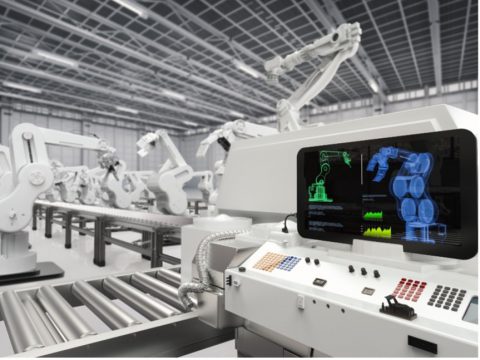
HOW TO REDUCE SCRAP AND REWORK IN YOUR PLANT THANKS TO ROBOTIC REPEATABILITY

The financial problem of scrap In manufacturing, few words generate more losses than these two: scrap and rework. They’re not just defects: They are lost hours. They are wasted materials. They are delivery delays. They are dissatisfied customers. In plants where each defective part carries both a direct cost and a hidden cost (energy, wear,

Read More

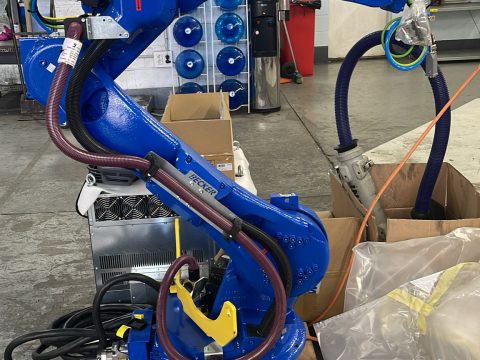
UPDATE AND MODERNIZATION OF INDUSTRIAL ROBOTS: WHEN DOES REFURBISHING MAKE MORE SENSE THAN BUYING NEW?

In many workshops, the same dilemma repeats itself: should you buy a new robot or modernize the one already installed? With advances in controllers, sensors, software, and mechatronics, older robots can be brought back to life effectively. The key is knowing when refurbishment makes sense— and when it’s time to replace. Why consider modernization? A

Read More

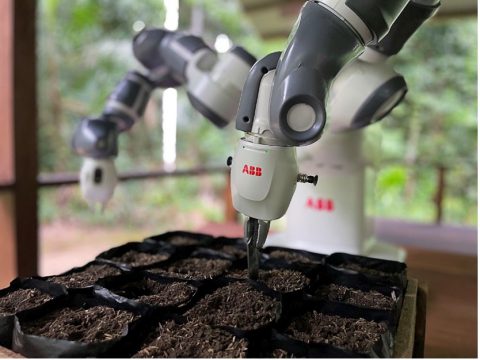
Robots in Precision Agriculture: Affordable Technology with Refurbished Units

Modern agriculture faces a major challenge: producing more with fewer workers and with rising operational costs. Automation is no longer a luxury—it is a necessity. However, many medium and small farmers still believe robotic technology is beyond their reach. The reality is very different: refurbished industrial robots are opening a new era in precision agriculture,

Read More

How Refurbished Robotics Is Accelerating Battery and Electric Vehicle Component Manufacturing

The rapid rise of electric mobility is transforming global manufacturing. Battery gigafactories demand high‑precision automation, controlled environments, and scalable production capacity. Yet many companies encounter a major challenge: high investment costs for industrial robots. Refurbished robotics is eliminating this barrier—driving growth, sustainability, and accessibility in the EV sector. Key Advantages of Refurbished Industrial Robots Cost

Read More

How to Calculate the Real ROI When Replacing a CNC Machine with a Robot + Spindle

For years, CNC machinery has been the benchmark for precision in industrial machining. However, the evolution of robotics — especially refurbished robots equipped with high‑performance spindles — is reshaping the landscape. More and more factories are now asking themselves: Is it really worth replacing a CNC with a robotic milling cell? The answer depends on

Read More

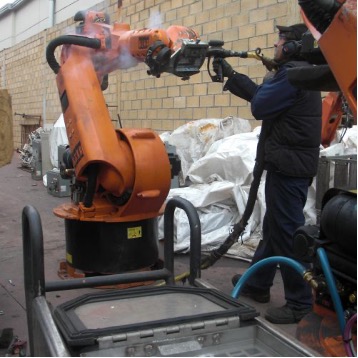
WHAT REAL-WORLD WELDING PROBLEMS CAN BE SOLVED WITH ROBOTIC AUTOMATION?

In industrial welding, the most expensive problems rarely come from the welding process itself but from its variability: differences between operators, inconsistent travel speed, positioning errors, or human fatigue. Robotic automation—especially in MIG/MAG and TIG welding—is widely used across the world to eliminate recurring failures that affect quality, production time, and cost per part. This

Read More

WHAT LEVEL OF INTERNAL TRAINING DOES A COMPANY NEED TO AVOID FULL DEPENDENCE ON THE SUPPLIER AFTER AUTOMATING WITH INDUSTRIAL ROBOTS?

In many companies, the decision to automate is not held back by the cost of the robot or by floor space, but by a less visible—yet decisive—concern: technical dependency. The question is not always stated openly, but it quickly emerges in any investment committee: What happens when the supplier leaves? Robotic automation introduces powerful technology,

Read More

INDUSTRIAL ROBOTS VS. TRADITIONAL PALLETIZING SYSTEMS

Palletizing is one of the most critical stages at the end of the production line. Although it is often perceived as a simple process, in practice it involves occupational risks, production bottlenecks, and hidden operational costs. For many years this process has been handled using traditional systems: manual palletizing, semi‑automatic solutions, or low‑flexibility dedicated machines.

Read More

INTEGRATING COLLABORATIVE SAFETY IN HYBRID LINES: CHALLENGES AND BEST PRACTICES

In the modern factory, the best of two worlds comes together: the robustness of traditional industrial robots and the flexibility of collaborative robots, or cobots. This fusion—a hybrid human-robot line—offers great advantages but also raises critical challenges: safety, ergonomics, production flow, and adaptability to change. For brands like KUKA, ABB, or FANUC, which you manage

Read More

REFURBISHED ROBOTS VS. NEW ROBOTS: WHEN TO CHOOSE EACH ONE?

In today’s industrial market, both new and refurbished robots have a legitimate and distinct role within automation strategies. Neither option is universally better; instead, each suits particular technical, operational, and financial requirements. The right decision shouldn’t be based on personal preference, but should come from a careful, comparative analysis that takes into account measurable criteria

Read More