Some projects never fail: Because they never start! They live in a permanent state of improvement. Every week, the system becomes a little better than before—slightly more precise, a bit more elegant. There’s always something to tweak, something to polish, something that “before we start real production” should be optimized. The robot moves. The simulation
In the era of automation, industrial robotics has become a fundamental pillar for companies seeking to optimize their processes and enhance the quality of their products. The implementation of robots in production lines offers multiple benefits that translate into significant competitive advantages. Constant Precision and Repeatability Industrial robots stand out for their ability to perform repetitive
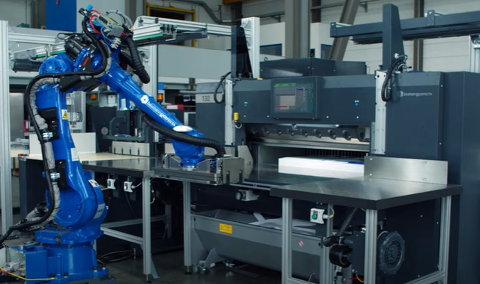
In the dynamic world of the graphic industry, automation is not just a trend but a necessity to stay competitive. The German group Baumann, known for its leadership in manufacturing machinery for this sector, has taken a step further with the launch of its fully automated paper cutting system under the baumannperfecta brand. Thanks to
Automation has become a crucial tool for increasing efficiency and reducing costs in various sectors. However, it is essential to ask the right questions before starting an automation project to ensure success and optimize return on investment. Here we explore three key questions that every company should consider before integrating automation into their processes. 1.
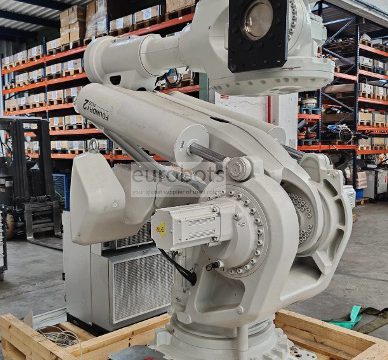
The ABB IRB 8700 is one of the most powerful and robust industrial robots available on the market. Designed for heavy-duty tasks and applications requiring high precision and payload, the IRB 8700 excels in multiple industries, from automotive to aerospace, thanks to its efficiency, speed, and ability to handle large weights. URT, as an authorized
ENORM Biofactory and KUKA Hygienic Oil Robots In an industrial warehouse in Denmark, 50 kilometers southwest of the city of Aarhus, an unusual but crucial spectacle for the future of food is unfolding: ENORM Biofactory, the largest commercial insect farm in Scandinavia. Why insects? Because these small creatures could be the key to addressing global