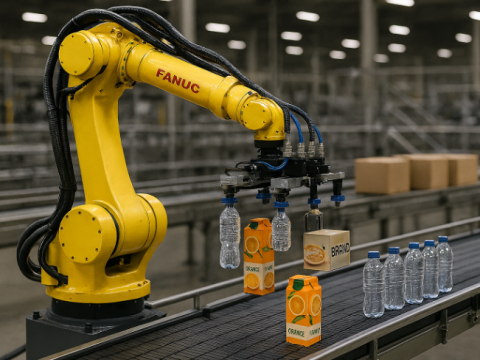
Yes, it is absolutely possible to successfully automate a line that handles a wide variety of packaging formats — but there is no single robot that can solve every situation on its own. The right choice depends on: available space product fragility geometry and weight frequency and complexity of format changeovers When these criteria are
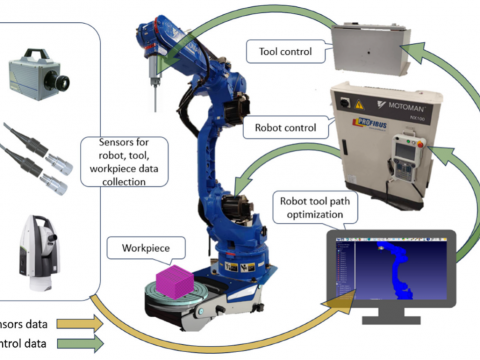
Simulation always looks calm. Everything flows. Nothing vibrates. Nothing shifts. No surprises. On screen, the robot never hesitates. That’s why, when the system moves from the digital environment to the real plant, the contrast is often brutal. The first contact with the real material — the one with history, moisture, internal stresses, inherited tolerances —
Implementing robotic automation in an industrial plant is not just about purchasing a robot or a cell — it’s about measuring whether it is truly delivering the expected benefits in productivity, quality, and cost reduction. To do this, it is essential to define and track Key Performance Indicators (KPIs) that validate the impact of automation
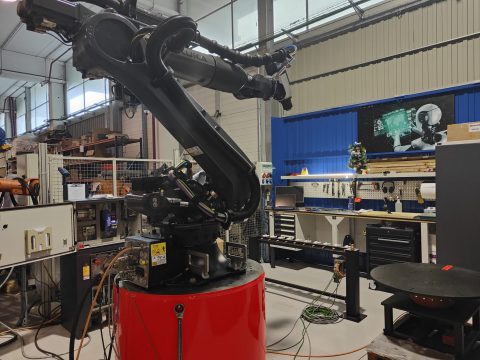
In many workshops, the same dilemma repeats itself: should you buy a new robot or modernize the one already installed? With advances in controllers, sensors, software, and mechatronics, older robots can be brought back to life effectively. The key is knowing when refurbishment makes sense— and when it’s time to replace. Why consider modernization? A
From the fear of depending on the integrator to true autonomy on the shop floor: “What if only they know how to make it work?” When an automation project is nearing its end, a silent concern often appears: “After the integrators leave, who keeps the knowledge?” It’s not a technical question. It’s a human question,
Choosing the right spindle for a robotic milling cell is not about buying “the most powerful one” and calling it a day. Several factors are involved: the application (material, tool, MRR), the rpm/torque window, the tool interface, cooling/duty‑cycle, and in robotics the weight and moments that the robot arm must withstand. If these factors are
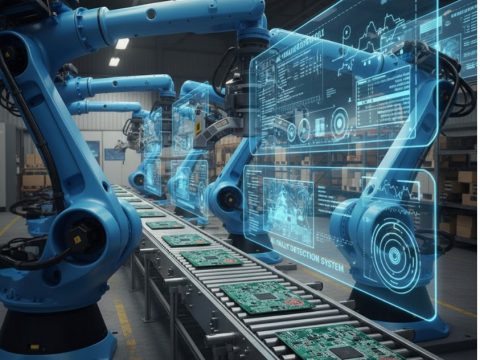
Failure detection in production has historically relied on a combination of human inspection, statistical controls, and traditional sensors. However, the increasing complexity of processes, the pressure to reduce scrap, and the need for real-time traceability have highlighted clear limits in these approaches. In this context, a frequently asked question on the shop floor is: How
It’s a question that rarely appears at the beginning of a project. It usually comes after the first success: The cell works. Cycle times are stable. Quality is consistent. And for the first time, the team trusts the system. Then someone asks: “What if we double production?” It’s not an innocent question — it’s a
There’s an awkward moment in some automation projects when no one really wants to look too closely at the first batches. The parts come out quickly. The robot never stops. Productivity indicators look great. And yet… something feels off. The defect that used to appear sporadically now shows up with impeccable regularity. There’s no debate:
In today’s industrial market, both new and refurbished robots have a legitimate and distinct role within automation strategies. Neither option is universally better; instead, each suits particular technical, operational, and financial requirements. The right decision shouldn’t be based on personal preference, but should come from a careful, comparative analysis that takes into account measurable criteria