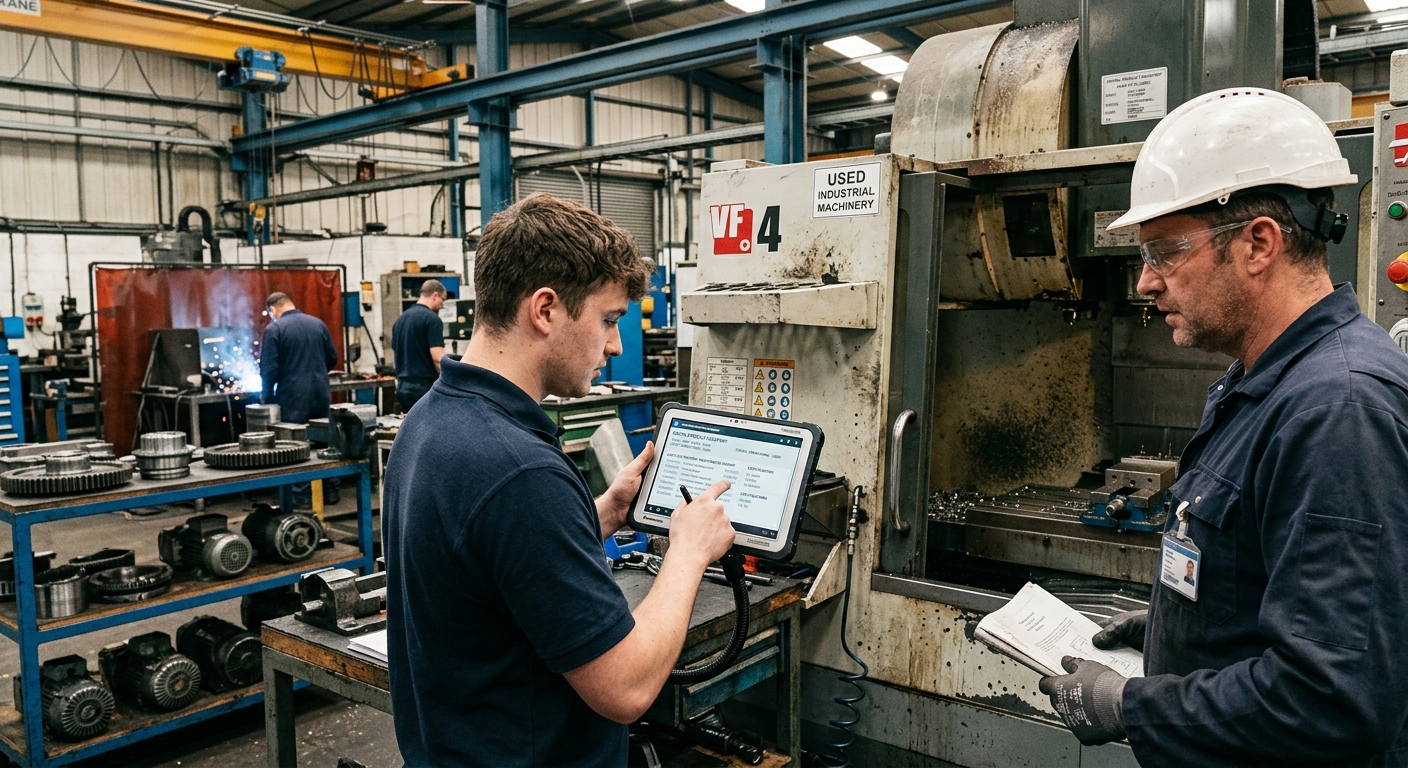
Used Industrial Robots Blog — Automation & Robotics Guides

When software-defined automation changes the industrial robot decision
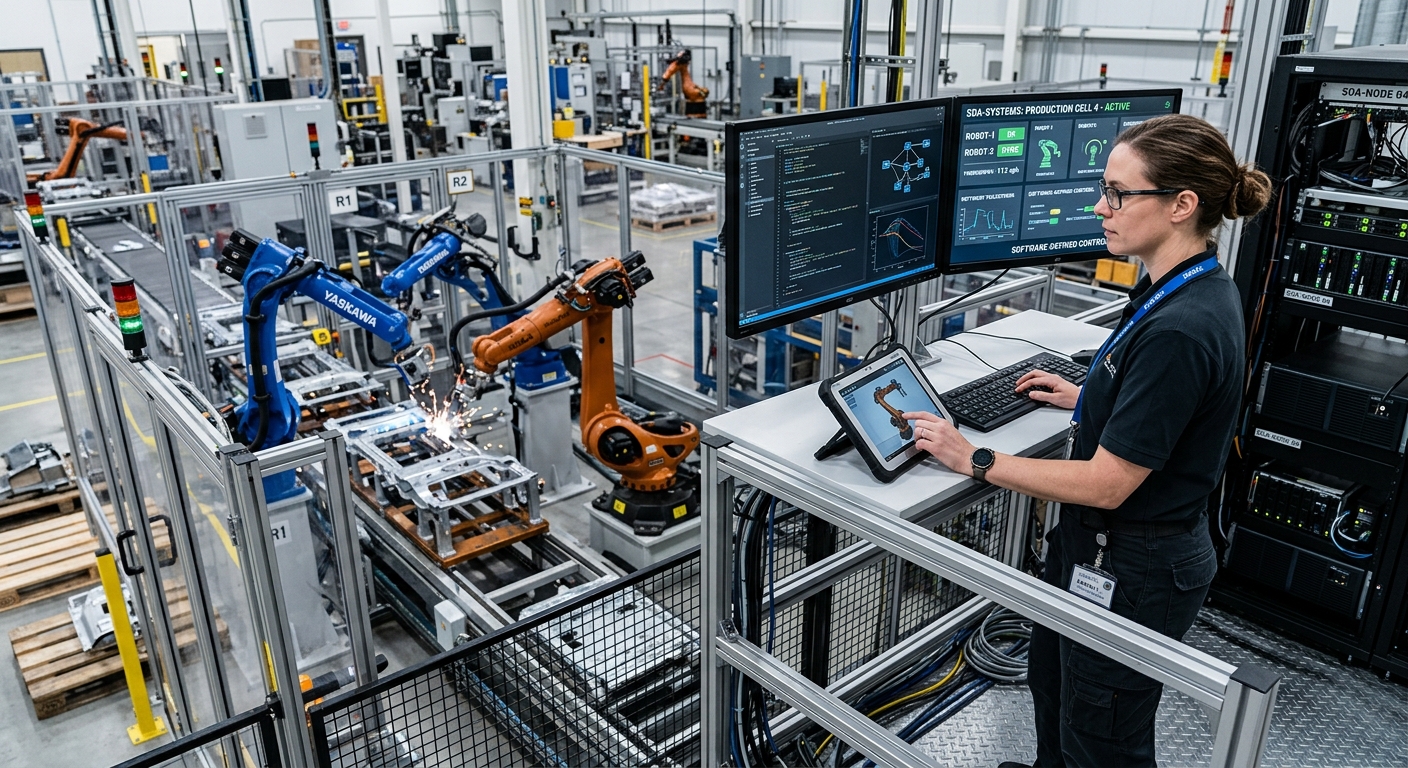
Engineer managing software-defined automation in an industrial robotic production cell

Software flexibility does not remove the physical constraints of a robot cell Software-defined automation can change how manufacturers configure, program, connect, and adapt industrial robots. However, it does not make the physical production process programmable by default. A plant may gain more flexibility at the software layer while tooling, fixtures, part presentation, robot reach, safety … Read more
When external axes make more sense than a larger industrial robot

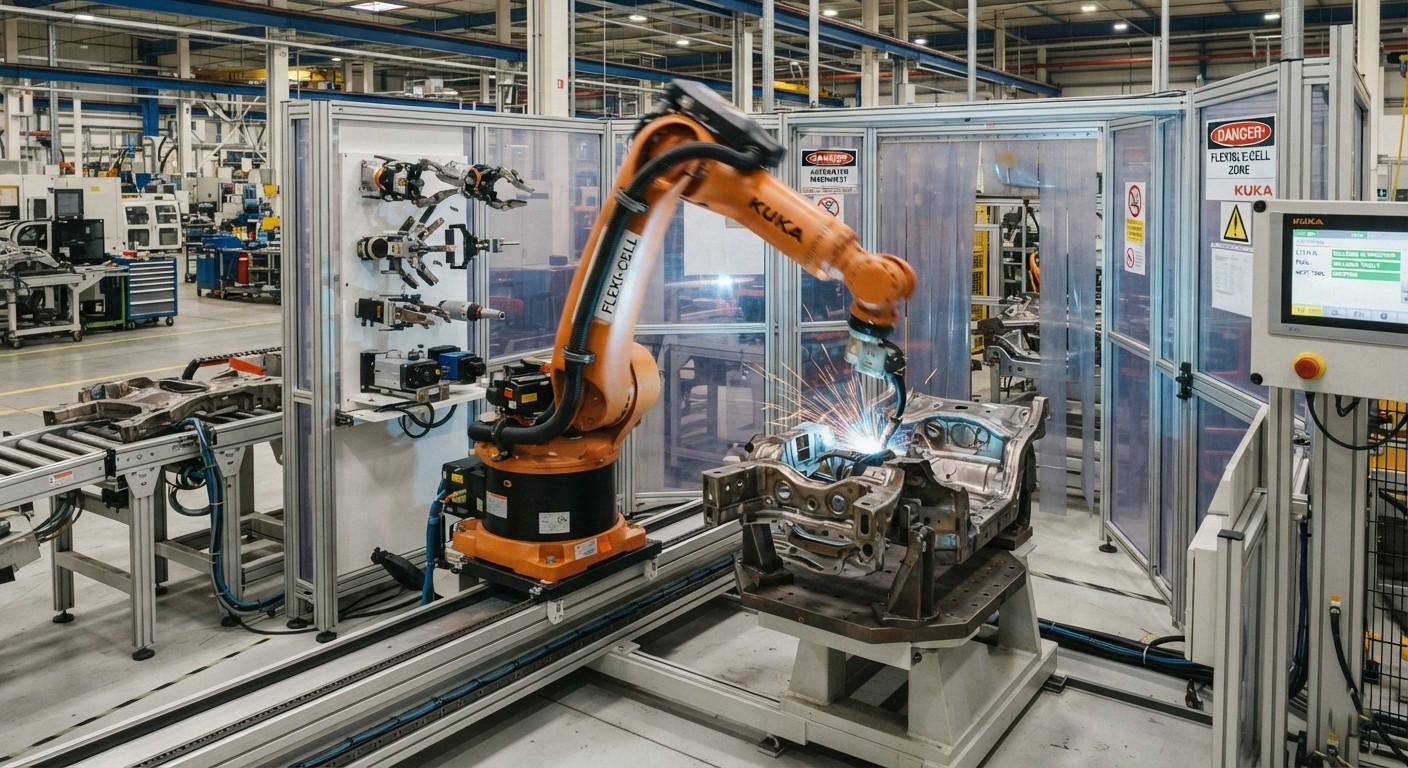
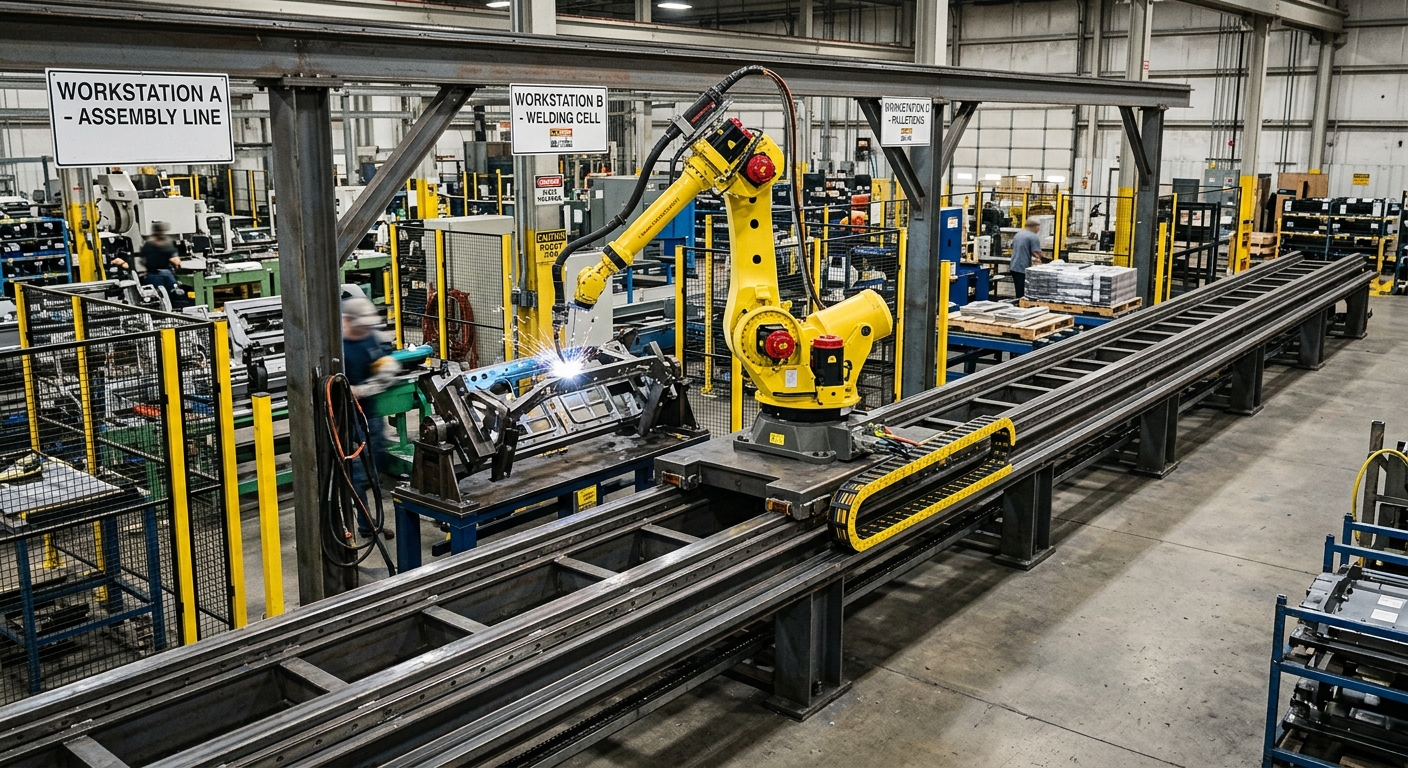
Industrial robot mounted on a linear external axis to reach multiple workstations

A larger working envelope may seem necessary when a robot cannot reach every process point. However, replacing the arm is not always the best solution. External axes for industrial robots can reposition the robot or workpiece and extend the usable production area. This approach can solve reach problems, but it also adds integration requirements. The … Read more

When a used robot makes sense for grinding and deburring metal parts

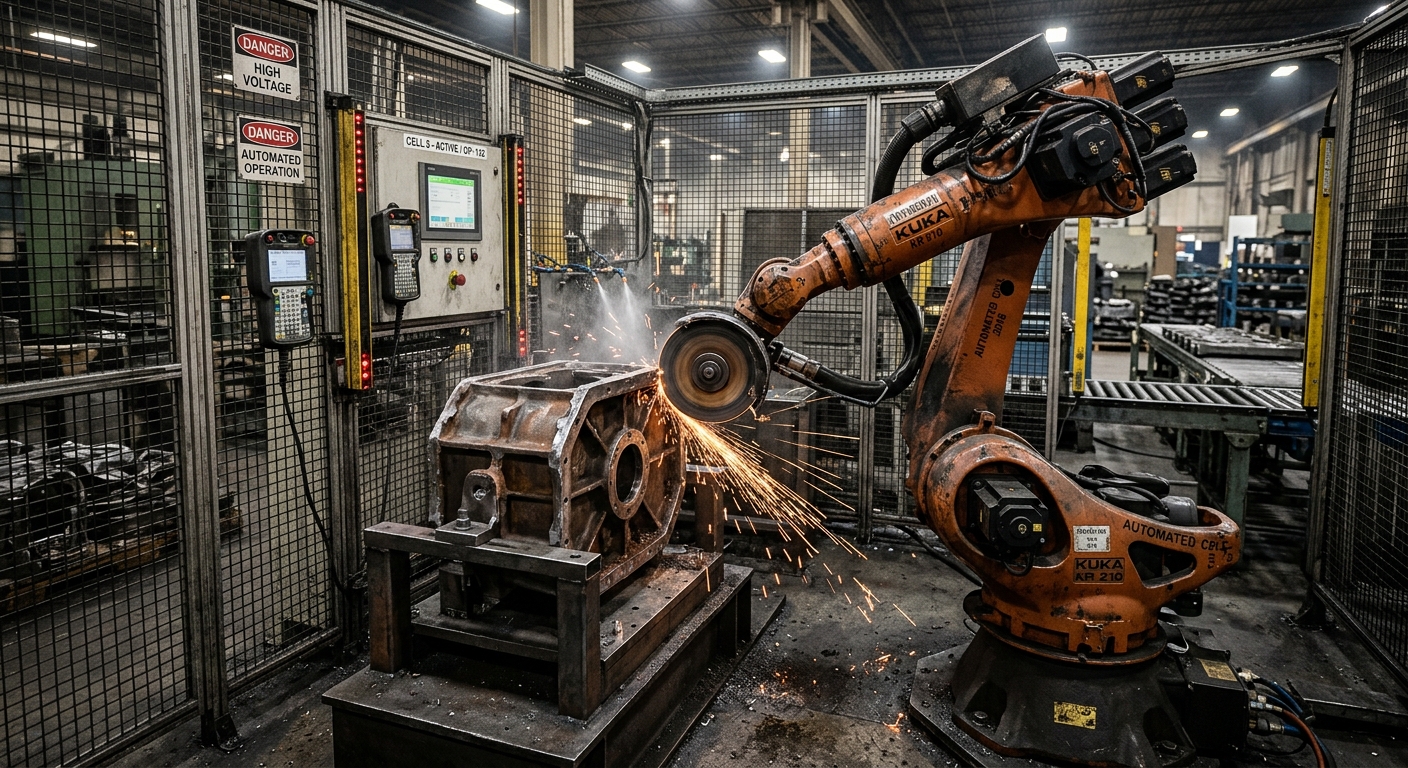
Used industrial robot grinding and deburring a metal component in an automated cell

A lower robot price does not make the grinding cell lower risk A project with used grinding robots can make financial sense when the equipment matches the process. The robot, controller, abrasive tooling, fixtures, and part presentation must work as one system. Problems start when a buyer focuses on the robot price and treats the … Read more

What one hour of robot cell downtime is really costing your plant

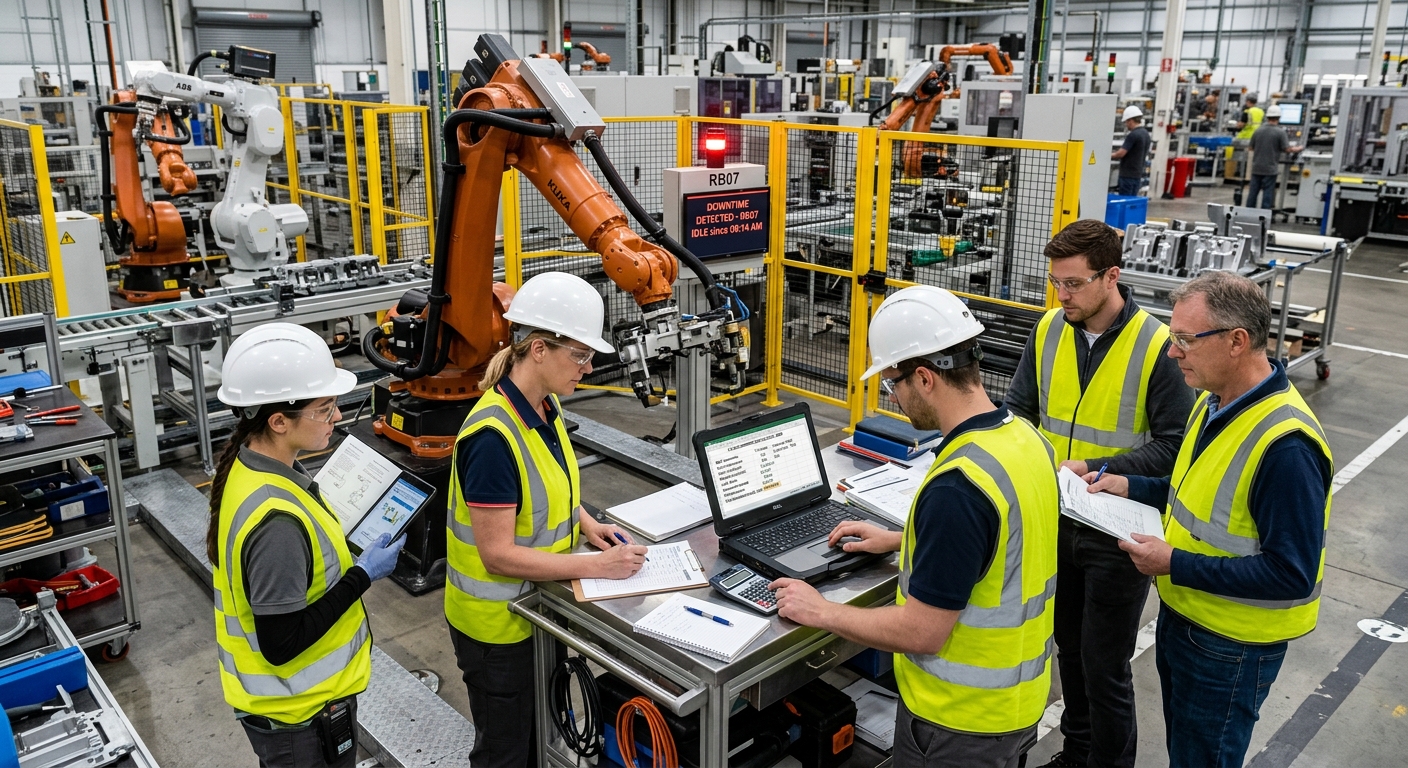
Production team calculating the hourly cost of downtime in an industrial robotic cell

The robot stopping is only the start of the cost A robot cell downtime cost calculation becomes misleading when a plant counts only technician time or when production is missed while the robot remains stopped. A one-hour fault can affect operators, upstream equipment, downstream operations, work in process, quality checks, maintenance resources, and the time … Read more

Robot gearbox wear: what you can verify before teardown

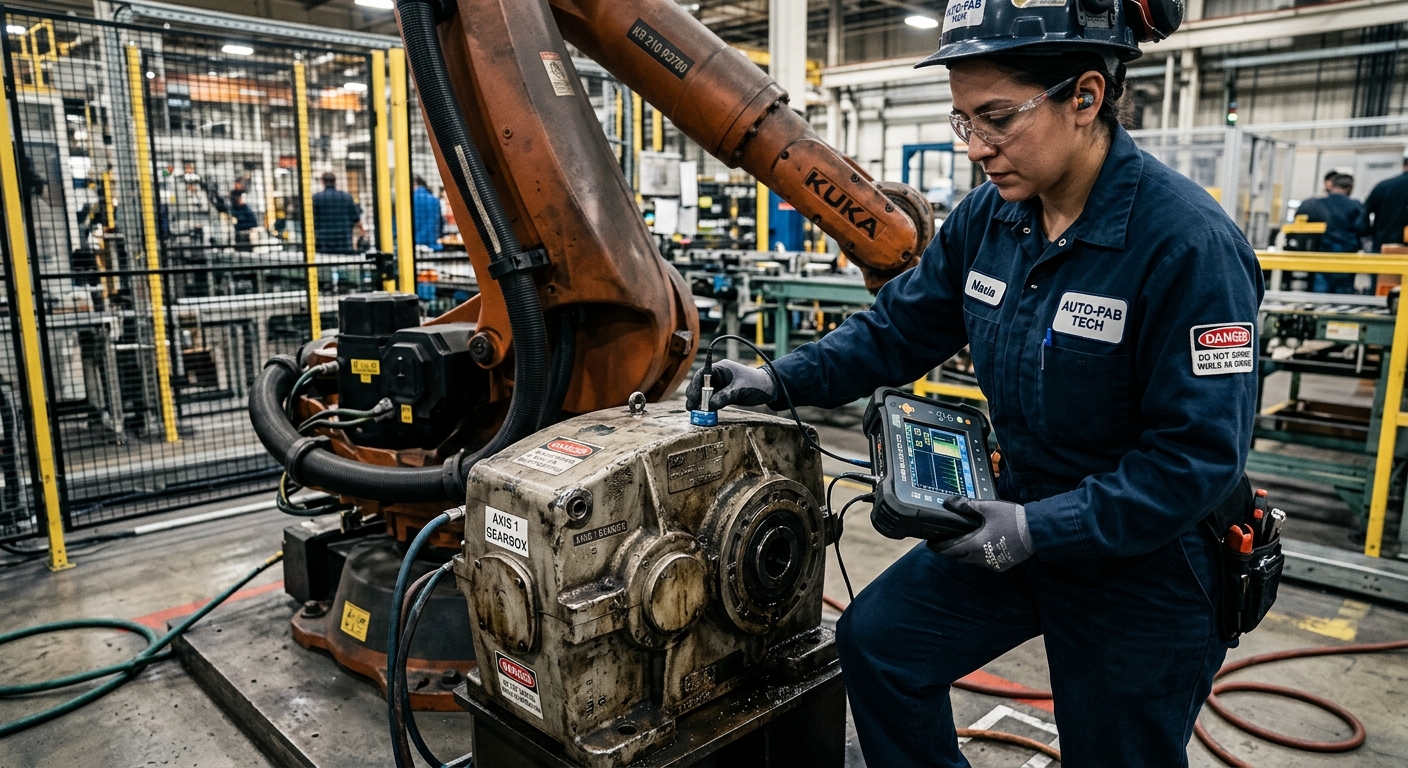
Maintenance technician checking an industrial robot gearbox for mechanical wear without dismantling the robot

Backlash can reveal robot gearbox wear without opening the robot Robot gearbox wear can become expensive long before a gearbox reaches obvious mechanical failure. Dismantling a robot simply to inspect internal components disrupts production. However, ignoring early changes in mechanical condition can turn a manageable maintenance issue into unplanned production downtime. The practical objective is … Read more

FANUC R-30iA vs R-30iB: what used robot buyers need to verify

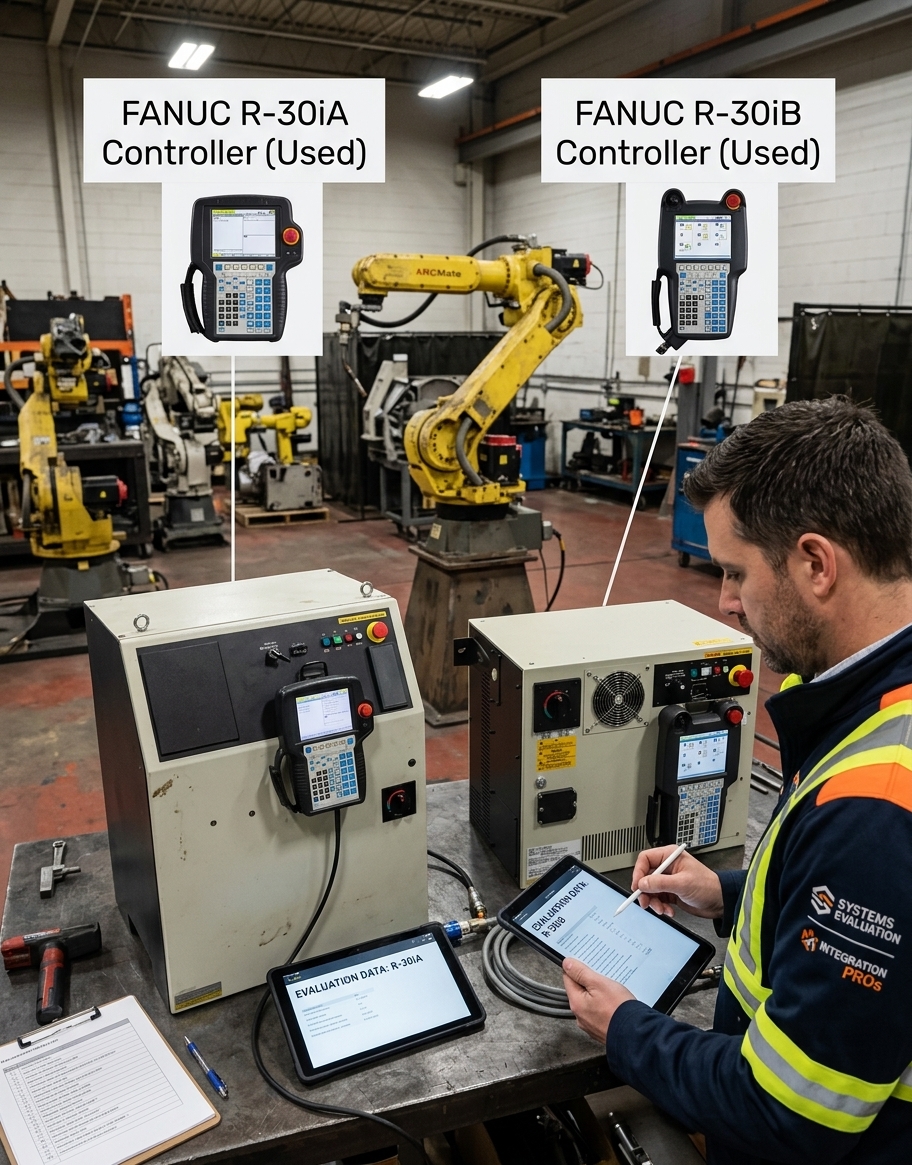
FANUC controller comparison between R-30iA and R-30iB systems for a used industrial robot purchase

A FANUC controller comparison between R-30iA and R-30iB should not start with the assumption that the later generation is automatically the better used-robot purchase. The controller affects robot compatibility, installed software, communications, safety architecture, maintenance knowledge, spare parts, backups, and integration work. A mechanically sound robot can still become an expensive project when its controller … Read more

Buying a used robot without a teach pendant: where the risk moves

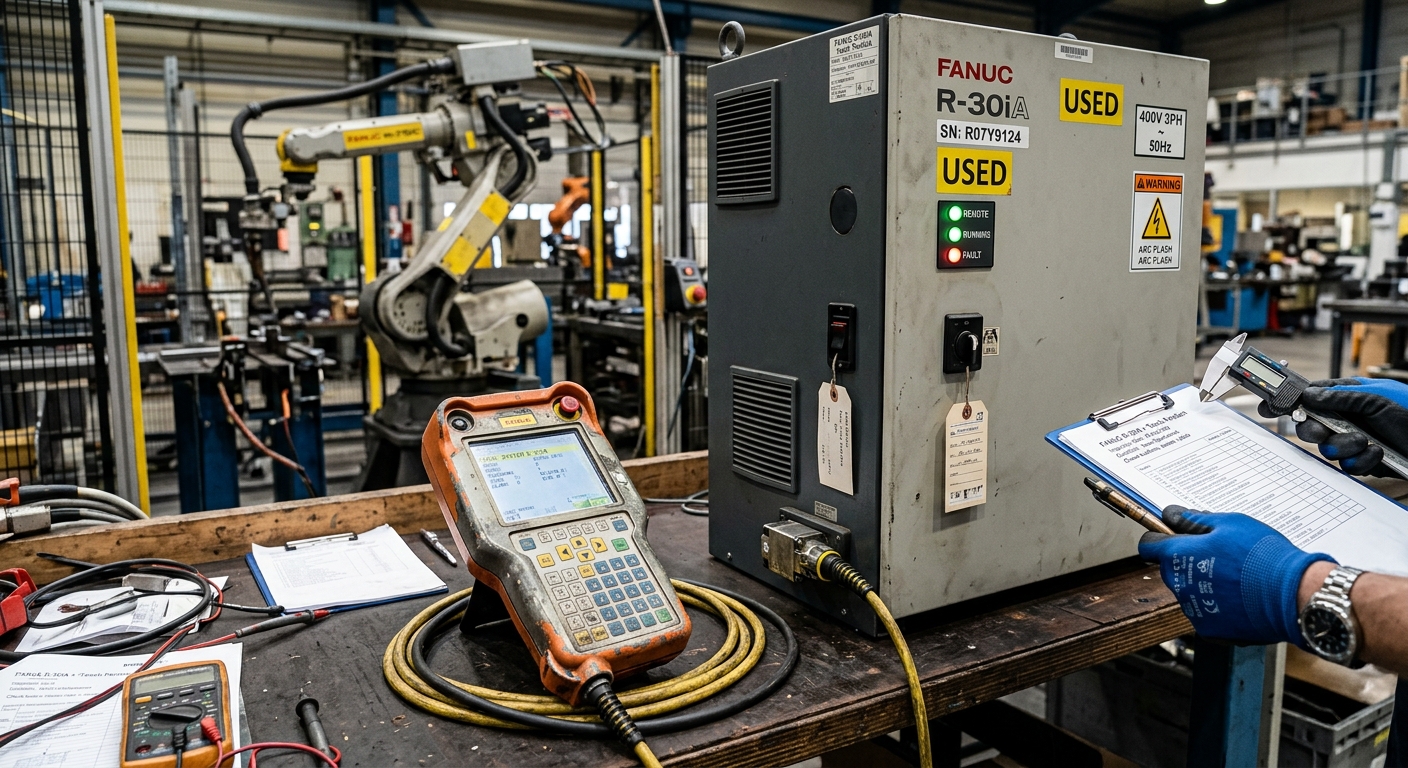
Used robot teach pendant beside an industrial robot controller during a pre-purchase inspection

A Missing Teach Pendant Changes More Than the Equipment List A used robot teach pendant can look like a secondary accessory when the buyer focuses on the robot arm, controller, and purchase price. In practice, the pendant can affect programming, commissioning, diagnostics, and recovery. The buyer should therefore determine whether the complete package supports the … Read more

Could digital product passports change how used industrial machinery is evaluated?

Digital product passports used to review lifecycle records for used industrial machinery

Digital Product Passports Could Reduce a Familiar Used-Equipment Risk For buyers of used industrial equipment, digital product passports matter only if they reduce uncertainty about a machine’s history. A digital record can provide useful evidence about configuration, maintenance, and previous changes. It cannot prove current mechanical condition or suitability for a new production process. The … Read more

When one industrial robot can serve multiple applications and when it cannot

Industrial robot applications using interchangeable tooling in a flexible manufacturing cell

Industrial Robot Applications Depend on More Than the Robot Arm Using the same robot for different industrial robot applications can increase the value of an existing automation asset. However, a robot that can physically perform another motion may still require significant engineering before it can support a new process. An industrial robot is only one … Read more

When Does Robotic Blasting Improve the Process Instead of Adding Complexity?

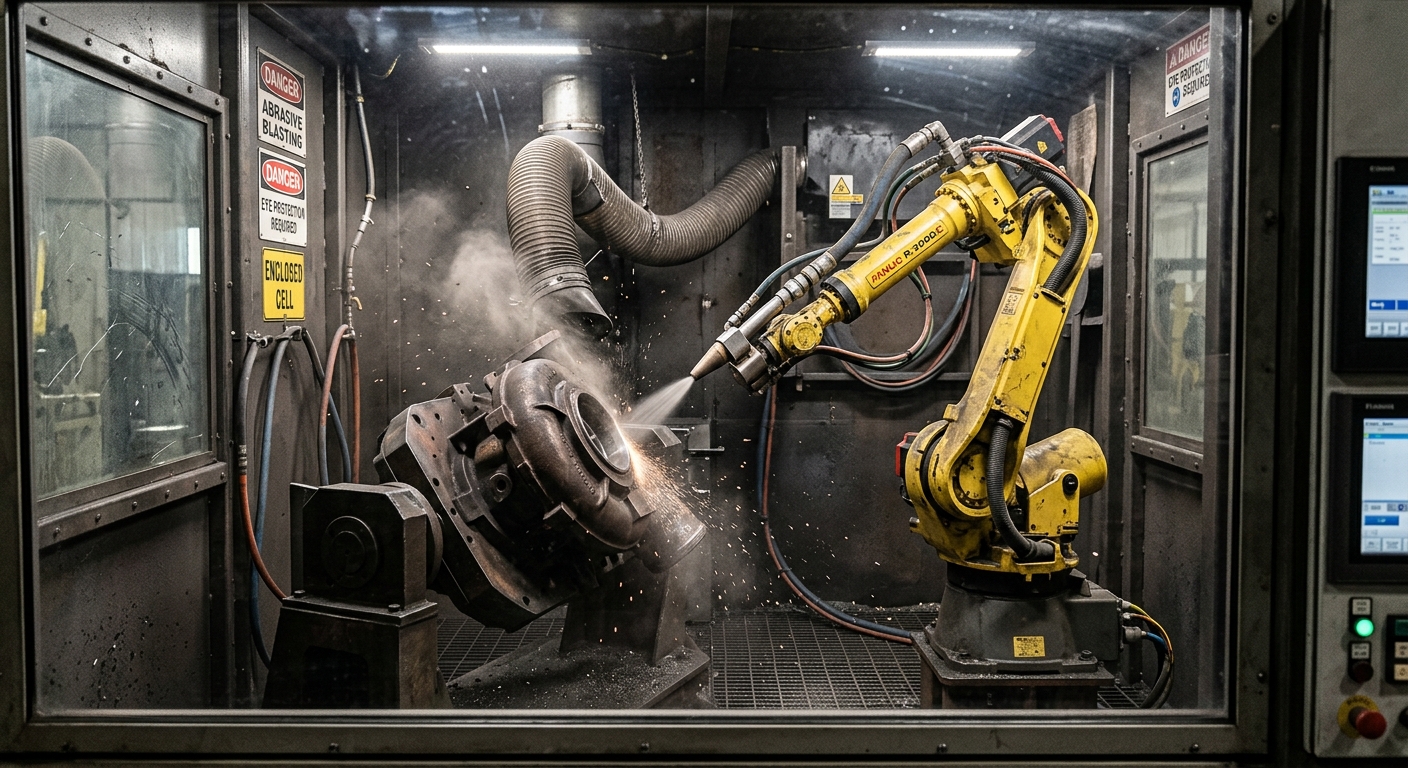
Industrial robot directing abrasive blasting at a metal component inside an enclosed production cell

A robotic sandblasting project can remove repetitive manual nozzle work, but robot motion alone does not control the surface result. Part location, abrasive delivery, nozzle condition, access, and incoming surface variation still affect the process. A robot can repeat the same path while the finished parts continue to vary. This creates the main decision for … Read more