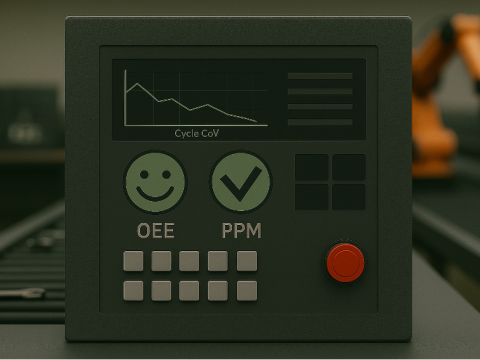
In many industrial companies, robotic automation is no longer pursued only to “produce more in less time.” Today, most plants already operate at stable demand levels, and the main operational challenge is variability, not capacity. When no increase in production volume is expected, decision-makers often ask: “How do we justify investing in a robot if
The difference between what the technical datasheets say and what actually happens on the shop floor “On paper it’s precise… but in real production?” One of the most frequent — and most honest — questions production teams ask is this: “Will the robot really be more precise than what we do today?” It’s not a
In today’s industrial market, both new and refurbished robots have a legitimate and distinct role within automation strategies. Neither option is universally better; instead, each suits particular technical, operational, and financial requirements. The right decision shouldn’t be based on personal preference, but should come from a careful, comparative analysis that takes into account measurable criteria