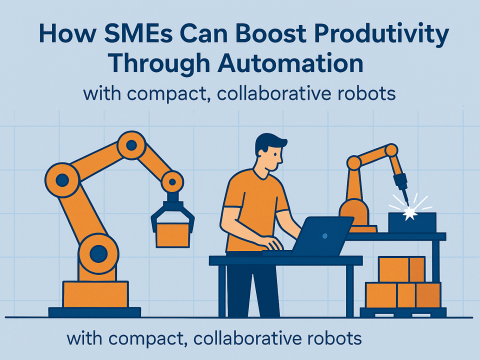
In today’s ever-evolving industrial landscape, the traditional image of massive factories filled with sprawling machinery is giving way to a new reality. Small and medium-sized enterprises (SMEs) are now discovering that robotics is no longer the privilege of large multinationals. Thanks to technological advances, compact and collaborative robots are revolutionizing productivity even in tight spaces,
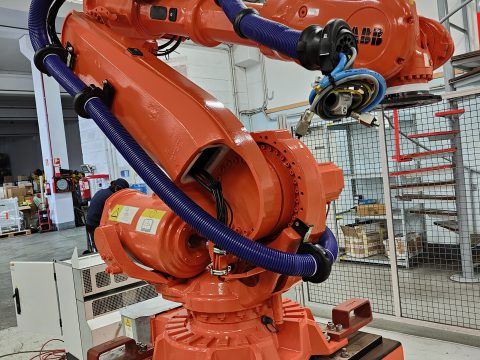
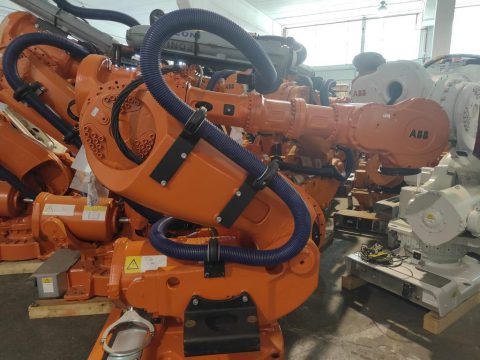
When we think of industrial robots, we often picture a mechanical arm lifting heavy objects. The ABB IRB 6640 3.2-130 certainly fits that image—it’s a robust piece of machinery capable of handling loads of up to 130 kg across a reach of 3.2 meters. But its true value lies in the advanced technology embedded within,
The advancement of industrial automation demands robotic solutions that combine strength, precision, and adaptability. Introduced in November 2024, the FANUC M-950iA/500 marks a significant evolution in heavy-duty handling robots. It’s specifically designed to tackle complex challenges in industries such as automotive manufacturing, battery production, and metal construction. With a payload capacity of up to 500
Automating a production process is never a simple or immediate decision. Many companies face understandable doubts: can a robot truly adapt to the specific needs of my production line? And more importantly, will it deliver tangible benefits? At UsedRobotsTrade, we understand these concerns, which is why we guide businesses through a thoughtful evaluation process to help
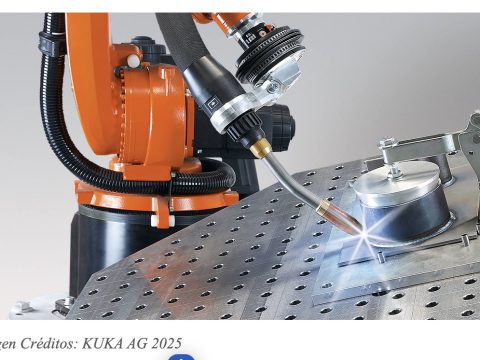
In recent years, industrial process automation has made significant strides, and welding is no exception. KUKA, a leader in robotic solutions, offers a range of gas-shielded welding robots known for their precision, efficiency, and adaptability, meeting the diverse needs of modern industry. KUKA provides a wide selection of robots specifically designed for gas-shielded welding processes,
In recent years, industrial process automation has undergone remarkable advancements, and one of the most significant developments is the implementation of automated cells for ablation. These systems integrate cutting-edge technologies to enhance efficiency, precision, and sustainability across a wide range of industrial applications. Ablation is a process that involves the controlled removal of material from
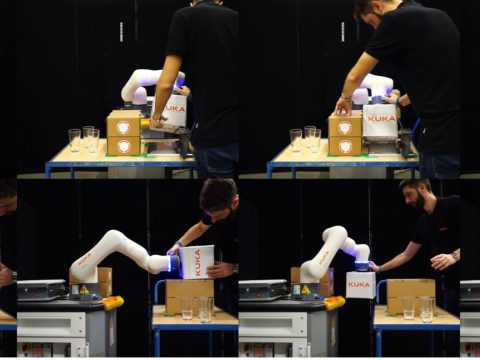
Industrial Automation: Overcoming Challenges for SMEs with the OPERA Project Industrial automation has been a cornerstone in the evolution of modern manufacturing. However, its effective implementation in small and medium-sized enterprises (SMEs) has faced significant challenges, such as the complexity of programming and system integration. The OPERA project, led by KUKA in collaboration with the
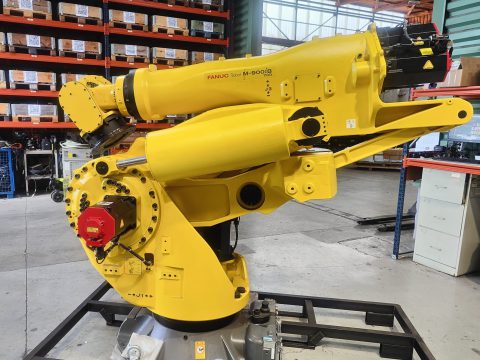
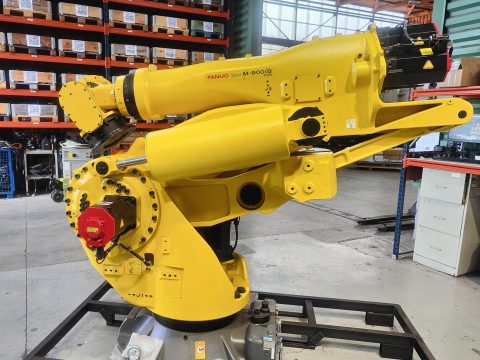
In the growing demand for automation systems that combine strength, reach, and high-level control, Fanuc continues to consolidate its leadership with versatile and robust solutions. A standout example is the M-900iB industrial robot, equipped with the R-30iB controller, a combination that effectively meets the needs of sectors such as automotive, steel, large part handling, and
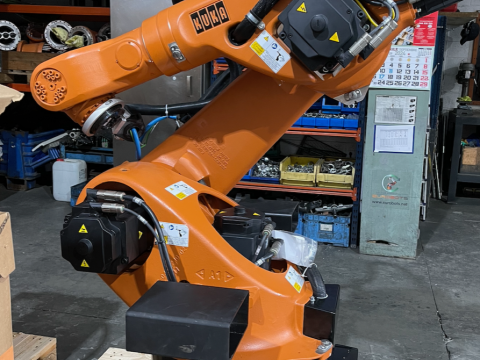
Industrial automation continues to advance as the backbone of modern production. In this context, UsedRobotsTrade offers a complete and optimized solution for welding processes: a system composed of the KUKA KR30-3 robot, a 3-axis positioner table, and a Megmeet Artsen Plus 500A welding source, designed to integrate quickly, reliably, and economically into production environments across
Advanced sealing technology has evolved from being merely a protective element in industrial robotics to becoming a key factor in enhancing the performance and longevity of robots. In environments where machines operate under extreme conditions and in complex applications, sealing solutions evolve to ensure efficiency, reduce component wear, and optimize maintenance costs. Traditional industrial seals,