
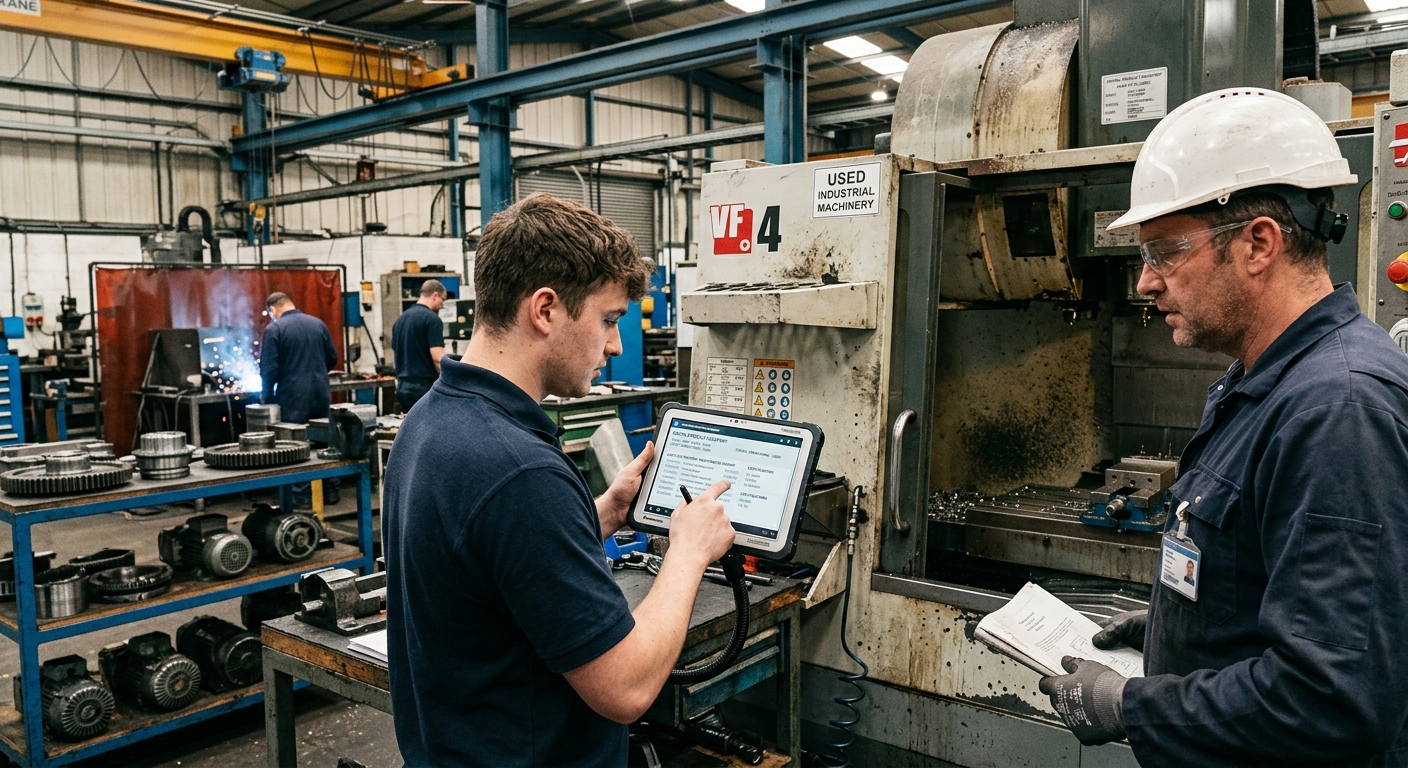
Digital Product Passports Could Reduce a Familiar Used-Equipment Risk
For buyers of used industrial equipment, digital product passports matter only if they reduce uncertainty about a machine’s history. A digital record can provide useful evidence about configuration, maintenance, and previous changes. It cannot prove current mechanical condition or suitability for a new production process.
The practical question is whether reliable information can remain connected to a machine throughout its operating life. Industrial assets may change owners, applications, components, and production sites. Each change can create gaps between the original documentation and the equipment that eventually reaches the secondary market.
Digital product passports could make that history easier to follow. Their value would depend on the quality, continuity and accessibility of the information behind them.
What Digital Product Passports Could Change for Used Machinery
Used machinery creates an information problem that buyers do not face to the same degree with new equipment. A machine may have operated in several plants. Previous owners may also have modified, repaired, or upgraded it after commissioning.
Documentation does not always follow those changes. Maintenance records may remain in a local system. An integrator may hold configuration documents, while another service provider keeps repair records.
Digital product passports could provide a more persistent information layer around the asset. Relevant lifecycle records could stay associated with the machine as it moves between owners.
That distinction matters because identifying a machine and assessing its condition are separate tasks. A digital passport may help establish what the asset is and what happened to it. A technical inspection must still determine its current condition.
Digital asset identity could become easier to preserve.
Industrial machinery can remain in production for many years. During that time, the surrounding production system may change several times.
A persistent digital identity could help buyers connect documentation with the correct physical machine. For industrial robots, this could help clarify the robot, controller, installed options, and other components that affect reuse.
Buyers would still need to verify the physical equipment. Digital product passports could make that verification more structured rather than replace it.
Lifecycle data could give maintenance records more context.
Maintenance records become valuable when buyers can connect them to the exact machine. They also need to know what work took place and which components were affected.
A lifecycle record could preserve selected service events and component changes. That information could give buyers more context before they inspect the equipment.
Documented maintenance still does not equal current machine condition. A previous component replacement tells the buyer what happened at that time. It does not establish the condition of the complete machine today.
Why Digital Product Passports Matter for Used Industrial Robots
Industrial robots show why lifecycle information could become valuable in the secondary market. The robot arm alone rarely determines whether a used system is a sensible purchase.
The controller, software, safety architecture, communication interfaces, and available documentation can affect the project. Tooling, application history and spare-parts availability may also change the final cost.
URT’s guidance on evaluating refurbished robots before purchase therefore looks beyond the initial equipment price. Digital product passports could strengthen that evaluation by providing additional history.
Consider a robot that has changed applications during its working life. The current equipment may differ substantially from its original configuration. A previous owner may have changed tooling, software, peripheral equipment, or controller options.
A useful digital passport would need to reflect those changes. Recording only the original factory configuration would give a secondary-market buyer an incomplete picture.
Configuration history could expose integration risks earlier.
A buyer can identify the correct robot model and still encounter an integration problem. Controller generation, software dependencies, and installed options can affect compatibility.
The same applies to communication interfaces and safety architecture. These factors can determine how much engineering work the receiving plant needs before production can start.
That is why buyers should evaluate refurbished robot compatibility with existing systems before reducing the decision to price and condition.
Digital product passports could make some compatibility questions visible earlier. A reliable configuration history may help engineering teams identify potential conflicts before they commit resources to detailed integration work.
Historical compatibility does not guarantee compatibility with a new cell. Engineers must still compare the installed equipment with the receiving plant’s systems and process requirements.
Digital Product Passports Do Not Replace Technical Inspection
Better documentation does not automatically mean better equipment. This is one of the most important limitations when evaluating digital product passports for used machinery.
A machine can have detailed lifecycle records and still be unsuitable for a particular application. Wear, damage, obsolete components, or configuration restrictions may remain even when documentation is complete.
Used-equipment evaluation therefore needs two types of evidence. Historical information explains what is known about the machine’s past. Inspection and engineering analysis establish whether its present condition fits the proposed use.
This distinction becomes especially important with refurbished equipment. Refurbishment may change the machine substantially. A supplier may replace components, modernize systems, or prepare the equipment for another application.
A useful digital passport should record meaningful changes without confusing past and present configurations. Buyers need to know which information still describes the machine they are considering.
Data Quality Could Limit Digital Product Passports
Attaching digital information to an industrial asset is only part of the challenge. Keeping that information accurate across the machine’s lifecycle is harder.
Different organizations control different pieces of the history. The manufacturer may hold original product information. The integrator may control cell-level documentation, while the operator maintains service records.
Repair companies and refurbishers may add another layer of information. A future buyer then needs to understand which records came from each source.
For this reason, useful digital product passports need more than a large quantity of data. Buyers must be able to distinguish original information from later modifications. They also need to identify important gaps.
Digital machinery records need clear ownership boundaries.
Not every piece of production data should travel with a used machine. A seller may have legitimate reasons to protect process recipes, production information, and proprietary programs.
Network information and customer-related data may also belong to the previous production environment. These records are different from information needed to establish the identity and history of the asset.
A practical passport system therefore needs boundaries. It should provide useful asset information without exposing unrelated operational data.
This issue is part of the wider move toward connected manufacturing. The International Federation of Robotics provides broader industry context on industrial robotics and automation as production systems become more digitally connected.
Incomplete digital product passport records will remain possible.
Many machines already in service predate modern digital lifecycle systems. Their historical records may therefore remain incomplete even if structured passports become more common.
Future equipment can also develop documentation gaps. A technician may perform an intervention without recording it correctly. A later owner may modify a system outside the original service network.
Buyers should therefore avoid interpreting missing data as proof that an event never occurred. They should also avoid treating a recorded event as proof of current condition.
Could Digital Product Passports Affect Used-Machinery Value?
Digital product passports could influence valuation when they reduce a specific purchasing uncertainty. A coherent history may make a machine easier to assess than equipment with unclear provenance.
Documentation remains only one part of total project risk. Buyers still need to account for transport, refurbishment, tooling, and programming. Integration, commissioning, training, and future support also affect the investment.
URT’s analysis of total cost of ownership for used versus new robots explains why acquisition price cannot represent the entire decision.
Better lifecycle information could improve that calculation indirectly. It may expose a controller limitation or a previous component change before purchase. Buyers can then include the issue in the project budget instead of finding it during commissioning.
The economic value comes from reducing identifiable uncertainty. A digital passport should not create an automatic price premium simply because one exists.
Where Digital Product Passports Could Be Overestimated
Digital product passports could become useful infrastructure for industrial machinery. They should not become a substitute for technical due diligence.
First, a passport cannot determine whether a machine fits a new production process. Engineers still need to evaluate tooling, working envelope, cycle requirements, and controller compatibility.
Second, a digital system cannot correct information that nobody recorded. Incorrect or outdated records can also create false confidence.
Third, older machines may have less digital history than newer equipment. That difference does not automatically make the older asset a worse purchase.
Finally, digital product passports cannot replace engineering judgment. Buyers still need to inspect the machine, verify its configuration, and estimate integration requirements.
The same principle applies when comparing equipment generations. The decision should reflect the complete technical and economic context. URT’s framework for choosing between new and refurbished robots examines that broader trade-off.
How Buyers Should Evaluate Digital Product Passport Data
Purchasing teams should not treat the presence of a digital passport as a quality certificate. Instead, they should ask whether the information resolves questions that would otherwise increase technical or commercial risk.
The following checks provide a practical way to assess digital product passport information during a used-equipment evaluation:
- Identity: Confirm that the digital record matches the exact physical machine and current configuration.
- Source: Identify who created important records, including the manufacturer, integrator, operator, service provider or refurbisher.
- Configuration: Separate the original configuration from later modifications and upgrades.
- Maintenance: Review relevant interventions without assuming that maintenance history proves current condition.
- Component changes: Identify replacements that could affect compatibility, support or future maintenance.
- Software: Check whether the records identify relevant controller or software changes and related dependencies.
- Gaps: Identify periods, ownership changes, or modifications that lack reliable documentation.
- Inspection: Compare important digital records with the physical equipment wherever practical.
- Integration: Evaluate the machine against the receiving production system rather than its previous application.
This approach keeps digital product passports in the correct role. They can provide another source of evidence during equipment evaluation, but they cannot replace the evaluation itself.
What Digital Product Passports Could Mean for the Used Machinery Market
One practical effect could be a change in buyer expectations. As structured lifecycle records become more common, buyers may expect clearer evidence about configuration, maintenance, and significant modifications.
Machines with uncertain histories may then require more investigation. The buyer may need additional inspection or engineering work before assigning an acceptable level of project risk.
Refurbishers could also use structured records to make their work easier to evaluate. They could document which components they inspected, replaced, or retained. They could also record important system updates.
This would help buyers distinguish documented refurbishment from a general claim about machine condition. The quality of the underlying work would still require appropriate verification.
Digital product passports may therefore improve transparency without eliminating uncertainty. For used-equipment buyers, that is a useful distinction.
The purchasing discipline should remain familiar: identify the asset, verify its condition and confirm compatibility. Buyers should also estimate integration work and calculate the complete project cost. Better digital records can support each step, but they should not make any of them optional.
FAQ
What are digital product passports for industrial machinery?
Digital product passports are structured digital records associated with a product or asset. For industrial machinery, their practical value would depend on which lifecycle, configuration, maintenance, and modification records remain connected to the physical machine.
What is the main benefit of digital product passports for used equipment?
The main potential benefit is better continuity of information across the machine’s lifecycle. Buyers may gain more context about configuration, maintenance, and previous changes before completing a technical inspection.
Can digital product passports prove that a used machine is in good condition?
No. Historical records can provide evidence about previous events, but they do not establish current mechanical or electrical condition. Buyers still need physical inspection and application-specific engineering checks.
Could digital product passports make used industrial robots easier to integrate?
They could reveal some integration risks earlier if the records contain reliable controller, software, and configuration information. Engineers must still verify compatibility with the receiving cell and its production requirements.
Will older machinery without digital product passports become unsuitable?
No. Older machines may simply predate structured digital lifecycle systems. Buyers can still evaluate them through documentation, physical inspection, configuration checks, and condition assessment.
Can digital product passports replace maintenance records?
They can provide a structure for maintenance information if relevant records are captured accurately. Their usefulness depends on completeness, traceability, and a reliable connection to the exact machine.
Could digital product passports increase the value of refurbished machinery?
They could support valuation when their information reduces uncertainty about configuration, refurbishment work, or maintenance history. The passport itself does not create value without useful and trustworthy records.
Talk to URT About Digital Product Passports and Used Equipment
If you are evaluating digital product passports and used industrial equipment, contact URT. We will give you a direct, technical answer based on your actual production requirements.