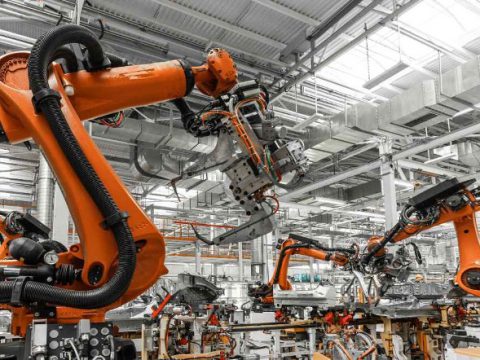
In many automation projects, the real bottleneck is not hardware or mechanical integration: it’s robot programming. Fine adjustments, repeated trials, last‑minute changes, and dependencies with other systems often extend commissioning far beyond expectations. A common question among engineering and production managers is: ➡️ What practical strategies can reduce robot programming time without sacrificing robustness or
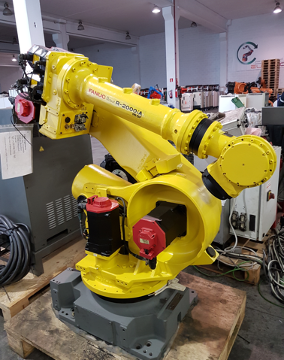
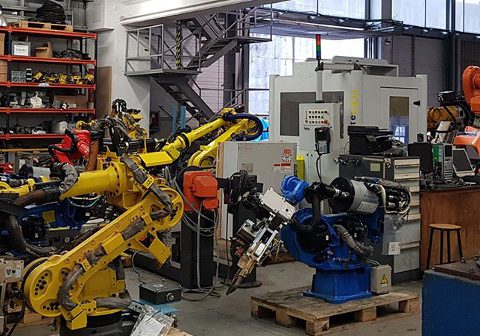
For years, factories were designed as rigid systems: fixed lines, dedicated stations and layouts that barely changed for an entire decade. But the days of mass, stable production are now behind us. The new industrial economy demands flexibility, customisation and immediate responsiveness. Thus, the concept of the reconfigurable factory was born, where refurbished industrial robots
Modular robot design is revolutionizing industrial automation by offering unprecedented flexibility and efficiency. This approach allows factories to quickly adapt to shifting market demands, streamline their processes, and reduce operational costs. What’s driving the change? The ability to easily reconfigure modular robots enables them to take on different tasks, making it easier for production lines
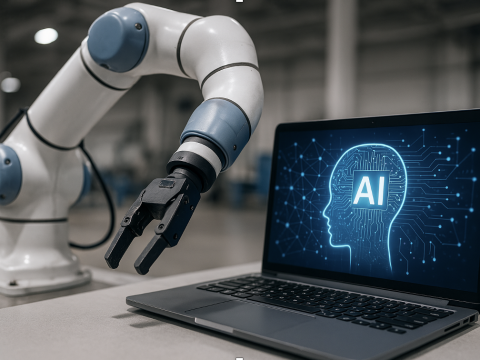
The convergence of artificial intelligence (AI) and robotic automation is profoundly reshaping modern industry. Far from being a passing trend, this synergy is redefining workflows, enhancing efficiency, and unlocking new possibilities across sectors such as manufacturing, logistics, healthcare, and agriculture. With an annual growth rate of 27.2% projected through 2028, investments in AI-powered robotics are
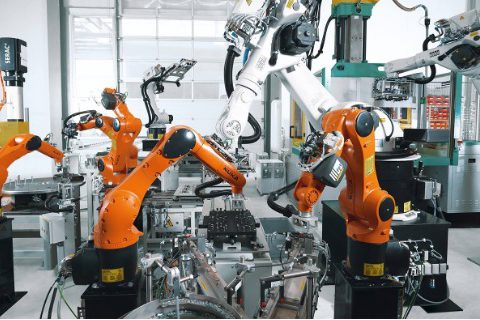
The global industry is undergoing a significant transformation known as Industry 4.0, which integrates advanced technologies such as automation, the Internet of Things (IoT), artificial intelligence (AI), robotics, and cyber-physical systems. In this landscape, companies like KUKA, a leading provider of industrial automation solutions, have been key in taking this evolution beyond traditional factories, enabling
In the era of Industry 4.0, manufacturing has evolved dramatically thanks to the integration of industrial robots. These advances have enabled companies not only to increase efficiency and productivity, but also to open the door to customised production and flexible manufacturing, concepts that were almost unthinkable a few decades ago. Here we explore how industrial