Machine Vision Inspection Without Bottlenecks: How to Automate Quality Control and Keep Production Moving

Industrial robot performing automated visual quality inspection on a production line

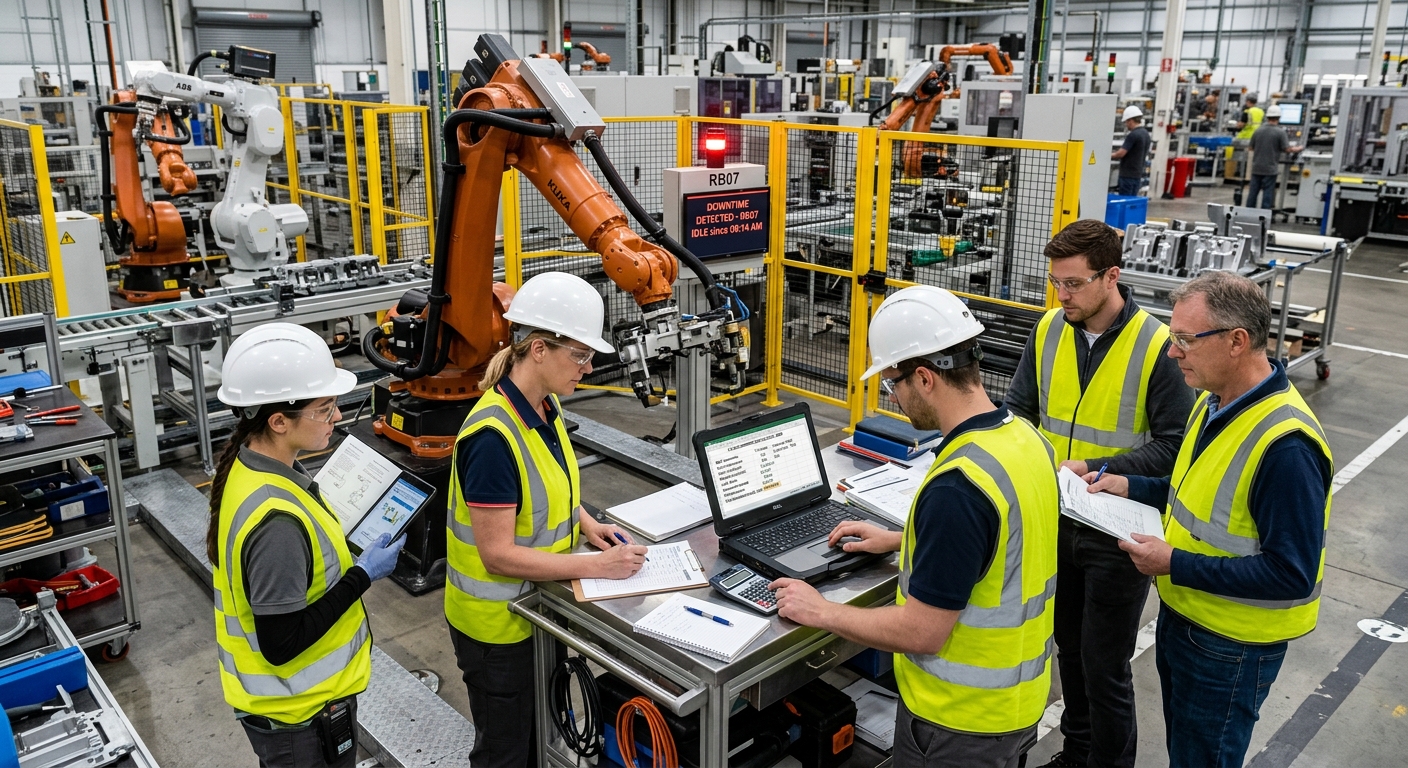
The Biggest Risk in Automated Quality Control Is Not Missing Defects Many manufacturers assume that quality control automation fails when cameras cannot detect defects accurately. In practice, the more common problem is different: the inspection system works, but production slows down. Cycle times increase, products queue up waiting for inspection results, and the quality system … Read more

Mining Automation Projects Often Fail for One Reason: The Wrong Process Was Chosen First

Mining automation delivers the strongest results when the right processes are selected first. Learn where industrial robots reduce risk most effectively.

The First Automation Decision in Mining Is Usually More Important Than the Robot The biggest risk in mining automation is not selecting the wrong robot. It is selecting the wrong process to automate first. Many mining companies identify a hazardous, labor-intensive, or costly operation and immediately focus on technology selection. The problem is that some … Read more

Automotive Robotics ROI: Which Processes Pay Fastest

Industrial robots automating automotive manufacturing processes on an assembly line

Why Automotive Robotics ROI Depends More on Process Selection Than Robot Cost The fastest automotive robotics ROI rarely comes from the most technologically advanced automation project. In most automotive plants, the strongest returns come from processes where repetitive labor, measurable downtime, quality variation, or throughput bottlenecks already create visible operational costs before the robot is … Read more

Small Business Automation: How to Start Without a Large Initial Investment

Small business automation allows companies to improve productivity and reduce manual work without requiring a large initial investment. A small business can begin automating operations without a large initial investment by focusing on simple, repetitive, and measurable processes; choosing modular solutions; considering collaborative robots, refurbished industrial robots, or inspected second‑hand equipment; and calculating return on … Read more

Industrial Robots in Pharma: Reducing Errors Safely

Industrial robots are increasingly central to pharmaceutical manufacturing strategies focused on quality, compliance, and operational resilience. Unlike other industries where automation is mainly driven by speed or labor costs, pharma automation is primarily about error reduction, repeatability, traceability, and risk control. When processes require consistent execution, minimal human contact, and complete documentation, robotic systems provide … Read more

Which process should you robotize first to achieve the fastest ROI

Production manager evaluating industrial automation process selection on a manufacturing floor

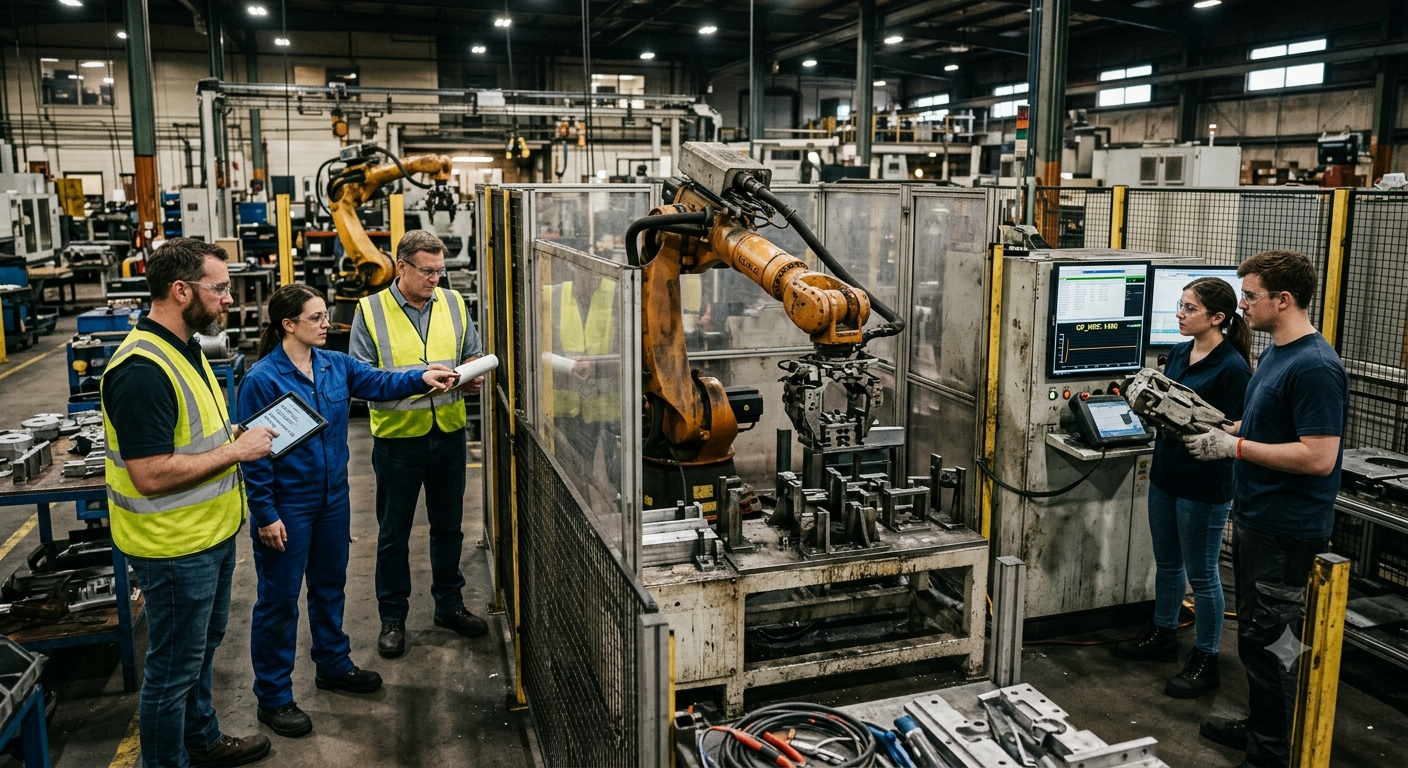
Choosing the first process to robotize in a manufacturing plant is one of the most consequential automation decisions a company makes — not because the first project is the largest, but because it sets the internal reference point for every project that follows. A first project that delivers clear, measurable results builds the organizational confidence … Read more

End of line: when to automate and when a semi-manual solution makes more sense

Robotic palletizing cell at the end of a production line in a food and beverage manufacturing facility

End of line automation is where most manufacturing plants first encounter a decision that is harder than it looks. The problem is visible — operators handling heavy loads repetitively, inconsistent pallet patterns, throughput that drops every time a format changes or a shift ends. The solution appears obvious: install a robot. But the companies that … Read more

Robotic automation KPIs to measure after implementation

Industrial robot control panel used to track robotic automation KPIs

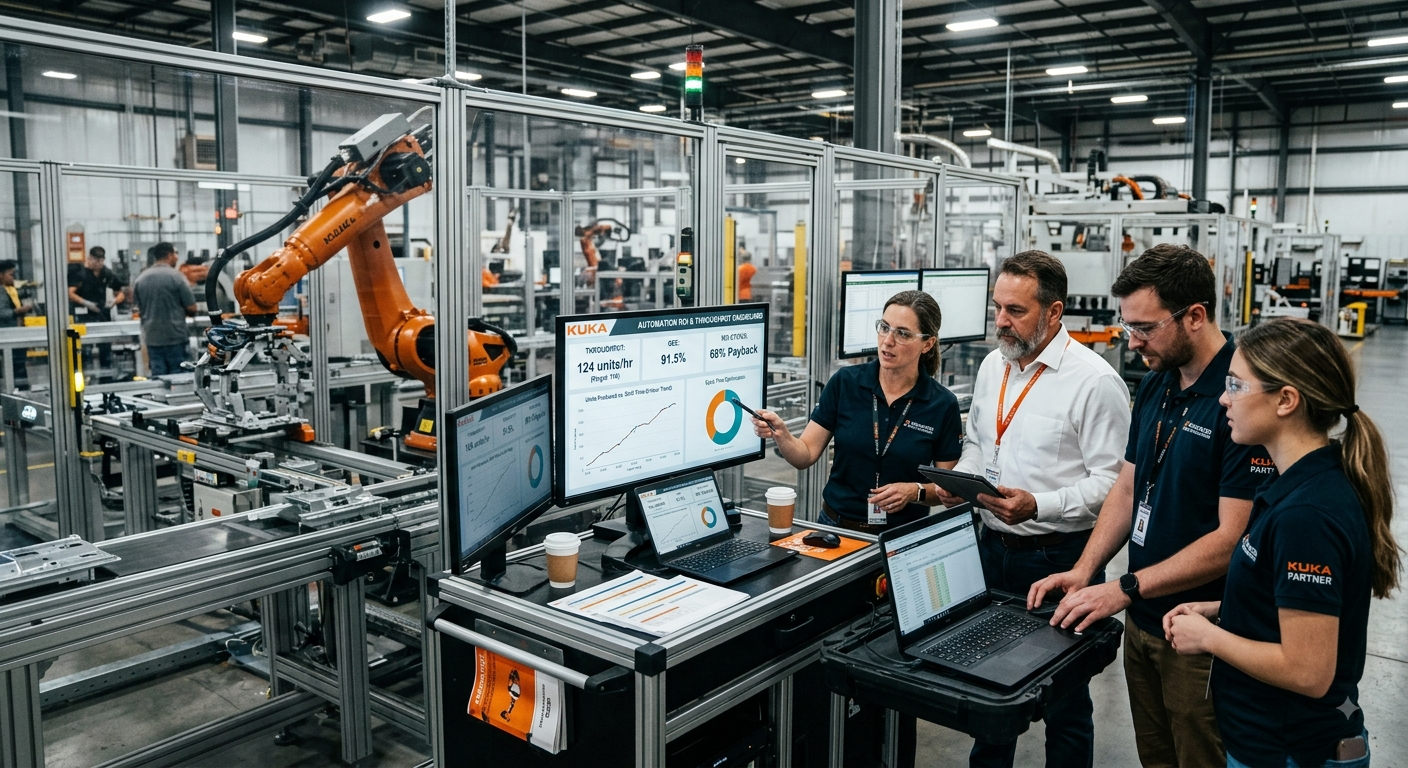
Implementing robotic automation in an industrial plant is not only about purchasing a robot or installing a cell. The real question is whether the system delivers measurable value after implementation. To evaluate that value, companies need clear robotic automation KPIs. These key performance indicators show whether automation is improving productivity, quality, availability, safety, cost control, … Read more

Can Your Process Become Collaborative Without Losing Productivity

Collaborative robotics has positioned itself as an attractive solution for many industries: promises of safety, flexibility, fast deployment, and the ability to work side by side with operators. However, on the shop floor a critical and completely legitimate question arises: How do I know if my process can truly become collaborative without sacrificing safety, production … Read more

How to Calculate the Real ROI When Replacing a CNC Machine with a Robot + Spindle

Robotic milling cell with industrial robot and high-speed spindle machining a part

Replacing a CNC machine with a robotic milling cell is not a simple upgrade decision. It is a strategic one. The financial case depends heavily on which specific costs and benefits are included in the calculation — and many standard ROI comparisons leave out the variables that most often determine whether the investment makes sense. … Read more