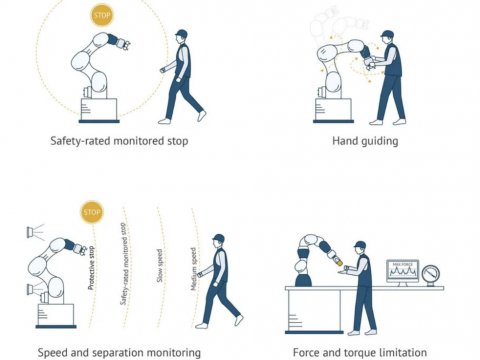
Collaborative robotics has positioned itself as an attractive solution for many industries: promises of safety, flexibility, fast deployment, and the ability to work side by side with operators. However, on the shop floor a critical and completely legitimate question arises: How do I know if my process can truly become collaborative without sacrificing safety, production
In the modern factory, the best of two worlds comes together: the robustness of traditional industrial robots and the flexibility of collaborative robots, or cobots. This fusion—a hybrid human-robot line—offers great advantages but also raises critical challenges: safety, ergonomics, production flow, and adaptability to change. For brands like KUKA, ABB, or FANUC, which you manage
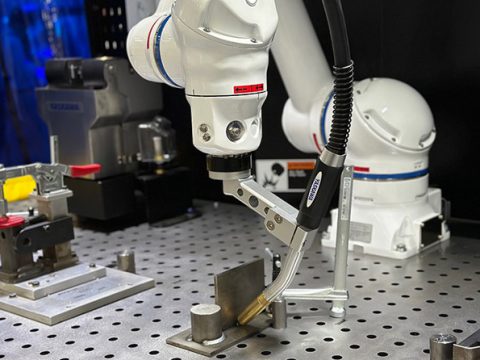
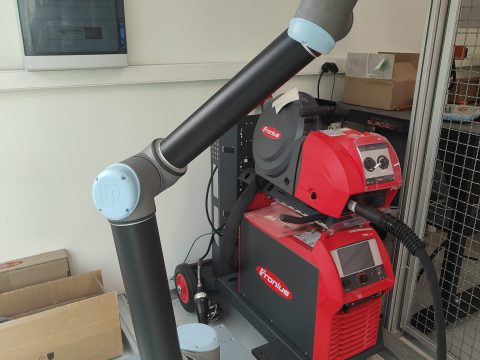
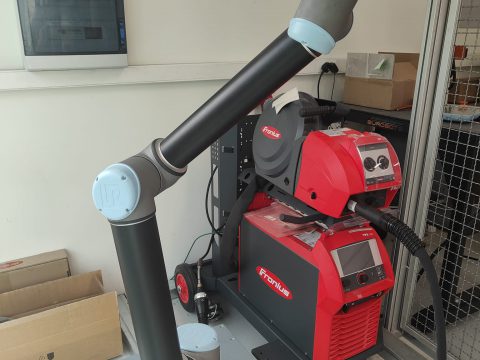
The welding industry, long associated with high-risk environments, is undergoing a profound transformation thanks to the rise of collaborative robotics. In modern welding facilities, safety is no longer just about regulatory compliance—it has become a cornerstone of operational efficiency and worker well-being. At the heart of this shift lies the strategic deployment of collaborative robots,
Collaborative robots like the UR10 are reshaping industrial painting in remarkable ways. One standout example is Brandt A/S, a Danish company with over 60 years of experience. In October 2024, the International Federation of Robotics (IFR) released a study highlighting how integrating UR10 cobots in finishing operations has enhanced precision, consistency, and efficiency across the
In the age of advanced automation, industrial robots have become indispensable players within production facilities. Their efficiency, precision, and ability to operate continuously are highly valued. Yet, with their growing presence comes a crucial responsibility: ensuring the safety of human operators who interact with these machines. Protecting robots and robotic cells is not merely about
The strategic alliance between Universal Robots (UR), a global leader in collaborative robots, and Nvidia, a prominent name in artificial intelligence and accelerated computing, is redefining the industrial robotics landscape. This collaboration has led to innovations that not only enhance the capabilities of existing cobots but also unlock new categories of applications that were previously
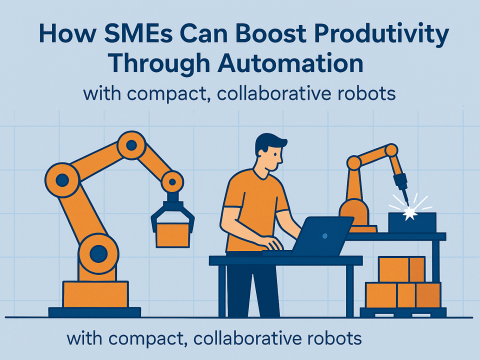
In today’s ever-evolving industrial landscape, the traditional image of massive factories filled with sprawling machinery is giving way to a new reality. Small and medium-sized enterprises (SMEs) are now discovering that robotics is no longer the privilege of large multinationals. Thanks to technological advances, compact and collaborative robots are revolutionizing productivity even in tight spaces,
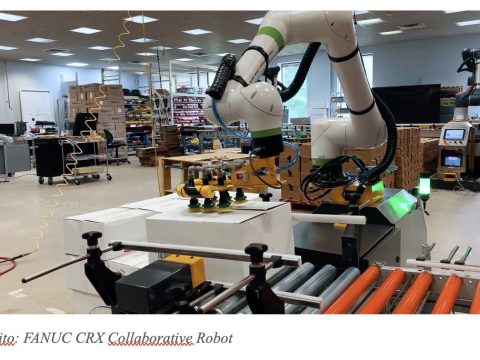
In the age of automation, collaborative robots—commonly known as “cobots”—have become indispensable allies in the industrial sector. FANUC, a global leader in robotic solutions, has developed a specialized range of cobots tailored for stacking and palletizing tasks. These innovations are reshaping industrial processes and significantly enhancing operational efficiency. Among FANUC’s standout cobots is the CRX-25iA,
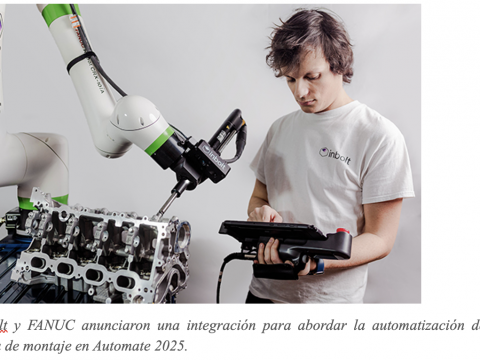
Detroit once again stood out as the epicenter of industrial innovation with the celebration of Automate 2025, North America’s most prominent event in automation, robotics, and advanced manufacturing. Among the many presentations that defined this year’s edition, one partnership stood out for its bold approach and transformative potential: the collaboration between Inbolt and FANUC. These
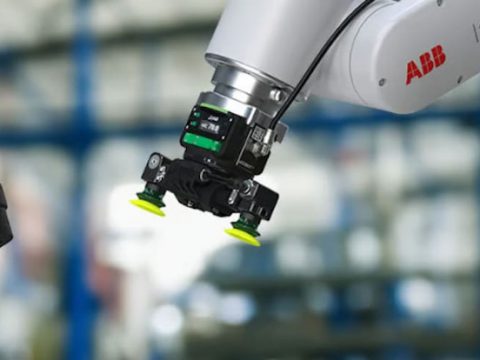
In the ever-evolving landscape of industrial automation, efficiency and adaptability have become essential pillars for success. Piab, a global leader in vacuum-based gripping solutions, has taken a significant step forward by offering its piCOBOT® and piCOBOT®L units in fully integrated versions for ABB’s GoFa collaborative robots. This development introduces true Plug & Play functionality, simplifying