Industrial robots, like any machinery, require regular maintenance. But the key question is: do we act before a failure occurs or after it? Predictive maintenance redefines efficiency by anticipating breakdowns and optimising resources. Corrective: The Traditional Model Corrective maintenance takes place after a failure: when a servomotor stops, an axis loses calibration or a controller
A recent video showcases a robotic cell featuring a KUKA KR30-3 mounted on a linear rail (track) and paired with two rotary positioners as part of an advanced handling or welding solution. This configuration is gaining ground as a flexible alternative for production lines, though it is not without challenges. Eurobots, as a provider of
Purchasing a robot is not simply a technical decision. In reality, it is a financial one. Many companies believe that the most expensive robot is the best, or that buying new is the safest way to “avoid risks”. However, when looked at from a business perspective, with numbers and strategy in mind, the reality is
The KUKA KR 510 R3080, part of KUKA’s QUANTEC/FORTEC family, is one of the most powerful high-payload industrial robots available on the market. Designed to handle extremely large and heavy parts—with a nominal payload of around 510 kg and a reach exceeding 3 meters—it offers a combination of strength, reach, and repeatability that makes it
Industrial recycling is undergoing a quiet but profound transformation. Until recently, the separation and processing of materials largely relied on traditional manual or mechanical methods. Today, thanks to robotics, these tasks are becoming automated, increasing efficiency and reducing workplace risks. What is truly innovative, however, is that much of this automation is being achieved using
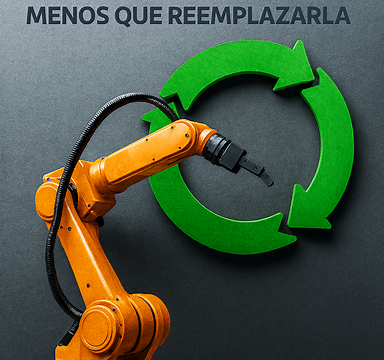
In the era of accelerated automation, many factories face the same dilemma: their robots work, but their control systems are outdated. The solution? Retrofitting. Modernising an obsolete industrial robot not only saves investment, it also prolongs its service life and improves its performance at a much lower cost than a new machine. What is robotic
In today’s industrial landscape, the demand for safer, more versatile, and easily integrable solutions has driven the rise of collaborative robotics. Collaborative robots, or cobots, allow humans and machines to work side by side without the need for complex physical barriers, opening up new possibilities across production lines, laboratories, small businesses, and highly customized environments.
At URT’s facilities in Zamudio, near Bilbao (Vizcaya), a precision test was recently carried out on the Fanuc M-20iA robot as part of the company’s industrial robot reconditioning process. The goal was to verify and certify that this model meets the highest standards of repeatability, positioning accuracy, and load response—key factors in demanding industrial environments.
Industrial inspection has evolved from being a “necessary cost” to becoming a true driver of productivity. Collaborative robotics and modular platforms now enable small and medium-sized enterprises, as well as mid-sized manufacturers, to integrate quality control cells with ease. This approach helps overcome barriers related to cost, complexity, and space—without requiring major investments. In this
FANUC, a global leader in industrial robotics, is reaffirming its dedication to technical training by becoming a Premium Sponsor of EuroSkills 2025, which will take place from September 9 to 13 in Herning, Denmark. This partnership reflects FANUC’s ongoing support for nurturing young talent in robotic systems integration. EuroSkills, part of the WorldSkills Europe network,