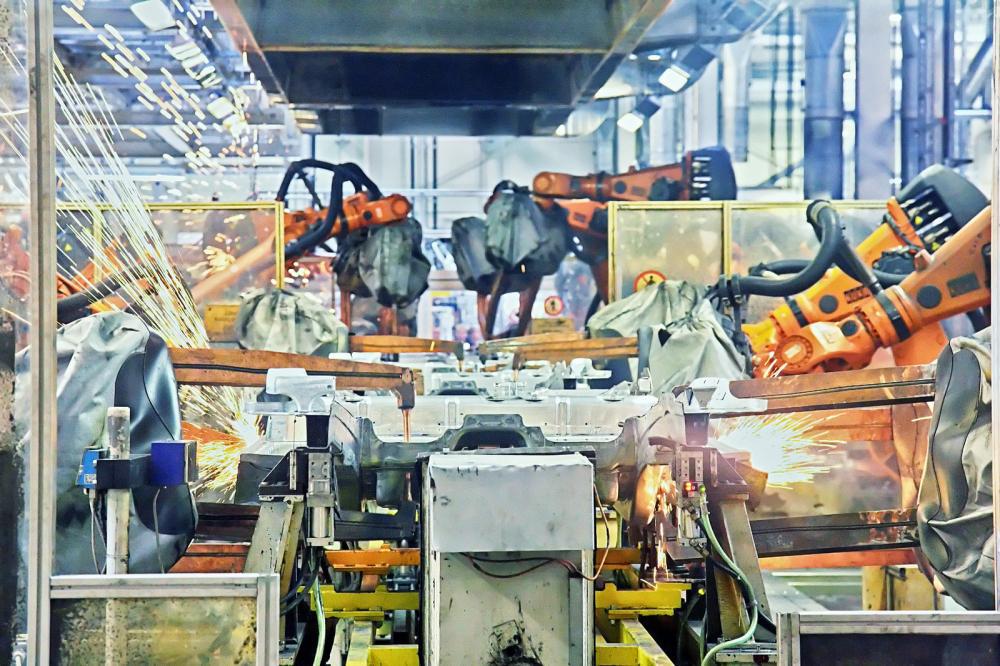
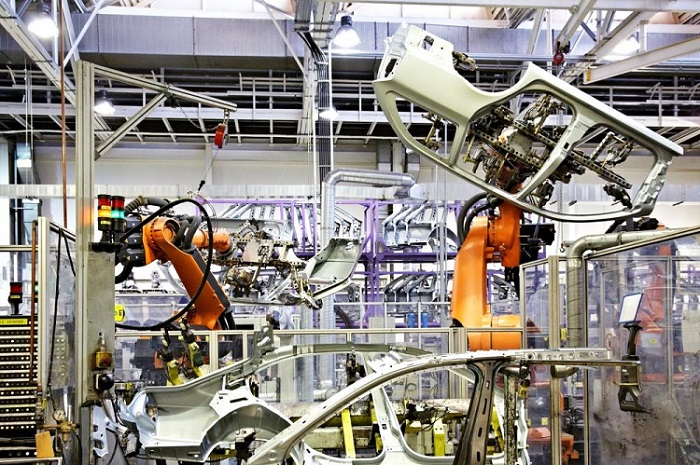
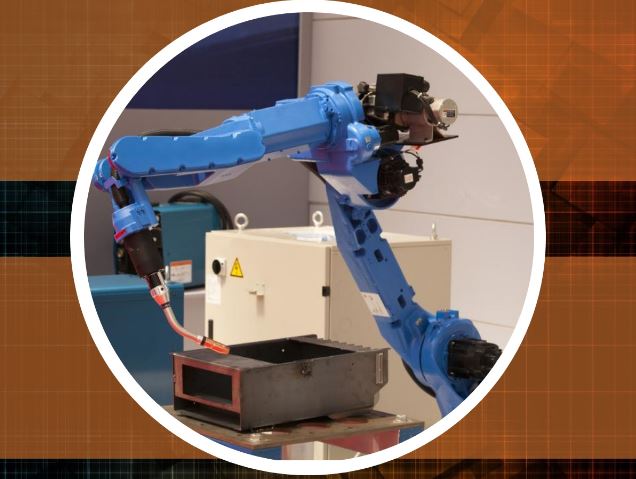
Currently, one of the most highly-requested applications is robotic welding, which is customised according to the client’s requirements. What welding cells do is make each weld solid, while allowing the robotic system and welding system to interact with each other and change how they operate automatically. In this way, they increase both the quality of the welding tasks and security, which makes it possible to also increase performance and speed, with lower costs for labour and materials and greater employee safety.
Industrial Applications
How industrial robots are used across manufacturing sectors — welding, palletizing, assembly, CNC tending, injection molding, painting and more.
Benefits Of Robotic Welding
Approximately ten years ago, it was very difficult to find skilled welders since many specialized operators had reached an age that prevented them from doing this type of work. This is where automation comes in, offering companies a solution for welding processes and working to help them with different repetitive tasks or those that can be dangerous for humans.
Robotic Welding vs. Manual Welding – Who Comes Out On Top?
With the unprecedented rise of machines in recent years, many processes have been subject to significant change. While previously people thought it impossible to automate complex tasks, nowadays sophisticated machines perform those very tasks much more expertly and efficiently.
How Do Welding Robots Improve Automotive Parts?
According to OSHA;
Welding, cutting, and brazing are hazardous activities which pose a unique combination of both safety and health risks to over 500,000 workers in a wide variety of industries. The risk from fatal injuries alone is more than four deaths per thousand workers over a working lifetime.
The Advantages Of Robotic Welding – Infographic
OBTAIN QUALITY IN THE APPLICATION OF WELDING USING ROBOTIC SYSTEMS
In the industrial and manufacturing world, quality and productivity play an important role in staying competitive in the market. With the advancement of technology in the field of welding, we seek to achieve high performance, low costs for parts and savings in labor costs. In many cases, the decision to implement a robotic welding cell becomes … Read more
Your Complete Guide to Robotic Welding
What is it?
Robot welding is the use of mechanized programmable tools (robots), which completely automates a welding process by performing the weld and handling the part.
The process is ideal for situations where a large number of welds are repeated and that need to be performed quickly, such as an automotive assembly plant.
5 Reasons to Purchase Robotic Welding Systems
Robotic welding refers to the utilization of robots to fulfill an automated welding process. Typically, robotic welding takes place for resistance spot welding and arc welding in high-volume applications such as the automotive industry. Today, robotic welding systems have become a basis for manufacturing jobs and settings. Irrespective of whether you operate a small-scale business, … Read more
Robotic Welding Performance: Ways to Improve It
Quality and productivity are two of the most important features in the manufacturing and fabrication world. Companies are always on the lookout for better ways to increase throughput and retain quality of the product, while trying to keep labor and maintenance costs low. To remain competitive, you too must find a way to efficiently streamline … Read more
Robotics Services Offered at UsedRobotsTrade
If you are keen on making the robotic switch into your business operations and manufacturing facilities, then refurbished robots sound like just the right investment. Offering great value at reduced prices, more and more businesses are now thinking of investing in second-hand robots than the heavily-priced brand new ones. And why not? The used robots … Read more