Who Owns the Data Generated by a Robotic Cell: the Customer, the Supplier, or the Robot Manufacturer?
As robotic automation becomes increasingly connected and data‑driven, a question that once seemed secondary is now unavoidable: Who actually owns the data generated by an industrial robot? This is not a trivial issue. In many modern automation projects, operational data holds as much strategic value as the physical production itself. What Data Does an Industrial … Read more
What level of internal training does a company need to avoid full dependence on the supplier after automating with industrial robots?

In many companies, the decision to automate is not held back by the cost of the robot or by floor space, but by a less visible—yet decisive—concern: technical dependency. The question is not always stated openly, but it quickly emerges in any investment committee: What happens when the supplier leaves? Robotic automation introduces powerful technology, … Read more

Justifying robotic automation without higher production volume

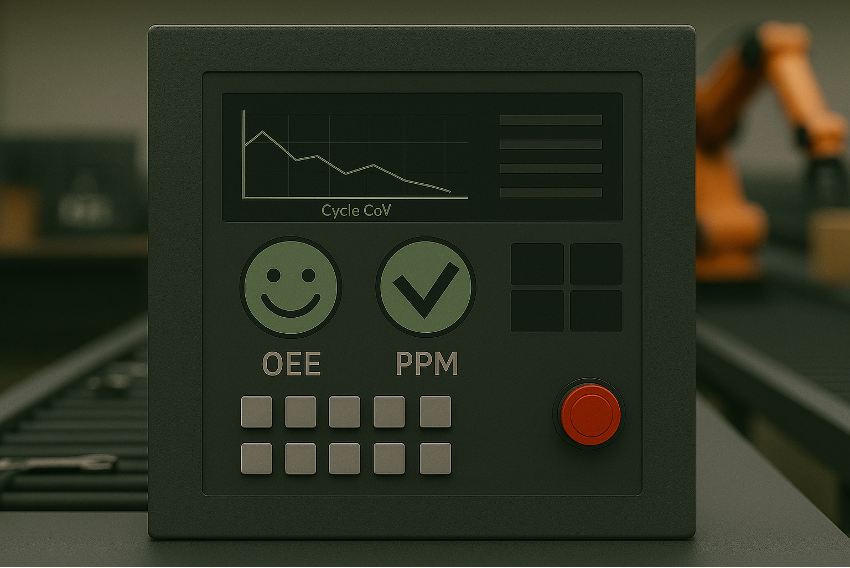
Industrial robot used to improve process stability without increasing production volume

In many industrial companies, robotic automation is no longer justified only by the need to produce more in less time. In mature plants, demand may already be stable and total output may not need to increase. In these cases, the main operational problem is often variability, not capacity. This creates a practical question for production … Read more

Industrial robots vs. traditional palletizing systems

Industrial palletizing robot stacking boxes at the end of a production line

The comparison between industrial robots and traditional palletizing systems is not a new debate — but it has become more consequential as product variability increases, labor costs rise, and safety requirements tighten. A mechanical stacker or a manual palletizing line that worked well ten years ago may be creating measurable operational costs today that are … Read more