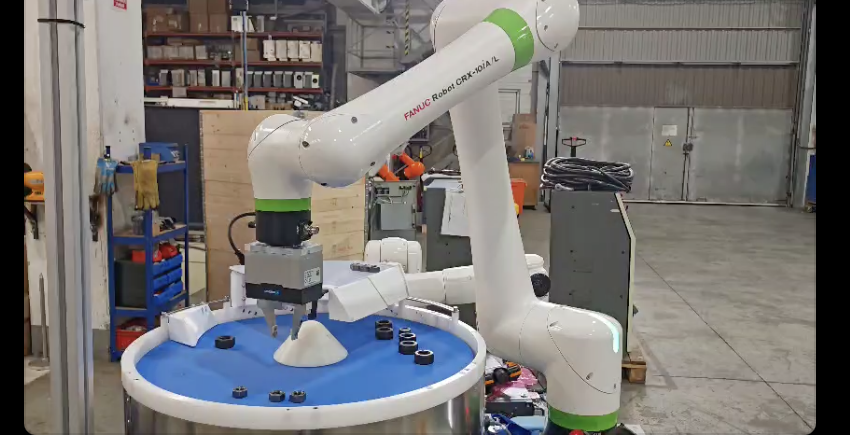
The integration of 3D vision with used robots is taking operational precision to a whole new level. The combination of robotics and three-dimensional vision systems has profoundly revolutionized industrial manufacturing: not only does it enable the automation of complex processes, but it also allows production lines to be quickly adapted to the specific needs of each company. What truly makes this technology interesting is its applicability to refurbished robots, making advanced smart automation accessible to a growing number of businesses—including those with more limited financial resources. This trend marks a turning point in modern industrial automation, where innovation is no longer the exclusive domain of those who purchase only new machines.
3D vision gives robots the ability to “see” and interpret their surroundings using state-of-the-art stereo cameras or laser sensors. These devices can capture detailed spatial information, which is then processed and converted into extremely precise three-dimensional coordinates. Thanks to this data, robots can recognize and distinguish different objects in the field, accurately measure distances and dimensions, and orient themselves autonomously during operations. For example, on an assembly line, a robot equipped with 3D vision can select parts with irregular shapes, detect defects, or position elements with a level of precision that would be otherwise unattainable through traditional programming alone.
Equipping a used robot with 3D vision systems is now possible thanks to the great flexibility of modern controllers. Even robots from established brands such as ABB, KUKA, or FANUC can be upgraded with industrial 3D cameras from leading companies like SICK, Keyence, or Photoneo, which provide high-resolution images and reliable data even in complex production environments. Complementing the hardware, advanced vision software like Halcon, Cognex, or ROS MoveIt allows for real-time analysis of collected data, translating it into detailed, customized operational instructions for each application. Integration with production line control systems often occurs through direct PLC connections using standard protocols such as Ethernet/IP or Modbus, ensuring stable and secure communication between all plant devices. This makes it possible to achieve levels of precision and flexibility that, until recently, were the exclusive domain of next-generation robots, providing a tangible competitive advantage even for those investing in the refurbishment and technological upgrade of their equipment.
Interested in learning more or exploring robotic solutions tailored to your needs? Don’t hesitate to contact us—we’re here to help you find the safest and most efficient path forward.