What logistics considerations should be taken into account when automating material handling processes with robots?
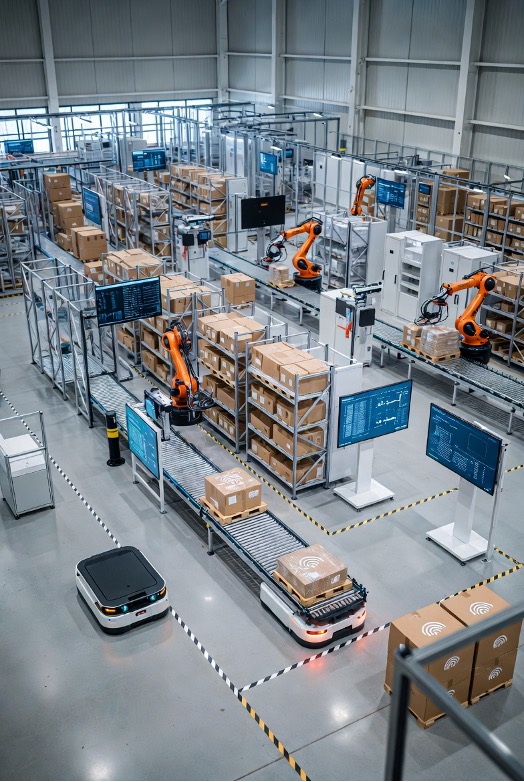
Automating material handling with robots requires more than simply selecting the right robot. It also involves organizing how materials are transported, stored, moved, and managed throughout your factory or logistics center. Material handling covers everything from the arrival of raw materials to internal material flow and the outbound shipment of finished products. Poorly designed automation … Read more
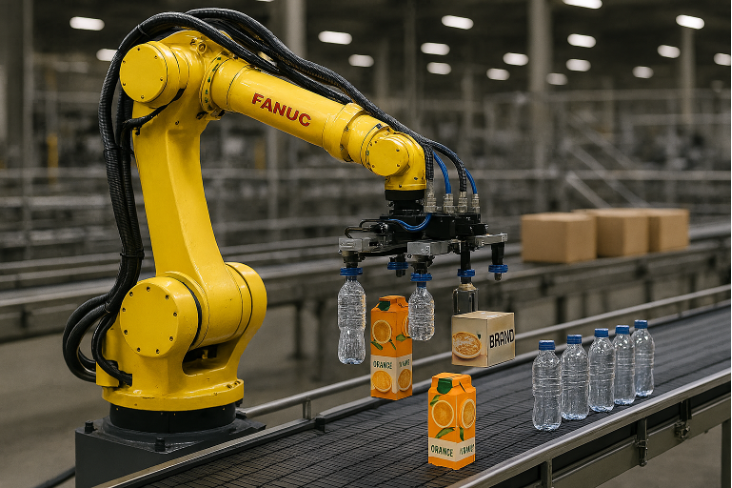

Which robot to choose if your line handles multiple packaging formats

Industrial robot handling multiple packaging formats on an automated production line

Packaging lines that handle a single format are relatively straightforward to automate. The geometry is fixed, the gripper is optimized for one product, and the cell can be tuned to run at maximum efficiency. But in food, beverage, cosmetics, and consumer goods manufacturing, single-format lines are the exception, not the rule. Most production environments deal … Read more

How to know if a robot fits your plastic injection molding process

Industrial robot performing part extraction in a plastic injection molding cell

Plastic injection molding is one of the most automated manufacturing processes in existence — and also one where robotic cells are most frequently misapplied. The question is rarely whether a robot can be integrated into a molding operation. Technically, it almost always can. The question that actually determines whether the project delivers value is more … Read more

How to robotize CNC machine loading and unloading without creating bottlenecks

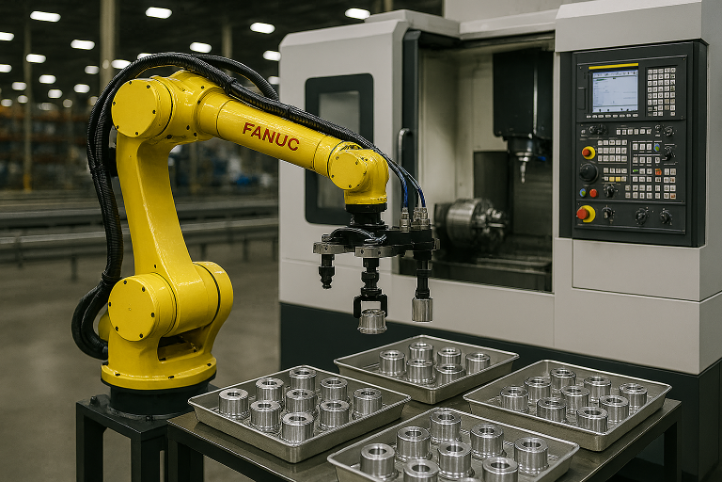
Industrial robot performing CNC machine tending — loading a part into a machining center

Robotic CNC machine tending is one of the most common entry points into industrial automation for machining operations — and one of the most frequently misexecuted. The technical side of CNC machine tending is well understood: a robot loads a blank into the machine, the CNC runs its cutting cycle, the robot extracts the finished … Read more

WHAT REAL-WORLD WELDING PROBLEMS CAN BE SOLVED WITH ROBOTIC AUTOMATION?

In industrial welding, the most expensive problems rarely come from the welding process itself but from its variability: differences between operators, inconsistent travel speed, positioning errors, or human fatigue. Robotic automation—especially in MIG/MAG and TIG welding—is widely used across the world to eliminate recurring failures that affect quality, production time, and cost per part. This … Read more

Industrial robots vs. traditional palletizing systems

Industrial palletizing robot stacking boxes at the end of a production line

The comparison between industrial robots and traditional palletizing systems is not a new debate — but it has become more consequential as product variability increases, labor costs rise, and safety requirements tighten. A mechanical stacker or a manual palletizing line that worked well ten years ago may be creating measurable operational costs today that are … Read more

WHAT HAPPENS IF WE NEED SPARE PARTS OR EMERGENCY SUPPORT IN A ROBOTIC WELDING CELL?

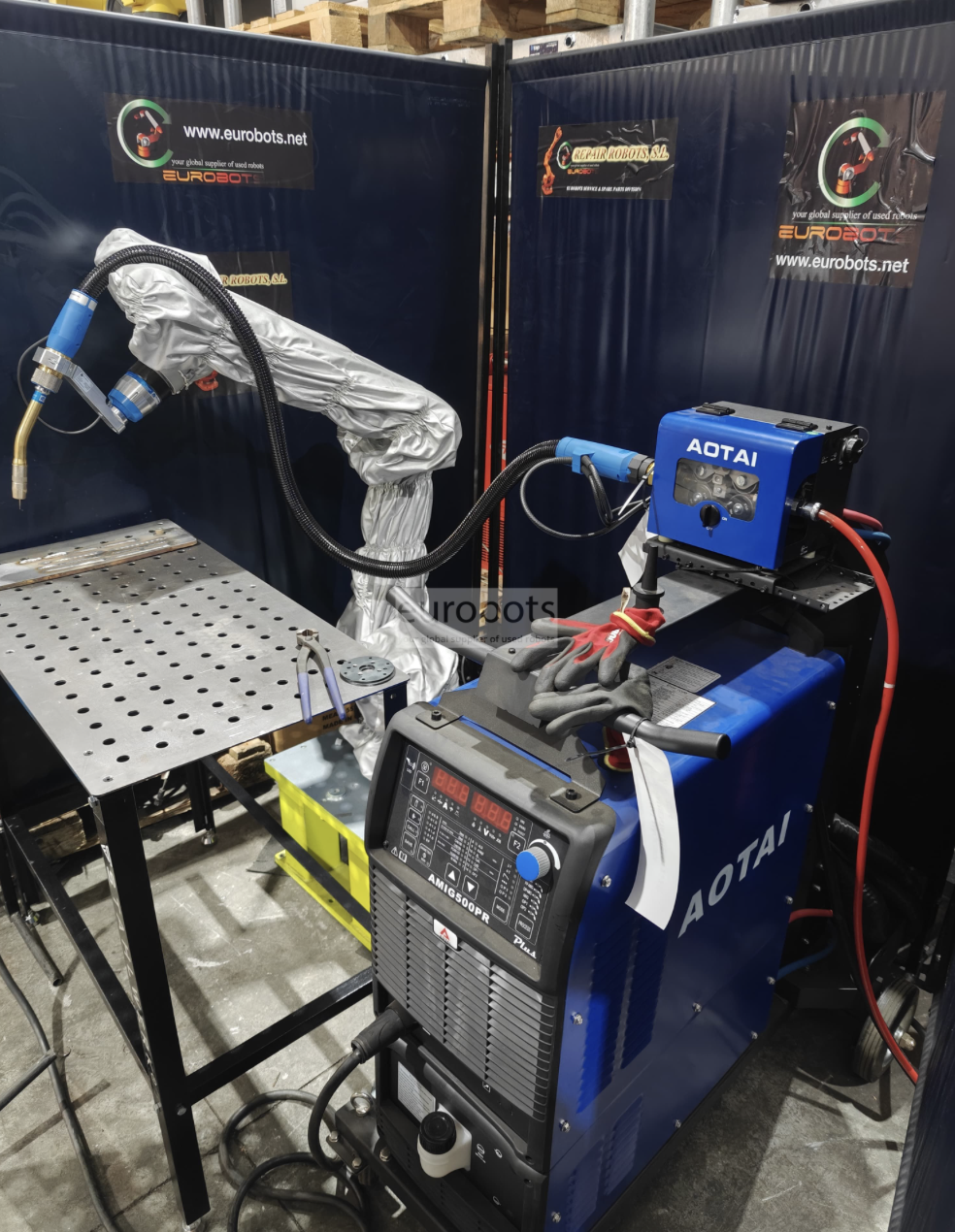
When working with robotic welding systems, one of the most important questions that often arises is what happens when we need spare parts or urgent assistance. In industrial environments, a robotic system is only truly reliable if it can remain operational even when a component fails, wears out, or an unexpected stoppage occurs. For this … Read more

THE 5 SIGNS THAT YOUR MIG/MAG WELDING IS READY FOR AUTOMATION

MIG/MAG welding is one of the most widely used manufacturing processes, but when performed manually it often leads to significant variation. Deciding to automate is not just about bringing new technology into the factory – it’s about determining whether your process is technically and operationally ready for a robot to deliver real, tangible improvements. There … Read more

MOTOMAN MH24-10 “HIGH SPEED”: AN EFFICIENT ALTERNATIVE FOR AUTOMATED WELDING

In the robotics industry, the Motoman MH24 is a six-axis articulated robot designed for high-speed tasks such as material handling, general operations, and other precision applications. While it is not a welding-specific robot like some models in Yaskawa’s AR series, its combination of speed, rigidity, and path accuracy makes it a viable option for welding … Read more

How Does URT Measure the Success of an Arc Welding Robotic Integration Project?

The effectiveness of a robotic welding integration project is determined by tangible outcomes in several crucial aspects. First and foremost, the quality of the weld bead is of utmost importance, as it directly impacts the strength, safety, and compliance with regulations. High-quality robotic welding results in fewer defects such as porosity, lack of fusion, undercut, … Read more