
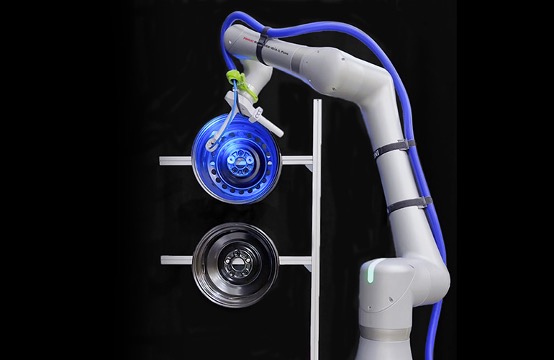
The FANUC CRX-10iA/L painting cobot is the first explosion-proof collaborative paint robot approved for sale and use globally. That distinction matters because painting and coating have historically been one of the most difficult automation environments to enter with a collaborative robot. The hazardous atmospheres created by solvent-based paints, powder coatings, and surface treatments require explosion-proof equipment certification — a requirement that conventional cobots do not meet, and that traditional painting robots meet at the cost of collaborative safety.
The CRX-10iA/L PAINT variant resolves that constraint. It is explosion-proof, collaborative, and programmable without specialist robot knowledge. This article covers the verified specifications, the certifications that define its application scope, and the operational conditions where it delivers clear value.
FANUC CRX-10iA/L Painting Cobot Specifications
The following figures are from FANUC’s official CRX-10iA/L PAINT product documentation, confirmed by The Robot Report’s launch coverage.
| Specification | Value |
|---|---|
| Payload | 10 kg |
| Reach | 1,418 mm |
| Repeatability | ±0.04 mm |
| Robot weight | 45 kg |
| Controller | R-30iB Mini Plus |
| Protection rating | IP67 |
| Maintenance interval | 8 years, zero scheduled maintenance |
| Explosion-proof certifications | ATEX, IECEx, NEC Class I Div 1 (US), + CA, JP, KR, CN, TW, BR |
The 1,418 mm reach is a meaningful specification for painting applications. Longer reach allows the cobot to cover larger surface areas without repositioning the workpiece — a significant advantage when coating large panels, housings, or structural components where multiple setups would otherwise be required.
The 8-year zero maintenance claim reflects FANUC’s broader CRX series design philosophy. In painting environments, maintenance access is often complicated by the surrounding booth infrastructure and contamination protocols. A longer interval between scheduled service events reduces the operational disruption that maintenance creates in a working paint booth.
FANUC CRX-10iA/L Painting Cobot: Explosion-Proof Certifications
The CRX-10iA/L PAINT cobot is designed to comply with explosion-proof safety standards across multiple regulatory frameworks. Confirmed certifications include:
- US NEC standards (National Electrical Code — Class I, Division 1)
- ATEX — European directive for equipment in explosive atmospheres
- IECEx — International certification for use in explosive atmospheres
- Additional approvals for Canada, Japan, Korea, China, Taiwan, and Brazil
This breadth of certification is practically significant. A painting cobot certified only for one regulatory jurisdiction cannot be deployed globally without separate country-specific approvals. The CRX-10iA/L PAINT’s multi-jurisdiction certification simplifies deployment for manufacturers operating across multiple markets or producing for export.
The ATEX and IECEx certifications mean the robot can be deployed in Zone 1 and Zone 2 environments — areas where flammable atmospheres are present or may occasionally be present. This covers the majority of industrial painting and powder coating booth environments. For the specific zone classification of your application, a formal hazardous area assessment by a qualified engineer is always required — the robot’s certification defines what it can handle; the actual zone determination must be done for the specific installation.
Why the FANUC CRX-10iA/L Painting Cobot Matters for Smaller Manufacturers
Conventional explosion-proof painting robots have historically required significant capital investment, specialist programming expertise, and dedicated safety infrastructure. As a result, robotic painting automation has been concentrated in high-volume automotive and aerospace environments where the volume justified the investment.
The CRX-10iA/L PAINT changes that equation in three ways. According to the International Federation of Robotics, collaborative robots in surface finishing and coating applications represent one of the fastest-growing deployment categories in general manufacturing.
First, the collaborative safety architecture eliminates mandatory safety fencing in correctly risk-assessed installations. The cobot’s force-limiting safety system stops immediately on contact with a person. This allows it to operate in mixed human-robot environments — a painter loads and positions workpieces while the cobot applies the coating — without the physical separation infrastructure that conventional robots require.
Second, programming does not require a specialist. FANUC’s Tablet Teach Pendant uses drag-and-drop graphical programming and lead-through teaching — the programmer physically guides the robot through the coating path, and the cobot records and repeats it. This is the same teaching approach demonstrated in the Brandt A/S UR10 painting deployment discussed in our article on UR10 cobot painting applications, and it directly reduces the barrier to deployment for manufacturers without in-house robotics expertise.
Third, the R-30iB Mini Plus controller’s compact footprint and standard power supply (200-240V AC) simplify installation. The controller can be stacked with the robot base, reducing the booth footprint compared to full cabinet solutions.
For a broader look at how collaborative robot technology is lowering the entry threshold for SME manufacturers, see our article on cobots as an entry point for SMEs into automation.
Applications for the CRX-10iA/L Painting Cobot
The CRX-10iA/L PAINT is designed specifically for painting, coating, and dispensing applications in hazardous environments. FANUC documents the following application types as primary targets:
- Liquid painting and spray coating — solvent-based and water-based paint application in enclosed or semi-enclosed booths
- Powder coating — electrostatic powder application in grounded powder booths
- Gel coat and fiberglass applications — FRP manufacturing, boat and composite part production
- Adhesive and sealant dispensing — applications where precise material deposition in a potentially hazardous environment is required
High-mix, low-volume operations are specifically identified by FANUC as a target market. In high-volume automotive painting, purpose-built explosion-proof robots with multi-axis wrist designs for atomizer mounting are typically the better choice. The CRX-10iA/L PAINT’s value is clearest where part variety is high, volumes are moderate, and the operation currently relies on manual painting that is difficult to justify automating with conventional robot infrastructure.
FANUC has also documented deployment in automotive component painting — not body-in-white primary painting, but sub-component and tier-2 supplier applications where the CRX-10iA/L’s collaborative operation alongside skilled finishing staff is an operational advantage. For context on FANUC’s broader presence in automotive painting applications, see our article on FANUC’s major order for luxury vehicle painting automation.
CRX-10iA/L PAINT vs Standard CRX-10iA/L: Key Differences
The CRX-10iA/L PAINT is a dedicated variant of the standard CRX-10iA/L. The core specifications — payload, reach, repeatability, controller — are identical. The differences are in the explosion-proof design and materials:
- Explosion-proof sealed construction for ATEX/IECEx compliance
- Materials and surface treatments resistant to paint solvents and cleaning agents used in booth maintenance
- Grounding provisions for electrostatic painting applications
- Specific approvals required for operation inside classified zones
The standard CRX-10iA/L is not suitable for use in classified explosive atmospheres. If the application involves a painting environment where solvent vapors or powder dust create an explosive atmosphere, only the PAINT variant should be specified.
The standard CRX-10iA/L does have a food-grade variant with NSF-H1 food-grade lubrication and chemical-resistant coating for food processing environments — a completely separate application domain. Do not confuse the FOOD and PAINT variants when specifying.
FAQ
What is the reach of the FANUC CRX-10iA/L painting cobot?
The CRX-10iA/L has a reach of 1,418 mm — the longest in its collaborative robot class. FANUC positions this as a key advantage for painting applications where the cobot needs to access large surface areas without repositioning. Some earlier sources cite slightly different figures; 1,418 mm is the current verified specification.
Is the FANUC CRX-10iA/L PAINT certified for ATEX environments?
Yes. The PAINT variant is certified for ATEX, IECEx, and US NEC Class I Division 1 standards, along with approvals for Canada, Japan, Korea, China, Taiwan, and Brazil. The specific zone classification for your installation must still be determined by a qualified hazardous area engineer — the robot’s certification defines its capability; the zone designation for the actual booth is a site-specific assessment.
Can the FANUC CRX-10iA/L painting cobot work without safety fencing?
Under a correctly completed risk assessment, yes. The CRX series uses FANUC’s force-limiting collaborative safety architecture, which stops the robot immediately on contact with a person. This allows operation in shared human-robot workspaces. However, the risk assessment must account for the specific painting environment, the hazardous atmosphere zone classification, and the proximity of personnel. Safety fencing requirements are determined by the risk assessment, not by default assumptions.
How is the FANUC CRX-10iA/L PAINT programmed?
Using the FANUC Tablet Teach Pendant with drag-and-drop graphical programming and lead-through teaching. An operator physically guides the cobot through the desired coating path, and the system records and repeats it. Path editing and optimization are available through ROBOGUIDE offline simulation software. This approach significantly reduces the specialist programming expertise required compared to conventional painting robots.
What types of coating processes can the CRX-10iA/L PAINT handle?
The cobot is designed for liquid painting, powder coating, gel coat application, fiberglass lay-up, and adhesive or sealant dispensing in hazardous environments. It is specifically positioned for high-mix, low-volume applications where part variety makes it difficult to justify conventional robot painting infrastructure. For very high-volume, single-product painting lines in automotive primary applications, purpose-built multi-axis painting robots remain the stronger choice.
Talk to URT About FANUC CRX Cobot Applications
At URT, we supply FANUC robots and cobots for a range of industrial applications, including painting, coating, machine tending, and assembly.
If you are evaluating the CRX-10iA/L PAINT for a coating or finishing application, or comparing it against other painting automation options, contact URT. We will give you a direct, technical answer based on your actual production requirements.