
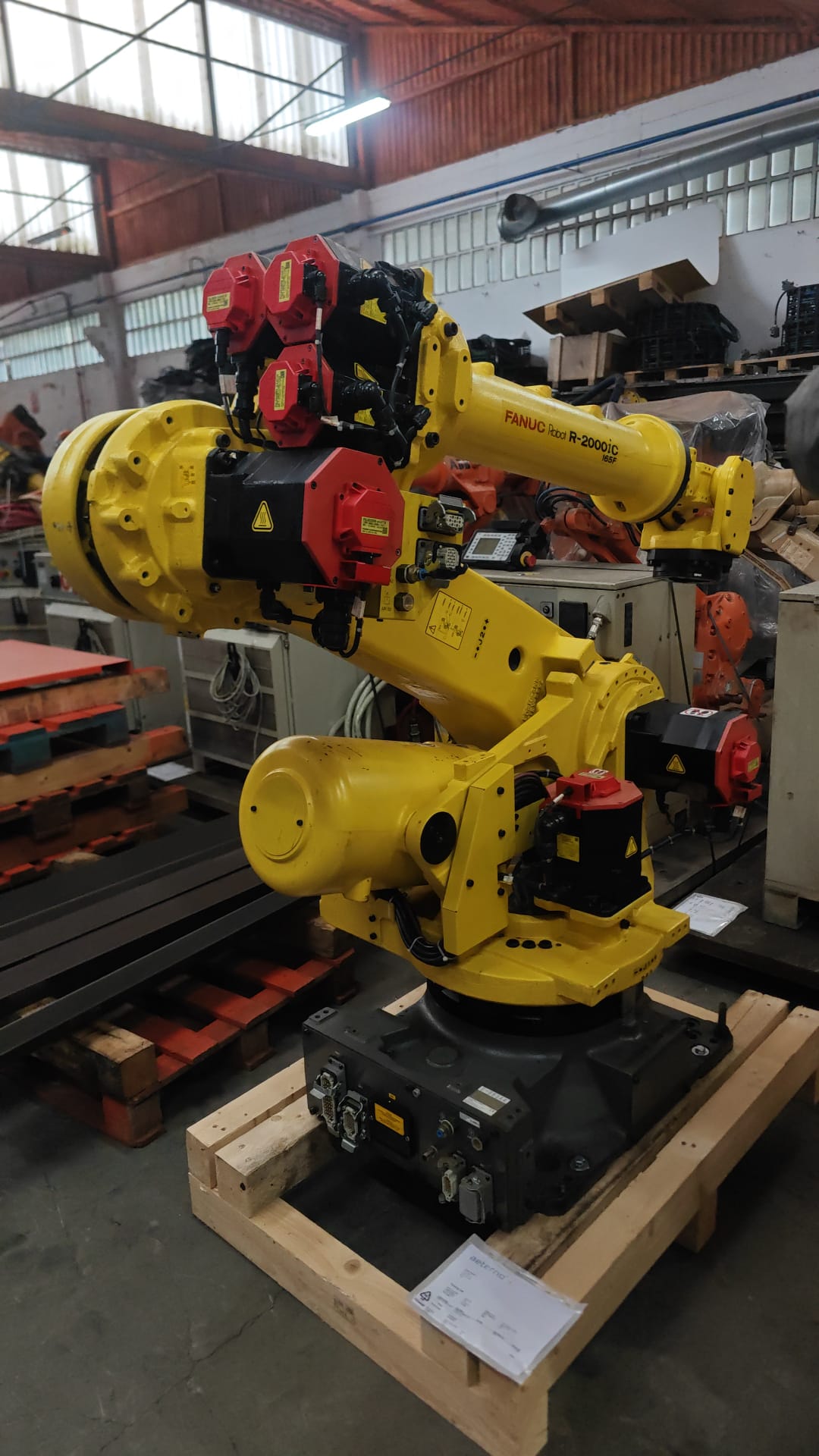
The comparison between industrial robots and traditional palletizing systems is not a new debate — but it has become more consequential as product variability increases, labor costs rise, and safety requirements tighten. A mechanical stacker or a manual palletizing line that worked well ten years ago may be creating measurable operational costs today that are simply accepted as normal because no one has quantified them.
This article compares industrial robots versus traditional palletizing systems across four dimensions — flexibility, productivity, safety, and total cost of ownership — using real investment and ROI figures rather than general claims. The goal is to give operations managers and plant directors the information they need to make a defensible decision, not to argue that one solution is always better than the other.
What Counts as a Traditional Palletizing System
Traditional palletizing covers a range of technologies that share one characteristic: they are optimized for a defined, stable set of operating conditions. The main categories are:
- Manual palletizing — operators build pallet layers directly, with or without mechanical assistance such as lift tables or roller conveyors
- Cartesian or gantry systems — fixed linear axes that handle a specific product format and pattern, with limited ability to accommodate changes
- Layer palletizers — mechanical systems that form a complete layer of product before depositing it onto the pallet, effective at high throughput for a single format
- Dedicated machines — purpose-built equipment for a single product type, often with very high throughput but minimal format flexibility
These systems deliver real value in the environments they were designed for. The limitations emerge when those environments change — which, in most manufacturing operations, they do.
Industrial Robots vs Traditional Palletizing: Flexibility
Flexibility is where the gap between robotic and traditional palletizing is most structural. In a traditional system, a format change — different box dimensions, a new pallet pattern, a different stack height — typically requires physical intervention: mechanical adjustment of guides and stops, tooling changes, reconfiguration of the layer-forming mechanism. In a layer palletizer or Cartesian system, this can take anywhere from 20 minutes to several hours depending on the complexity of the change and the availability of technical support.
In a robotic palletizing cell, format changes are managed through software. The operator selects a recipe from the HMI, and if the gripper covers the new format, the cell begins producing the new pallet pattern with no mechanical intervention. If the gripper needs to change, a quick-change end-effector system reduces that to a few minutes.
This difference compounds in operations with high SKU counts or seasonal format variation. If the line runs eight different products across the year and changes format three times per shift during peak season, the cumulative changeover time of a traditional system becomes a measurable throughput constraint. The same operation on a robotic cell recovers that time productively.
For context on how packaging format complexity affects the broader end-of-line design, see our article on which robot to choose when your line handles multiple packaging formats.
Industrial Robots vs Traditional Palletizing: Productivity
The productivity comparison between industrial robots and traditional palletizing depends on the operating profile of the line. For high-volume, single-format production, a purpose-built layer palletizer can match or exceed a robot’s throughput at lower capital cost. The robot’s productivity advantage becomes clear in three specific scenarios.
Multi-shift and unattended operation. A robotic palletizing cell runs at consistent throughput across all shifts, including nights and weekends, without the variability introduced by operator fatigue, shift changes, or absences. Properly integrated robotic cells typically sustain above 95% availability over extended operating periods. Manual and semi-automatic systems in comparable environments typically run at 85–90% availability when operator-related interruptions are included.
Production peaks. When output increases — seasonal demand, a promotional period, a large order — a manual palletizing operation requires additional labor that may not be available or that introduces quality variation. A robotic cell absorbs the additional throughput within its design capacity without requiring additional headcount.
Pattern consistency. Every pallet a robot builds matches the programmed pattern exactly, regardless of operator experience, time of day, or workload. Consistent pallet quality reduces downstream handling damage, distribution center rejection rates, and the repalletizing costs that frequently go untracked in manual operations.
According to the International Federation of Robotics, palletizing and material handling consistently rank among the highest-volume robot application categories globally, driven specifically by the productivity and consistency advantages in multi-shift food, beverage, and consumer goods operations.
Industrial Robots vs Traditional Palletizing: Safety and Ergonomics
End-of-line palletizing is one of the highest-risk manual operations in manufacturing. Repetitive lifting of loads that may weigh 10–25 kg per unit, sustained at production pace across a full shift, produces musculoskeletal injury rates that are well documented across food, beverage, and logistics sectors. Even assisted manual systems — lift tables, ergonomic conveyors — reduce but do not eliminate the physical exposure.
A robotic palletizing cell removes operators from the direct handling task entirely. The operator’s role shifts from physical labor to supervision and exception handling — a change that typically produces measurable reductions in injury rates, workers’ compensation costs, and absenteeism. In operations where palletizing injuries have become an expected cost of doing business, automating this task addresses a compliance and liability exposure that is independent of the productivity argument.
This safety dimension is structural rather than optional. Regulatory requirements for manual handling risk reduction have tightened consistently across European and North American markets, and the cost of meeting those requirements through engineering controls on a manual line often approaches the cost of robotic automation when calculated correctly.
Total Cost of Ownership: The Correct Comparison Framework
Comparing initial capital expenditure between a traditional system and a robotic cell produces a misleading result because the upfront cost difference is rarely as large as it appears, and it ignores the ongoing cost structure that determines actual profitability over the life of the investment.
The correct framework is Total Cost of Ownership (TCO) over the expected useful life of each system — typically 8–10 years for traditional mechanical systems and 12–15 years for industrial robots.
| Variable | Traditional System | Robotic Palletizing Cell |
|---|---|---|
| Initial investment | Low to medium | Medium |
| Format flexibility | Very limited | High |
| Direct labor requirement | High | Very low |
| Output consistency | Variable by shift | Consistent |
| Typical useful life | 8–10 years | 12–15 years |
| Changeover time | Minutes to hours | Minutes (software-based) |
| Ergonomic risk | High (manual) to medium (assisted) | Low |
For a dedicated TCO analysis of new versus used robot economics, see our article on the used robot economy: understanding TCO versus a new robot.
Real ROI Figures for Robotic Palletizing
The ROI calculation for a robotic palletizing cell needs to be built from the actual operating profile of the line, not from industry averages. The figures below reflect a standard two-shift manufacturing scenario replacing manual palletizing:
Investment in a complete robotic palletizing cell (robot, end-effector, safety equipment, integration, commissioning): €90,000–€140,000, depending on payload requirements, cell complexity, and whether the robot is new or certified refurbished.
Annual labor saving: With one operator per shift at a fully loaded cost of €28,000–€40,000 per year, a two-shift operation produces annual savings of €56,000–€80,000. Three-shift operations reach €84,000–€120,000 annually.
Indirect savings (reduced injury costs, lower rework from inconsistent pallet patterns, elimination of overtime during peaks): typically €10,000–€20,000 annually in operations where these costs are currently tracked.
Resulting payback period: 12–24 months in two-shift operations. Three-shift operations with higher labor costs can reach payback below 12 months.
These figures assume a new robotic cell. Using a certified refurbished robot reduces the capital investment by 30–50%, which in a €90,000–€140,000 project represents a meaningful reduction in the payback calculation. For context on evaluating refurbished equipment specifically for palletizing applications, see our guide on how to assess refurbished robot compatibility with existing systems.
Robot Models Commonly Used in Palletizing
The robot selection for palletizing is primarily driven by payload and reach requirements, which are determined by product weight, pallet dimensions, and stack height. The most widely deployed platforms in industrial palletizing are:
4-axis articulated palletizing robots in the 100–450 kg payload range cover the majority of food, beverage, and consumer goods applications. The ABB IRB 760 and ABB IRB 460, the FANUC M-410 series, and the KUKA KR 700 PA are the standard platforms. Their fixed wrist eliminates the complexity and cost of full 6-axis motion for layer-building applications and optimizes cycle time for high-throughput palletizing.
6-axis articulated robots in the same payload range are used where the cell needs to handle mixed-case palletizing, complex layer patterns, or integrated upstream tasks that require the additional degrees of freedom. The cost premium over 4-axis platforms is justified when the application genuinely requires the flexibility.
Collaborative robots in the 10–20 kg payload range are increasingly used for light-duty palletizing applications where the volumes are lower and the cell needs to operate near operators without full safety fencing. Their speed limitation means they are not appropriate for high-throughput lines.
When Traditional Systems Are Still the Right Answer
A fair comparison acknowledges that robotic palletizing is not the right choice for every operation. Traditional systems retain a genuine advantage in three specific scenarios:
- Very low production volumes that do not generate sufficient labor cost to justify a robotic cell’s capital investment and ongoing maintenance
- Single-format, long-run production where a dedicated mechanical system operates at maximum efficiency and format changes are not a practical consideration
- Temporary or end-of-life processes where the remaining operational life of the line is too short to recover the capital investment
In these conditions, a traditional system — or a semi-manual approach with ergonomic improvements — may deliver better return on the available capital. For a structured framework on making this decision, see our article on end-of-line automation: when to automate and when a semi-manual solution makes more sense.
Self-Assessment: Is Robotic Palletizing Right for Your Operation?
Use the following criteria to assess your situation before entering a more detailed evaluation:
Conditions that favor robotic palletizing:
- The line runs two or more shifts and palletizing is a daily, sustained operation
- Product formats change at least weekly, or the operation handles more than three SKUs
- Palletizing-related injuries or ergonomic complaints are a recurring issue
- Pallet quality varies between shifts or operators
- Production peaks require additional palletizing labor that is difficult to source
- The downstream process (distribution center, customer) has strict pallet quality requirements
Conditions that favor traditional or semi-manual systems:
- A single product format accounts for more than 90% of volume and is not expected to change
- Production is single-shift with available labor and no significant injury history
- The process is expected to change significantly or be discontinued within three years
FAQ
What is the main technical difference between a robotic palletizer and a traditional palletizing machine?
A robotic palletizer uses a programmable industrial arm with an interchangeable end-effector, which allows format changes through software and accommodates a wide range of product geometries. A traditional palletizing machine — layer palletizer, Cartesian system, or dedicated mechanical unit — is optimized for a specific product format and requires physical reconfiguration to handle changes. The robot trades some throughput efficiency in single-format high-speed applications for the flexibility to handle varied and changing product mixes.
What payload range do palletizing robots cover?
Standard industrial palletizing robots used in end-of-line applications cover payloads from approximately 50 kg to 700 kg. The most widely deployed platforms — including the ABB IRB 760 (450 kg payload, 3.18 m reach), the FANUC M-410 series (up to 700 kg payload, up to 3.1 m reach), and the KUKA KR 700 PA (700 kg payload, 3.32 m reach) — cover the full range of food, beverage, and consumer goods palletizing requirements. The payload specification must account for the weight of the end-effector in addition to the product weight — a vacuum gripper array handling multiple cases simultaneously can add significant weight to the effective payload budget, which is why specifying with headroom above the maximum product weight is standard practice.
How accurate are the ROI figures cited for robotic palletizing?
The figures cited — €90,000–€140,000 investment, €56,000–€120,000 annual labor saving, 12–24 month payback — are representative of standard two-shift and three-shift manufacturing operations in Western Europe. They are not universal. The correct ROI calculation for a specific operation depends on the number of shifts, the fully loaded labor cost in the relevant market, the cost of injuries and absenteeism currently attributed to the palletizing operation, and whether new or certified refurbished equipment is used. Any ROI calculation that does not use the actual operating data from your plant is an approximation.
Can a single robot serve multiple production lines for palletizing?
Yes, with conditions. A robot mounted on a linear track can serve two or more palletizing positions if the throughput of each line allows it — the robot must be able to complete its tasks at each position before any line requires its next pallet layer. In high-throughput operations, serving multiple lines from a single robot usually creates a bottleneck. In moderate-throughput operations with asynchronous line cycles, it can be cost-effective.
What maintenance does a robotic palletizing cell require compared to a traditional system?
Industrial robots require scheduled preventive maintenance — typically at 3,000–4,000 operating hour intervals — covering lubrication, gear and axis checks, harness inspection, and controller diagnostics. The maintenance cost is predictable and can be managed in-house with trained personnel or through a service contract. Traditional mechanical palletizing systems have lower maintenance cost per hour but higher mechanical failure rates in high-cycle applications, particularly in end-of-effector and guide mechanisms exposed to product debris and vibration.
Talk to URT About Your Palletizing Project
At URT, we supply industrial robots — new and refurbished — for palletizing applications across food, beverage, logistics, and industrial manufacturing. We work with operations teams to evaluate the right configuration for their actual throughput, format mix, and budget — not a standard proposal.
If you are comparing robotic palletizing against your current system and want a technical and financial analysis based on your real production data, contact URT. We will give you a direct, technical answer based on your actual production requirements.