Tag Archives: industrial robots

WHAT LEVEL OF INTERNAL TRAINING DOES A COMPANY NEED TO AVOID FULL DEPENDENCE ON THE SUPPLIER AFTER AUTOMATING WITH INDUSTRIAL ROBOTS?

In many companies, the decision to automate is not held back by the cost of the robot or by floor space, but by a less visible—yet decisive—concern: technical dependency. The question is not always stated openly, but it quickly emerges in any investment committee: What happens when the supplier leaves? Robotic automation introduces powerful technology,
Read More

INDUSTRIAL ROBOTS VS. TRADITIONAL PALLETIZING SYSTEMS

Palletizing is one of the most critical stages at the end of the production line. Although it is often perceived as a simple process, in practice it involves occupational risks, production bottlenecks, and hidden operational costs. For many years this process has been handled using traditional systems: manual palletizing, semi‑automatic solutions, or low‑flexibility dedicated machines.

Read More

INTEGRATING COLLABORATIVE SAFETY IN HYBRID LINES: CHALLENGES AND BEST PRACTICES

In the modern factory, the best of two worlds comes together: the robustness of traditional industrial robots and the flexibility of collaborative robots, or cobots. This fusion—a hybrid human-robot line—offers great advantages but also raises critical challenges: safety, ergonomics, production flow, and adaptability to change. For brands like KUKA, ABB, or FANUC, which you manage

Read More

REFURBISHED ROBOTS VS. NEW ROBOTS: WHEN TO CHOOSE EACH ONE?

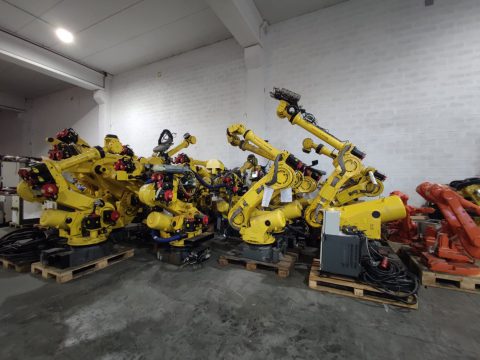
In today’s industrial market, both new and refurbished robots have a legitimate and distinct role within automation strategies. Neither option is universally better; instead, each suits particular technical, operational, and financial requirements. The right decision shouldn’t be based on personal preference, but should come from a careful, comparative analysis that takes into account measurable criteria

Read More

POLISHING, AND FINISHING PROCESSES: WHAT YOU NEED TO KNOW BEFORE INTEGRATION

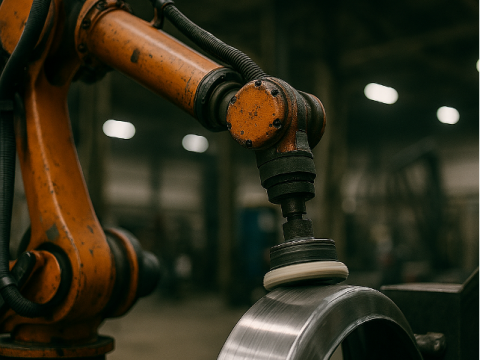
In the industrial sector, sanding, polishing, and surface finishing might seem like straightforward tasks, but they actually involve a significant level of technical complexity. Each piece requires consistent pressure, precise motions, a uniform rhythm, and an attentive approach to detail—qualities that are difficult to maintain manually over many hours of work. This is where an

Read More

WHAT SPECIFIC IMPROVEMENTS WOULD WE SEE IN EFFICIENCY, QUALITY, OR COSTS WITH THE INTEGRATION OF A ROBOTIC SOLUTION?

The integration of a robotic welding solution does not simply replace manual labor, but transforms the entire production process. The benefits are mainly reflected in three key areas, which are constantly monitored by the industry: production efficiency, weld quality, and operating costs per part. These improvements are recognized worldwide and proven by the actual performance

Read More

PREDICTIVE MAINTENANCE IN INDUSTRIAL ROBOTS: SENSORS, DATA AND MINIMISING DOWNTIME

At the heart of many automated factories, a group of robots works tirelessly for hundreds of hours on end. But what happens if one of these machines fails unexpectedly? An unplanned stoppage can cost thousands of euros per hour, result in lost orders and delayed deliveries. This is where predictive maintenance steps in: instead of

Read More

WHAT IS THE TOTAL COST OF INVESTING IN A ROBOTIC WELDING SOLUTION, INCLUDING THE ROBOT, INTEGRATION, SOFTWARE, AND TRAINING?

The total investment goes far beyond the price of the robot itself. A robotic welding cell involves a complete package that covers the industrial robot, mechanical and electrical integration, welding equipment and peripherals, software and programming, staff training, and ongoing maintenance and spare parts. The industry takes this comprehensive approach because it best reflects the

Read More

NEW VS REFURBISHED ROBOTS: WHEN IS EACH OPTION APPROPRIATE?

In an increasingly competitive industrial landscape, the choice between purchasing a brand-new industrial robot or opting for a refurbished one has become a crucial consideration for many manufacturing plants. This decision not only impacts the initial investment, but also factors such as ongoing maintenance, technological integration, installation speed and the overall sustainability of the project.

Read More

RETROFITTING: HOW TO UPGRADE AN OBSOLETE INDUSTRIAL ROBOT STEP-BY-STEP

In the era of accelerated automation, many factories face the same dilemma: their robots work, but their control systems are outdated. The solution? Retrofitting. Modernising an obsolete industrial robot not only saves investment, it also prolongs its service life and improves its performance at a much lower cost than a new machine. What is robotic

Read More