In many industrial companies, robotic automation is no longer pursued only to “produce more in less time.” Today, most plants already operate at stable demand levels, and the main operational challenge is variability, not capacity. When no increase in production volume is expected, decision-makers often ask: “How do we justify investing in a robot if
The truth is that not every industrial task benefits from robotic automation—and even fewer are genuinely compatible with a refurbished robot. The key lies in understanding whether your process meets the fundamental technical conditions that professionals use to evaluate automation projects: aspects such as geometry, repeatability, production volume, accessibility, safety, and the overall stability of
Some projects never fail: Because they never start! They live in a permanent state of improvement. Every week, the system becomes a little better than before—slightly more precise, a bit more elegant. There’s always something to tweak, something to polish, something that “before we start real production” should be optimized. The robot moves. The simulation
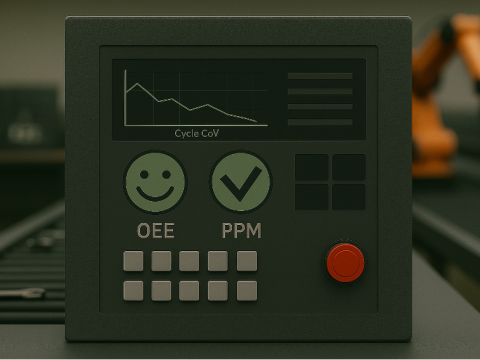
There’s an awkward moment in some automation projects when no one really wants to look too closely at the first batches. The parts come out quickly. The robot never stops. Productivity indicators look great. And yet… something feels off. The defect that used to appear sporadically now shows up with impeccable regularity. There’s no debate:
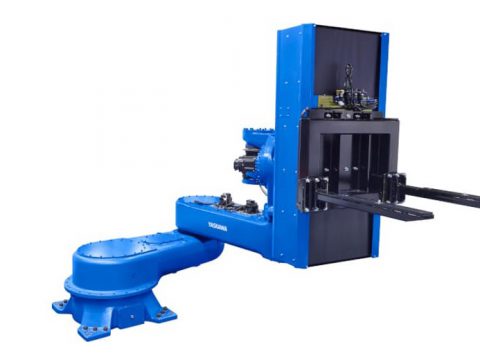
Yaskawa has launched the MOTOMAN ME1000, a six-axis robot designed for horizontal handling of heavy loads. With a capacity of up to 1,000 kg, this compact arm aims to meet the needs of sectors such as automotive, logistics, and construction, offering industrial flexibility. Horizontal Design and Energy Efficiency Unlike vertically articulated robots, the ME1000 features
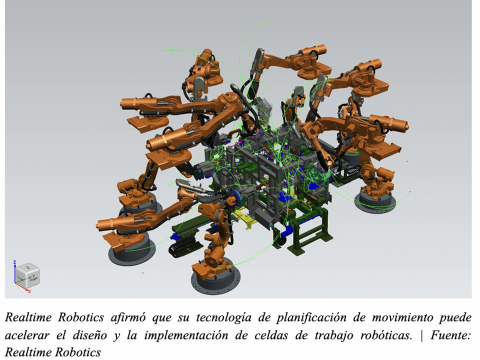
In the ever-evolving landscape of both conventional and Industry 4.0 robotics, the efficient design and use of robotic work cells is essential. Within this context, Realtime Robotics, a key player in intelligent automation, has made a significant breakthrough by unveiling two new direct integrations for its revolutionary cloud-based platform, Resolver. These additions not only broaden
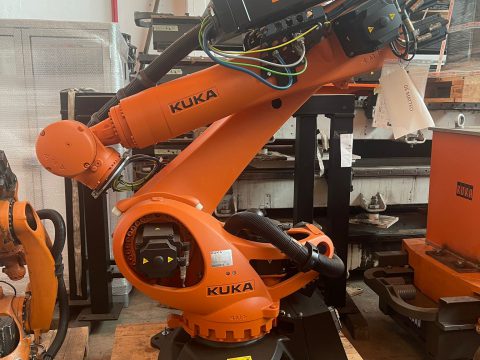
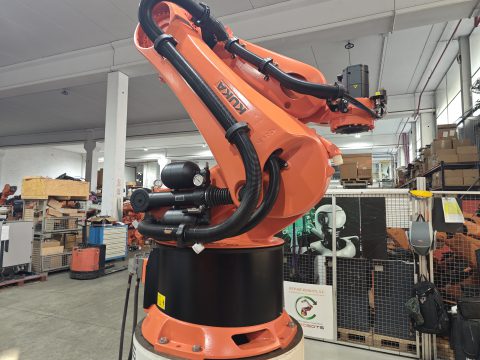
Industrial automation has transformed production across countless sectors, and among the leading solutions, KUKA robots have emerged as a highly cost-effective option for businesses seeking greater efficiency, precision, and a reduction in operational expenses. From manufacturing to logistics, these robots offer versatile capabilities that streamline processes and enhance overall profitability. Their financial value stems from
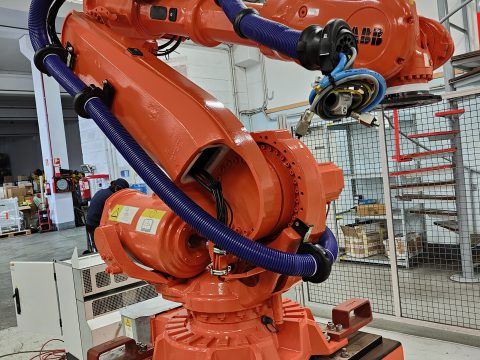
When we think of industrial robots, we often picture a mechanical arm lifting heavy objects. The ABB IRB 6640 3.2-130 certainly fits that image—it’s a robust piece of machinery capable of handling loads of up to 130 kg across a reach of 3.2 meters. But its true value lies in the advanced technology embedded within,
In an increasingly automated industrial world—where robots are no longer a futuristic promise but a daily tool—having a skilled system integrator is not a luxury; it is a strategic necessity. Across industries, both large and small companies are embracing automation. They invest thousands or even millions in robotic arms, smart sensors, autonomous conveyors, and machine
In the world of industrial automation, energy efficiency has become a key factor for profitability and sustainability. KUKA, one of the leading companies in industrial robotics, has developed the KR QUANTEC series, a line of robots designed to reduce energy consumption by up to 60% compared to previous generations. This innovation not only lowers operational