
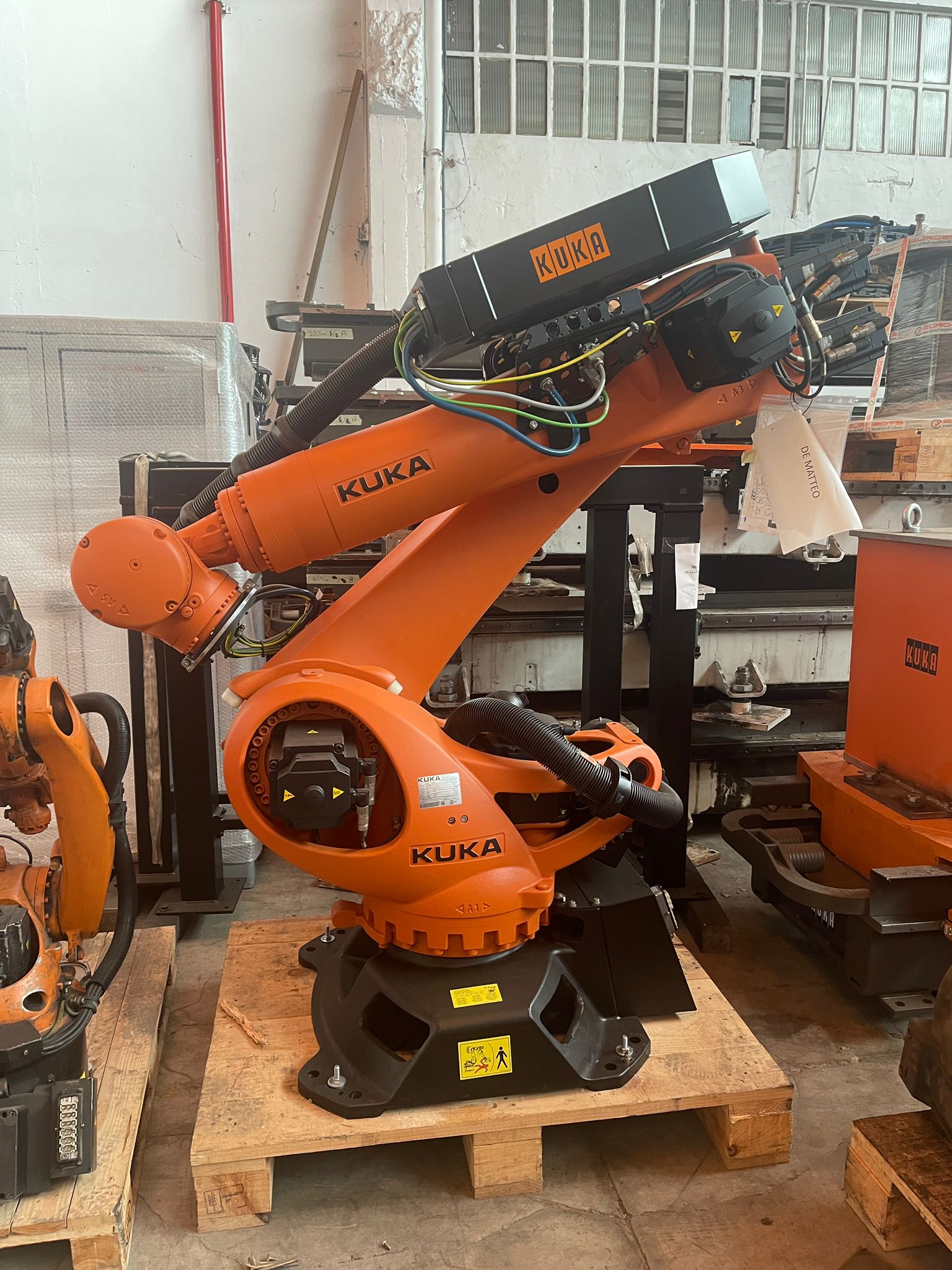
KUKA robots are among the most widely deployed industrial robot platforms in the world. They are used in automotive plants, food and beverage facilities, electronics manufacturing, logistics centers, and general fabrication shops. However, the cost-effectiveness of KUKA robots varies significantly depending on the application. A platform that delivers excellent ROI in one process may be over-specified — or under-specified — for another.
This article examines KUKA robot cost-effectiveness across the applications where they are most commonly deployed. It covers which KUKA models fit which processes, what drives ROI in each case, and where the limits of economic justification lie.
What Determines KUKA Robot Cost-Effectiveness
Cost-effectiveness is not a fixed property of a robot platform. It is the result of matching the right robot to the right application. Three variables drive that calculation.
The first is utilization. A robot that runs at high utilization across two or three shifts delivers far better return than one that runs a single shift and sits idle for sixteen hours. KUKA robots are engineered for continuous industrial operation. However, achieving high utilization requires that the process itself is stable, well-defined, and capable of running at sufficient volume.
The second is labor displacement. In applications where the robot replaces two or three operator positions across a shift cycle, the labor cost saving directly reduces the payback period. In applications where the robot supplements rather than replaces manual work, the financial case is weaker and depends more on quality improvement and throughput gains.
The third is integration cost. The robot itself typically accounts for 25 to 35 percent of total project cost. The remainder goes to end-effectors, safety equipment, programming, and system integration. A simpler application with straightforward tooling keeps total project cost manageable. A complex cell with custom tooling and vision integration raises it substantially.
For a broader framework on selecting which process to automate first and evaluating ROI before equipment selection, see our guide on which process delivers the fastest ROI when robotized.
KUKA Robots in Welding — Where the Cost Case Is Strongest
Welding is one of the applications where KUKA robot cost-effectiveness is most consistently demonstrated. The reasons are straightforward. Manual welding is expensive, physically demanding, and highly skill-dependent. Consistent weld quality is difficult to sustain across a full shift. And in most structural fabrication and automotive environments, weld quality directly affects downstream processing and final product integrity.
KUKA’s welding-focused platforms — the KR CYBERTECH series and the KR CYBERTECH ARC — are designed specifically for arc welding applications. The KR CYBERTECH ARC KR 8 R1610 offers a 8 kg payload with a reach of 1,610 mm. Its hollow wrist design routes welding cables internally, which reduces interference during complex weld paths and extends cable service life. That translates directly to lower maintenance cost per operating hour.
For heavier structural welding, the KR QUANTEC series handles payloads from 90 kg to 270 kg. It is used extensively in automotive body-in-white and large structural steel applications where the robot needs to handle both the torch and heavy fixture components.
In welding, the financial case typically rests on four factors. Labor cost for skilled welders is high and rising in most European markets. Weld consistency directly reduces rework and scrap. Robotic cells can run through breaks and shift changes without interruption. And in many applications, a single robot can cover the work of two manual welders across a shift.
For more on the financial structure of robotic welding investments, see our article on the total cost of investing in a robotic welding solution. For KUKA welding applications specifically, see our overview of KUKA gas-shielded welding robots.
KUKA Robots in Palletizing — High Utilization, Clear ROI
Palletizing is one of the most economically straightforward robotic applications. The task is repetitive, physically demanding, and well-suited to automation. KUKA’s palletizing platforms deliver strong cost-effectiveness in food and beverage, consumer goods, and logistics environments.
The KR QUANTEC PA series is KUKA’s dedicated palletizing platform. It is available in variants covering payloads up to 300 kg. The KR 700 PA is the highest-payload standard variant, handling 700 kg at a reach of 3,320 mm. These are 4-axis robots with a fixed wrist — a configuration that simplifies programming, reduces cycle time, and lowers cost compared to a full 6-axis platform for pure layer-building applications.
In palletizing, the ROI drivers are well understood. The robot replaces one to two operators per shift. It sustains consistent throughput through demand peaks without additional labor. And it eliminates the musculoskeletal injury exposure that makes manual palletizing a significant safety and HR liability in many operations. According to the International Federation of Robotics, palletizing remains one of the highest-volume robot application categories globally.
KUKA also produces one of the more energy-efficient palletizing platforms available. For context on KUKA’s palletizing energy performance, see our article on energy-saving palletizing robots from KUKA.
The cost case weakens in low-volume operations running a single shift with infrequent format changes. In those environments, a semi-manual solution may deliver better return on the available capital. However, for operations running two or more shifts with sustained output, KUKA palletizing cells consistently produce payback periods in the 12 to 24 month range depending on labor costs and shift structure.
KUKA Robots in Machine Tending — The Value of Spindle Utilization
Machine tending — loading and unloading CNC machines, injection molding presses, and other process equipment — is an application where KUKA’s mid-range platforms perform well. The KR AGILUS series, covering payloads from 6 to 10 kg at reaches up to 1,100 mm, is optimized for compact machine tending cells. Its small footprint allows installation in tight spaces adjacent to existing equipment.
The cost-effectiveness argument in machine tending is different from welding or palletizing. The primary value driver is not labor displacement alone — it is spindle utilization. A CNC machine that cuts metal for six hours of an eight-hour shift has 75% spindle utilization. The remaining 25% is loading, unloading, and idle gaps. A robotic tending cell can reduce non-cutting time significantly. As a result, the machine produces more parts on the same equipment without adding shifts.
In machining environments where the CNC represents significant capital and spindle time is the capacity constraint, that output increase has financial value independent of any labor saving. This makes machine tending one of the more compelling applications for KUKA robots in precision manufacturing. For a detailed look at how to structure a CNC tending cell to avoid bottlenecks, see our article on how to robotize CNC machine loading and unloading without creating bottlenecks.
KUKA Robots in Material Handling — Where the Case Depends on Volume
Material handling covers a broad range of applications: part transfer between production stations, feeding assembly lines, loading and unloading conveyors, and internal logistics. KUKA’s KR IONTEC series — covering payloads from 20 to 70 kg — is frequently used in these applications. It offers a balance of payload, reach, and cycle speed that fits the majority of general manufacturing handling tasks.
In material handling, cost-effectiveness is more variable than in welding or palletizing. The application needs to generate sufficient volume and shift coverage to justify the capital investment. Low-volume handling tasks that an operator can complete alongside other duties rarely justify a dedicated robotic cell. However, high-volume handling tasks that tie up one or more operators continuously across multiple shifts present a clear case for automation.
One specific area where KUKA material handling robots consistently deliver strong ROI is automotive body-in-white. In that environment, the KR FORTEC series — handling payloads from 120 to 300 kg — transfers large body panels and structural components between pressing, welding, and assembly stations. The volume is high, the shifts are continuous, and the handling precision required is beyond what manual processes can reliably sustain.
New vs. Refurbished KUKA Robots: The Cost Difference in Practice
A properly refurbished KUKA robot typically costs 40 to 60 percent less than an equivalent new unit. In a project where the robot accounts for 25 to 35 percent of total cell cost, that saving is meaningful. It frees budget for higher-grade tooling, better safety equipment, or additional programming work — all of which affect operational performance more directly than the robot generation.
KUKA robots are well-suited to refurbishment because the mechanical platforms are robust and the KRC controller series is well-documented and widely supported. A refurbished KR QUANTEC or KR AGILUS with a documented rebuild — harness replacement, axis checks, controller diagnostics, and calibration — performs identically to a new unit in standard industrial applications.
For more detail on evaluating refurbished KUKA equipment before purchasing, see our guide on understanding total cost of ownership for used versus new robots.
FAQ
Which KUKA robot models are most cost-effective for welding applications?
For arc welding, the KR CYBERTECH ARC series is KUKA’s purpose-built platform. Its hollow wrist design reduces cable interference during complex weld paths. For heavier structural welding requiring larger payload, the KR QUANTEC series covers 90 to 270 kg. Both platforms deliver strong cost-effectiveness in applications with sufficient volume and shift coverage to justify the cell investment.
What payload range does KUKA offer for palletizing?
KUKA’s dedicated palletizing platform, the KR QUANTEC PA series, covers payloads up to 300 kg in standard variants. The KR 700 PA handles 700 kg at a reach of 3,320 mm for heavy-duty applications. These are 4-axis platforms optimized for layer-building patterns — simpler and faster than full 6-axis robots for pure palletizing tasks.
Is a KUKA robot cost-effective for low-volume production?
Not always. In low-volume, single-shift operations where the robot would run at low utilization, the financial case is difficult to make on labor displacement alone. Cost-effectiveness improves substantially in multi-shift operations with sustained throughput. If volume is the limiting factor, a semi-manual solution may deliver better return in the short term, with the option to automate fully when volume justifies it.
How does refurbished KUKA robot cost compare to new?
A properly refurbished KUKA robot typically costs 40 to 60 percent less than a new equivalent. The saving is most meaningful in applications where the robot body and controller configuration are well-established — welding, palletizing, machine tending — and where the latest generation of controller software is not a project requirement. Refurbishment quality varies between suppliers. A mechanical rebuild with documented testing is a different product from a cosmetic clean and memory reset.
What is the typical payback period for a KUKA robotic cell?
Payback period depends on the application, the number of shifts, and the labor cost structure of the operation. In two-shift welding or palletizing applications in Western European markets, payback periods of 12 to 24 months are common when the robot displaces two or more operator positions per shift. Machine tending applications with strong spindle utilization gains can deliver similar payback even at lower headcount displacement. Operations in markets with lower labor costs will see longer payback periods.
Talk to URT About KUKA Robots for Your Application
At URT, we source and supply KUKA industrial robots — new and refurbished — for welding, palletizing, machine tending, material handling, and general manufacturing applications.
If you are evaluating whether a KUKA robot fits your process, which model covers your payload and reach requirements, or what a refurbished unit would cost for your application, contact URT. We will give you a direct, technical answer based on your actual production requirements.