
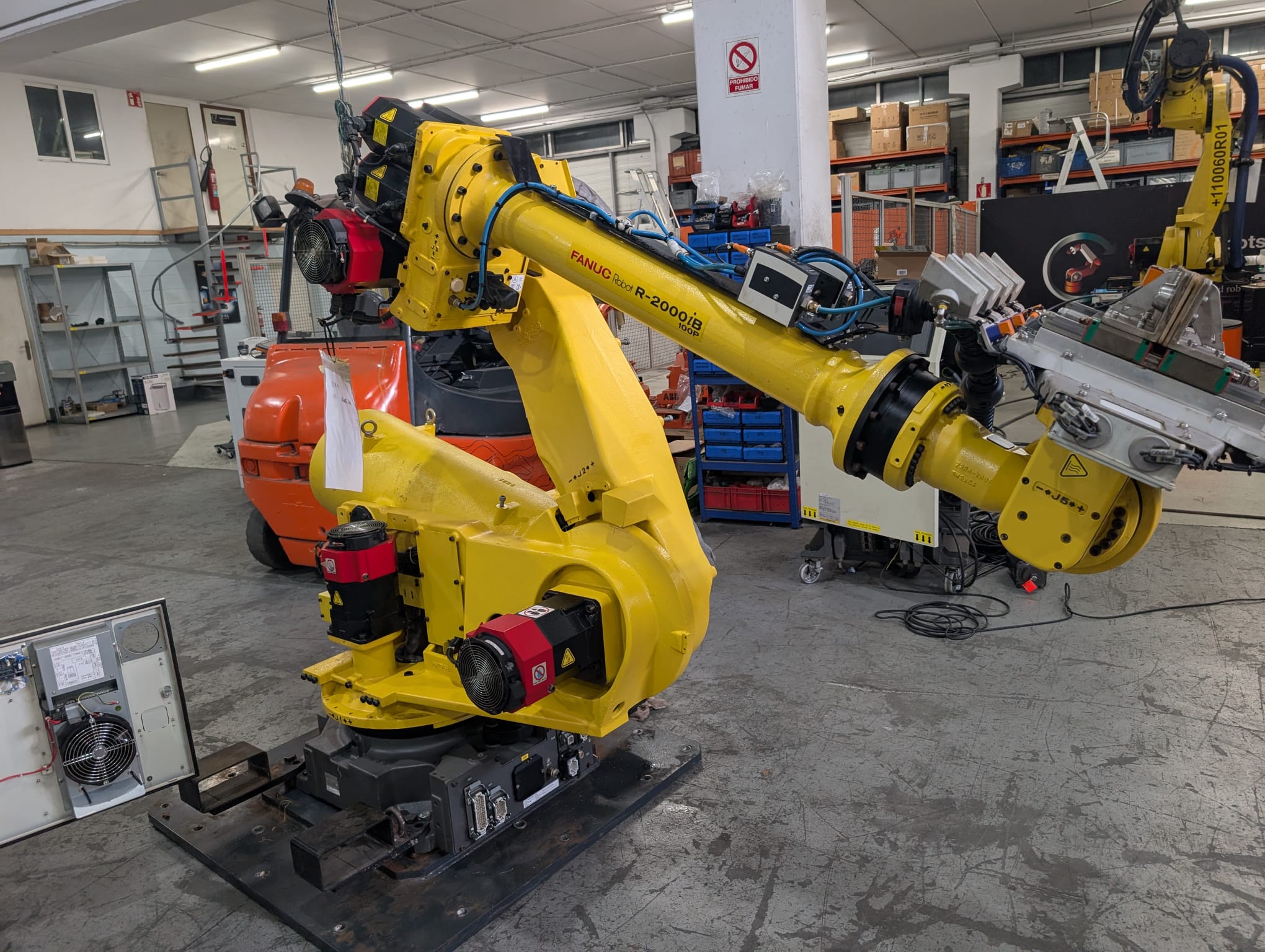
In many workshops, the same dilemma repeats itself: should you buy a new robot or modernize the one already installed? With advances in controllers, sensors, software, and mechatronics, older robots can be brought back to life effectively. The key is knowing when refurbishment makes sense— and when it’s time to replace.
Why consider modernization?
A well-maintained robot can last for decades. For example, one publication notes that industrial robots, “when correctly maintained, can operate for more than 100,000 hours.”
Additionally, manufacturers like KUKA offer modernization services (“upgrade & refurbish”) to give “a second life” to cobots or industrial robots, extending their useful life and lowering costs.
Moreover, inspecting and modernizing can reduce downtime, improve spare parts availability, enhance IoT/MES integration, and be a more sustainable option.
When does it make sense to modernize instead of buying new?
Here are some technical and business criteria that help guide the decision:
- Controller or software obsolescence:
If the controller is no longer supported, spare parts are difficult to obtain, or upgrades are no longer possible, this may be a strong sign that modernization is required. For example, Kawasaki recommends checking the age of the controller as a first step. - Investment cost vs. new:
According to ABB, a refurbished robot can cost up to ≈25% less than a new unit. - Remaining useful life of the robot:
If the arm is in good structural condition (gearboxes, bearings, axes), modernization can leverage that asset and require investment only in electronics, sensors, and software. - Lead time / urgency:
Modernizing can offer shorter delivery times than manufacturing a new robot. - Sustainability / ROI and spare parts:
Refurbishing means lower initial depreciation and can deliver a faster ROI if the existing cell is already installed and operating properly.
Documented Case
A KUKA article describes its modernization program: “Instead of purchasing new equipment, it is better to rely on the machines and robots you already have… A well-timed, customized upgrade or overhaul will ensure your robot systems can continue to be used over the long term.”
The text explains that modernization can provide greater availability, lower effort, better performance, and thus extend the system’s life cycle.
Another ABB article reports a plant that chose to modernize its old robots because new ones were more expensive, and they valued fast delivery and reuse of the existing environment.
These examples show that modernization is not merely a secondary option: it is a strategically viable solution for companies seeking flexibility, speed, and ROI.
Modernizing an industrial robot can be much more than a technical stop—it can be a competitive advantage. When the mechanical arm is still in good condition but electronics, software, or integration are obsolete, refurbishing allows companies to leverage their previous investment and adapt to the current automation landscape.
Buying new equipment is still necessary when the robot is structurally worn, its remaining life cycle is low, or a major technological leap is required. But for many factories, the “second life” of a well-modernized robot can achieve nearly equivalent results—with lower cost, shorter lead time, and reduced environmental impact.
The key lies in rigorous analysis, precise technical execution, and a strong service ecosystem. With this, a refurbished and updated robot can lead the production line with the same effectiveness as a new one.
❓ FAQ
1. How long can an industrial robot last?
A well-maintained industrial robot can exceed 100,000 operating hours, depending on load, environment, and maintenance quality.
2. Is modernization always cheaper than buying a new robot?
Generally yes—manufacturers like ABB report that a refurbished robot can cost 20–25% less compared to a new one.
3. What components are typically replaced during modernization?
- Controllers
- Encoders and sensors
- Wiring and safety modules
- Software and communication interfaces
- IoT/MES integration components
4. How long does modernization take?
The lead time is usually shorter than purchasing a new robot, often from a few days to a few weeks, depending on scope.
5. When is modernization not recommended?
- Severe mechanical wear of the arm or joints
- Cracked structure or damaged reducers
- Discontinued mechanical components
- Processes requiring a major technological leap (e.g., higher payload, precision, speed)
6. Does modernization affect warranty?
Manufacturers generally offer a new warranty for upgraded components or complete refurbishment packages.
✅ CHECKLIST
Industrial Robot Modernization Feasibility Checklist
Mechanical Condition
- Axes move smoothly
- No excessive backlash
- Bearings and reducers in good condition
- No structural cracks or stress marks
Electrical & Control
- Controller still supported or upgrade available
- Spare parts available
- Wiring harness OK
- Motors/encoders still reliable
Software & Integration
- Software version supported
- Ability to connect to MES/ERP/IoT
- Safety functions compatible with current standards
- User programs can be migrated
Operational Context
- Cycle times still achievable
- Payload requirements unchanged
- Layout compatible with existing cell
Cost & ROI
- Modernization cost < 70% of new robot
- Expected ROI < 12–24 months
- No major redesign needed for the cell
Time & Logistics
- Need fast deployment
- Lead time for new robot too long
- No production downtime window available for replacement
Technology Needs
- Required precision can be achieved after modernization
- Required connectivity achievable with upgrades
- No need for new payload category
Sustainability / Strategy
- Reuse of existing equipment desired
- Environmental impact a priority
- Internal policy favours refurbishment where viable
Contact us to receive the best offers and the best opportunities available in our warehouses. We’ll be ready to support you in finding the right solution for your project.