WHAT REAL-WORLD WELDING PROBLEMS CAN BE SOLVED WITH ROBOTIC AUTOMATION?

In industrial welding, the most expensive problems rarely come from the welding process itself but from its variability: differences between operators, inconsistent travel speed, positioning errors, or human fatigue. Robotic automation—especially in MIG/MAG and TIG welding—is widely used across the world to eliminate recurring failures that affect quality, production time, and cost per part. This … Read more

Industrial robots vs. traditional palletizing systems

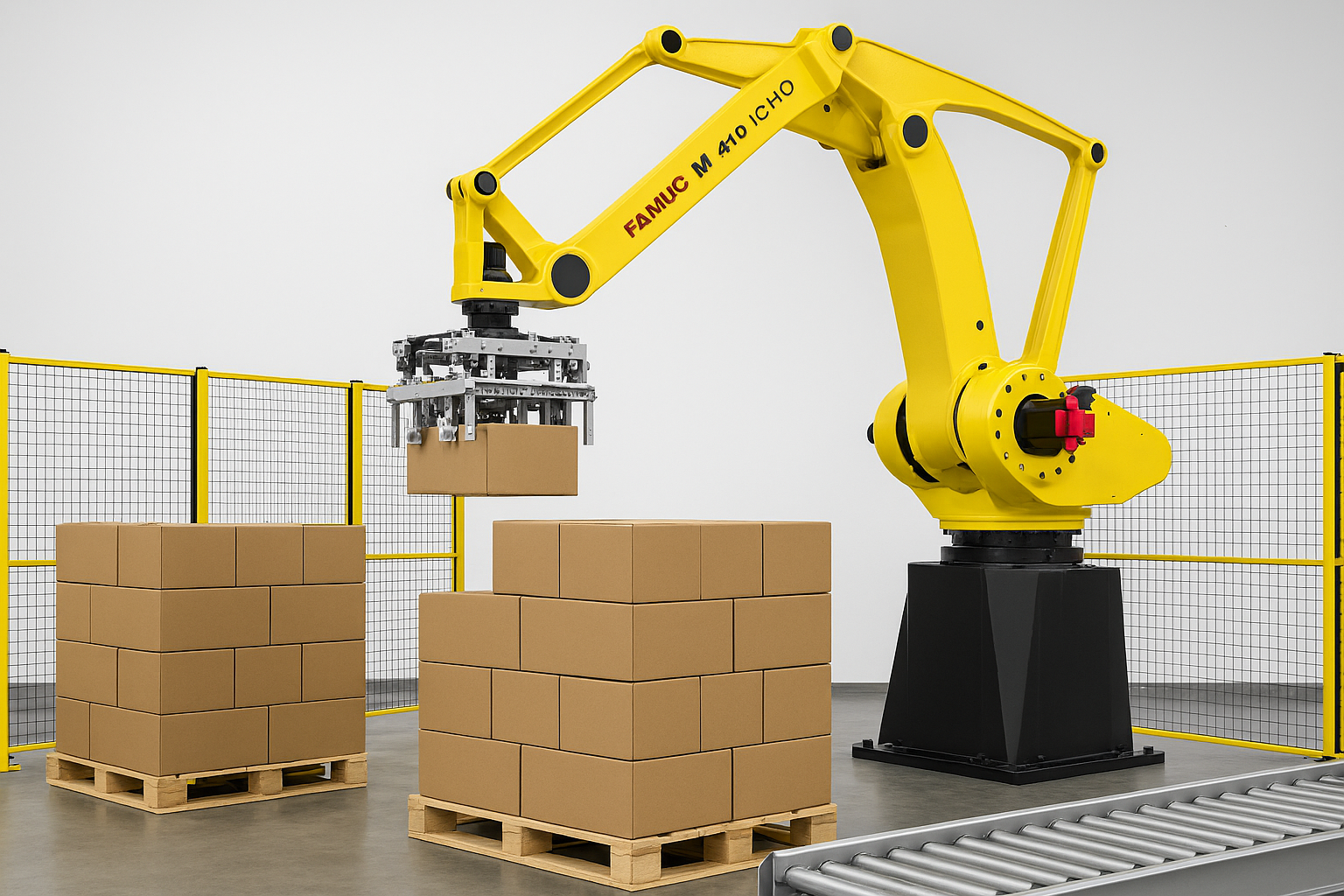
Industrial palletizing robot stacking boxes at the end of a production line

The comparison between industrial robots and traditional palletizing systems is not a new debate — but it has become more consequential as product variability increases, labor costs rise, and safety requirements tighten. A mechanical stacker or a manual palletizing line that worked well ten years ago may be creating measurable operational costs today that are … Read more

WHAT HAPPENS IF WE NEED SPARE PARTS OR EMERGENCY SUPPORT IN A ROBOTIC WELDING CELL?

When working with robotic welding systems, one of the most important questions that often arises is what happens when we need spare parts or urgent assistance. In industrial environments, a robotic system is only truly reliable if it can remain operational even when a component fails, wears out, or an unexpected stoppage occurs. For this … Read more

THE 5 SIGNS THAT YOUR MIG/MAG WELDING IS READY FOR AUTOMATION

MIG/MAG welding is one of the most widely used manufacturing processes, but when performed manually it often leads to significant variation. Deciding to automate is not just about bringing new technology into the factory – it’s about determining whether your process is technically and operationally ready for a robot to deliver real, tangible improvements. There … Read more

How Does URT Measure the Success of an Arc Welding Robotic Integration Project?

The effectiveness of a robotic welding integration project is determined by tangible outcomes in several crucial aspects. First and foremost, the quality of the weld bead is of utmost importance, as it directly impacts the strength, safety, and compliance with regulations. High-quality robotic welding results in fewer defects such as porosity, lack of fusion, undercut, … Read more

ASSEMBLY ROBOTS: HOW YOUIBOT IS TRANSFORMING PRODUCTION LINES

In the modern industrial landscape, where speed, precision, and adaptability are paramount, assembly robots have evolved from being mere auxiliary tools to playing a crucial role in manufacturing processes. YOUIBOT, a specialist in intelligent and mobile robotic solutions, is at the forefront of this transformation, seamlessly integrating autonomous mobility with robotic arms capable of assembling, … Read more

FANUC WINS MAJOR ORDER TO AUTOMATE PAINTING ON LUXURY VEHICLE PRODUCTION LINE

FANUC has signed a major contract to supply an automated painting system to a leading European luxury car manufacturer, further strengthening its position in automotive robotics. With nearly 50 robots dedicated to both bodywork and plastic components, the project stands out as a prime example of full integration—from design and installation to process control on … Read more

THE SAFE REVOLUTION: INDUSTRIAL ROBOTICS TRANSFORMS FIBREGLASS CUTTING AND PRIORITISES HEALTH

Today’s industry is constantly striving to find solutions that not only improve efficiency and quality but also protect the health and well-being of employees. In the field of fiberglass cutting—a task that has historically posed significant challenges in terms of occupational safety—industrial robotics emerges as an innovative and crucial solution. Manually cutting fiberglass exposes workers … Read more

SAFETY ADVANCES FOR COLLABORATIVE WELDING: A PROTECTED FUTURE

The welding industry, long associated with high-risk environments, is undergoing a profound transformation thanks to the rise of collaborative robotics. In modern welding facilities, safety is no longer just about regulatory compliance—it has become a cornerstone of operational efficiency and worker well-being. At the heart of this shift lies the strategic deployment of collaborative robots, … Read more

THINKING OF AUTOMATING MATERIAL HANDLING? HERE’S WHAT YOU NEED TO CONSIDER

In today’s industrial environments, automation is no longer a luxury, but a necessity for staying competitive in terms of efficiency, safety, and cost. One of the areas with the greatest potential for improvement is material handling — from moving boxes and parts to feeding machines and palletizing products. However, before integrating a robot into your … Read more