UPDATE AND MODERNIZATION OF INDUSTRIAL ROBOTS: WHEN DOES REFURBISHING MAKE MORE SENSE THAN BUYING NEW?

In many workshops, the same dilemma repeats itself: should you buy a new robot or modernize the one already installed? With advances in controllers, sensors, software, and mechatronics, older robots can be brought back to life effectively. The key is knowing when refurbishment makes sense— and when it’s time to replace. Why consider modernization? A … Read more

CAN YOUR PROCESS BECOME COLLABORATIVE WITHOUT LOSING PRODUCTIVITY?

Collaborative robotics has positioned itself as an attractive solution for many industries: promises of safety, flexibility, fast deployment, and the ability to work side by side with operators. However, on the shop floor a critical and completely legitimate question arises: How do I know if my process can truly become collaborative without sacrificing safety, production … Read more

WHAT TRAINING DOES MY STAFF REALLY NEED TO OPERATE AND MAINTAIN AN INDUSTRIAL ROBOT?

From the fear of depending on the integrator to true autonomy on the shop floor: “What if only they know how to make it work?” When an automation project is nearing its end, a silent concern often appears: “After the integrators leave, who keeps the knowledge?” It’s not a technical question. It’s a human question, … Read more

HOW TO CHOOSE THE RIGHT MILLING SPINDLE FOR ROBOTICS: DIMENSIONS, POWER AND MATERIALS

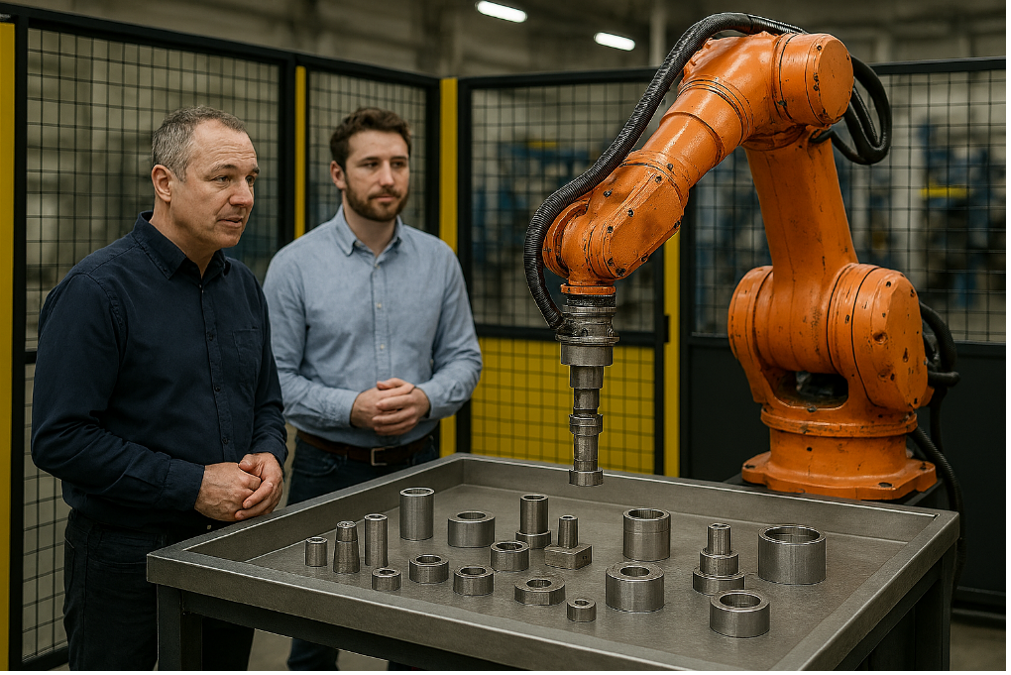
Choosing the right spindle for a robotic milling cell is not about buying “the most powerful one” and calling it a day. Several factors are involved: the application (material, tool, MRR), the rpm/torque window, the tool interface, cooling/duty‑cycle, and in robotics the weight and moments that the robot arm must withstand. If these factors are … Read more

How to Calculate the Real ROI When Replacing a CNC Machine with a Robot + Spindle

For years, CNC machinery has been the benchmark for precision in industrial machining. However, the evolution of robotics — especially refurbished robots equipped with high‑performance spindles — is reshaping the landscape. More and more factories are now asking themselves: Is it really worth replacing a CNC with a robotic milling cell? The answer depends on … Read more

AI IN ROBOTIC ARMS FOR DETECTING PRODUCTION FAILURES

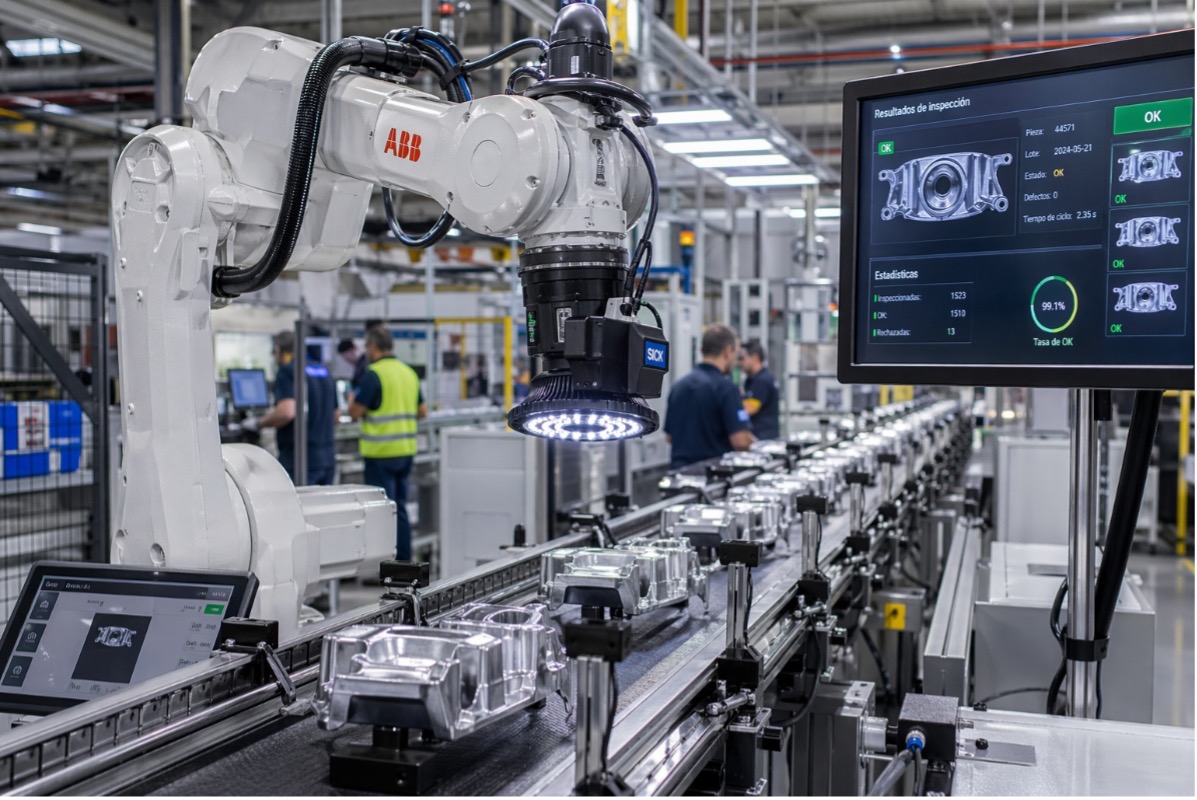
Failure detection in production has historically relied on a combination of human inspection, statistical controls, and traditional sensors. However, the increasing complexity of processes, the pressure to reduce scrap, and the need for real-time traceability have highlighted clear limits in these approaches. In this context, a frequently asked question on the shop floor is: How … Read more

What level of accuracy and repeatability can you expect from an industrial robot?

Spec sheets vs shop-floor reality On paper everything looks precise. In production you face tolerances, scrap risk, manual tweaks, and material variability. The honest question is: “Will the robot actually be more accurate than what we do today?” Accuracy vs repeatability Repeatability The robot’s ability to return to the same point over and over. Typical … Read more

CHALLENGES AND SOLUTIONS FOR INTEGRATING MACHINE VISION IN THE FOOD INDUSTRY

Machine vision has become one of the most in-demand technologies in the food industry. Quality control, inspection, sorting, traceability, and robotic guidance are now processes almost unimaginable without vision systems. However, real-world plant environments differ greatly from marketing promises: integrating machine vision in food production requires facing specific technical, operational, and regulatory challenges. Unstable lighting, … Read more

How Dependent Does My Process Become on Software Instead of Hardware?

This question rarely appears when a robot first arrives on the production floor. It emerges months later. When everything works. When the cell is producing. When nobody questions the arm, the gearbox, or the repeatability anymore. The doubt appears in front of a screen: A pending update. A license about to expire. A file that … Read more

Who Owns the Data Generated by a Robotic Cell: the Customer, the Supplier, or the Robot Manufacturer?

As robotic automation becomes increasingly connected and data‑driven, a question that once seemed secondary is now unavoidable: Who actually owns the data generated by an industrial robot? This is not a trivial issue. In many modern automation projects, operational data holds as much strategic value as the physical production itself. What Data Does an Industrial … Read more