
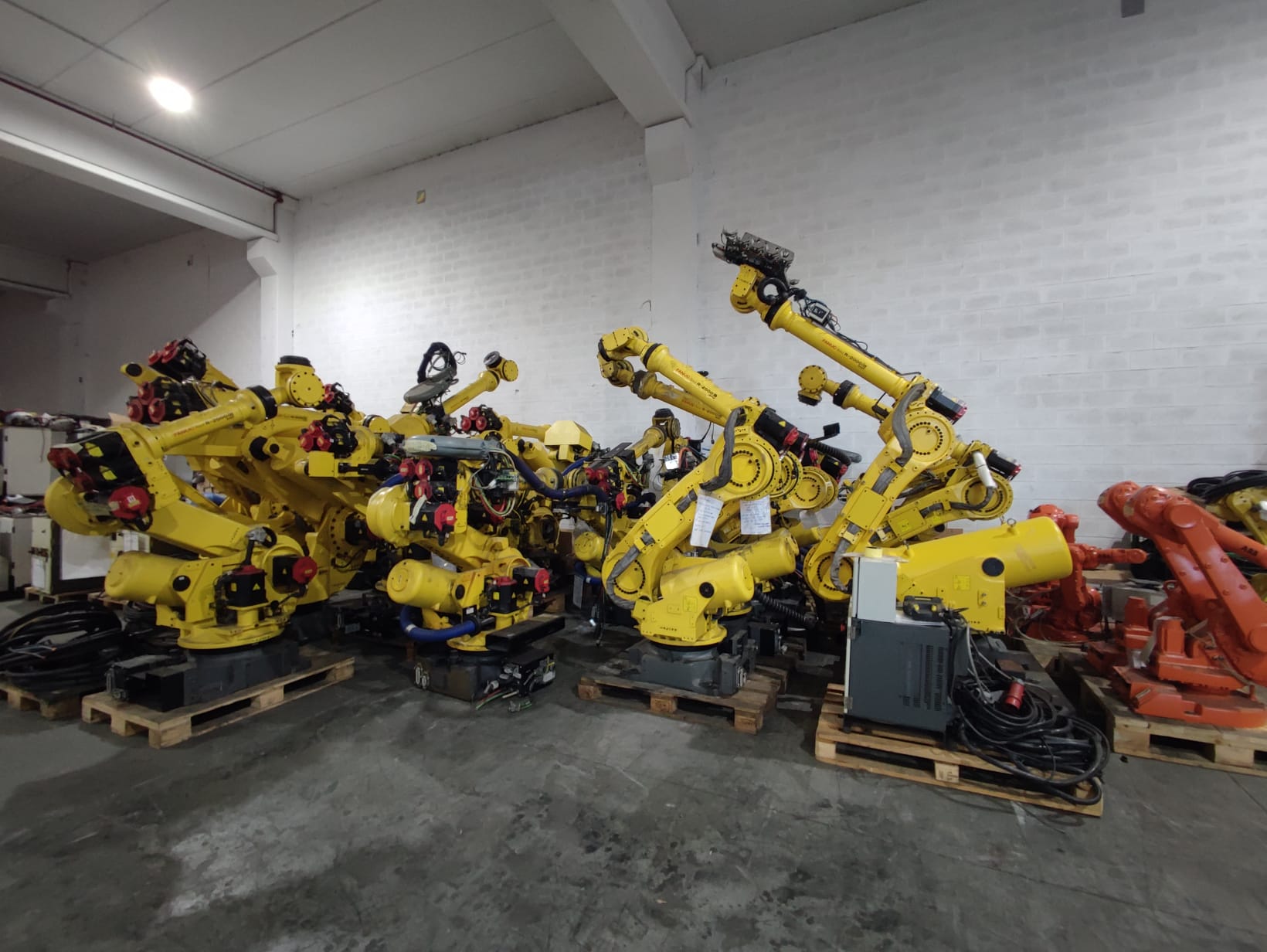
At the heart of many automated factories, a group of robots works tirelessly for hundreds of hours on end. But what happens if one of these machines fails unexpectedly? An unplanned stoppage can cost thousands of euros per hour, result in lost orders and delayed deliveries. This is where predictive maintenance steps in: instead of reacting to a breakdown, the idea is to anticipate it.
Why is predictive maintenance more important than ever? Traditionally, maintenance has followed two main approaches: corrective maintenance, which involves fixing issues after something has already failed, and scheduled maintenance, which takes place every set number of hours or days. Both approaches have their downsides – either intervention comes too late, or there is unnecessary work carried out.
Predictive maintenance (PdM), on the other hand, analyses the actual condition of the system, pinpointing when a component is likely to deteriorate before it fails. In the context of industrial robots – such as six-axis arms, servomotors, gearboxes and tools – applying PdM makes it possible to reduce costly unplanned downtime, optimise the cost of spare parts and labour, extend the lifespan of robots and their components, and boost the reliability of the production line, ultimately improving Overall Equipment Effectiveness (OEE).
For instance, a recent study showed that analysing sensor data – such as vibration, electrical current and temperature – allowed for the detection of anomalies in industrial robots even before any visible faults appeared.
So, how does predictive maintenance work in a robotic cell? The basic steps are as follows: First, data collection is essential. This involves using sensors to monitor the electrical current in the robot’s motors, vibration, temperature and torque in axes or gearboxes, and information on the duty cycle, speed and tool load. For example, a 2021 KTH study used robot torque profiles as input for PdM algorithms.
Next comes data processing and analysis, which can take place locally (on an edge node) or in the cloud. Certain machine learning algorithms can predict the remaining useful life (RUL) of components. One article, for example, describes how a PLC with IIoT collected data from both the robot and a CNC machine, analysed it via MQTT and generated early warnings.
When an anomaly is detected, the system can trigger a maintenance alert. This means components can be replaced before causing serious failures, thus preventing stoppages. The article “AI-Driven Predictive Maintenance for Industrial Robots in Automotive Manufacturing” documented how knowledge transfer across domains improved PdM performance.
Continuous improvement is a key aspect: over time, predictive models are refined with real-world data, maintenance intervals and spare parts usage are optimised, and failure metrics are improved.
There are documented cases of predictive maintenance in industrial robots. Although many companies keep their data private, some published studies show real results. For example, “Industrial Robot Control System with a Predictive Maintenance Module” (2025) describes an implementation in an automatic loading station, where a robot worked alongside a CNC machine. Data on energy consumption and errors were collected, and faults were detected before causing major stoppages. Another study, “AI-Driven Predictive Maintenance for Industrial Robots in Automotive Manufacturing” (2022), presents a methodology tested in an automotive environment with robotic arms equipped with torque sensors, showing that transferring learning across domains improves predictions. These studies confirm that predictive maintenance for robots is no longer just a promise; it is a viable and profitable practice.
What are the keys to implementing PdM in your plant? Start with the most critical equipment – the robot whose downtime would be most costly. Make sure data is available, such as current, vibration and temperature. Choose an analysis platform (edge or cloud) that can scale with your needs. Involve the maintenance, IT and production teams so everyone recognises the value. Set clear KPIs: reduction in stoppages, lower maintenance costs, extended service life. Run pilot projects with measurable deadlines.
Predictive maintenance for industrial robots opens the door to production without unpleasant surprises. By anticipating failures, you reduce the hidden cost of downtime, make the most of your equipment and reinforce the reliability of your plant. For brands like KUKA, ABB, FANUC, and for retrofit solutions like those from URT, incorporating PdM is not just an added extra but a decisive competitive advantage. The robotics of the future will not only be stronger, but also increasingly self-aware.