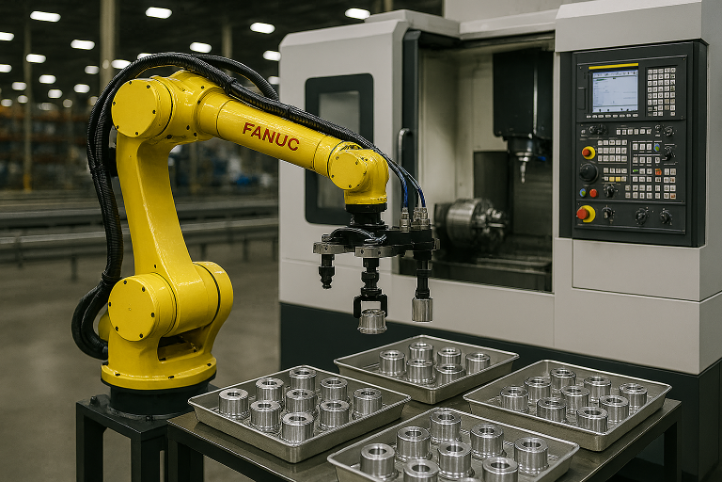
WHAT REAL-WORLD WELDING PROBLEMS CAN BE SOLVED WITH ROBOTIC AUTOMATION?

In industrial welding, the most expensive problems rarely come from the welding process itself but from its variability: differences between operators, inconsistent travel speed, positioning errors, or human fatigue. Robotic automation—especially in MIG/MAG and TIG welding—is widely used across the world to eliminate recurring failures that affect quality, production time, and cost per part. This … Read more

How Dependent Does My Process Become on Software Instead of Hardware?

This question rarely appears when a robot first arrives on the production floor. It emerges months later. When everything works. When the cell is producing. When nobody questions the arm, the gearbox, or the repeatability anymore. The doubt appears in front of a screen: A pending update. A license about to expire. A file that … Read more

Who Owns the Data Generated by a Robotic Cell: the Customer, the Supplier, or the Robot Manufacturer?

As robotic automation becomes increasingly connected and data‑driven, a question that once seemed secondary is now unavoidable: Who actually owns the data generated by an industrial robot? This is not a trivial issue. In many modern automation projects, operational data holds as much strategic value as the physical production itself. What Data Does an Industrial … Read more

What level of internal training does a company need to avoid full dependence on the supplier after automating with industrial robots?

In many companies, the decision to automate is not held back by the cost of the robot or by floor space, but by a less visible—yet decisive—concern: technical dependency. The question is not always stated openly, but it quickly emerges in any investment committee: What happens when the supplier leaves? Robotic automation introduces powerful technology, … Read more

Justifying robotic automation without higher production volume

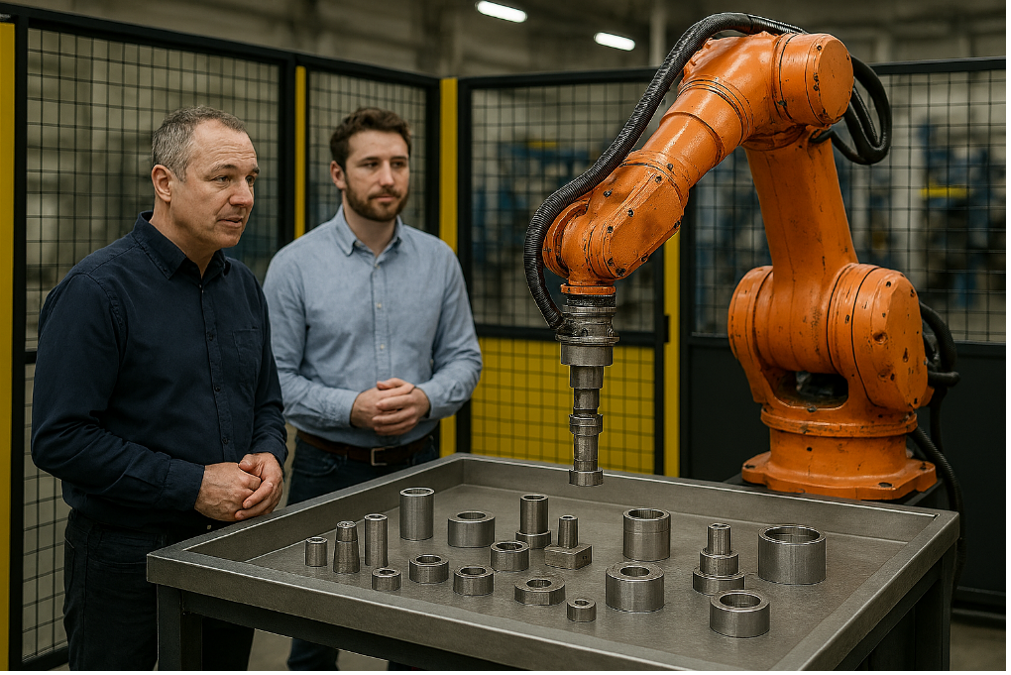
Industrial robot used to improve process stability without increasing production volume

In many industrial companies, robotic automation is no longer justified only by the need to produce more in less time. In mature plants, demand may already be stable and total output may not need to increase. In these cases, the main operational problem is often variability, not capacity. This creates a practical question for production … Read more

Industrial robots vs. traditional palletizing systems

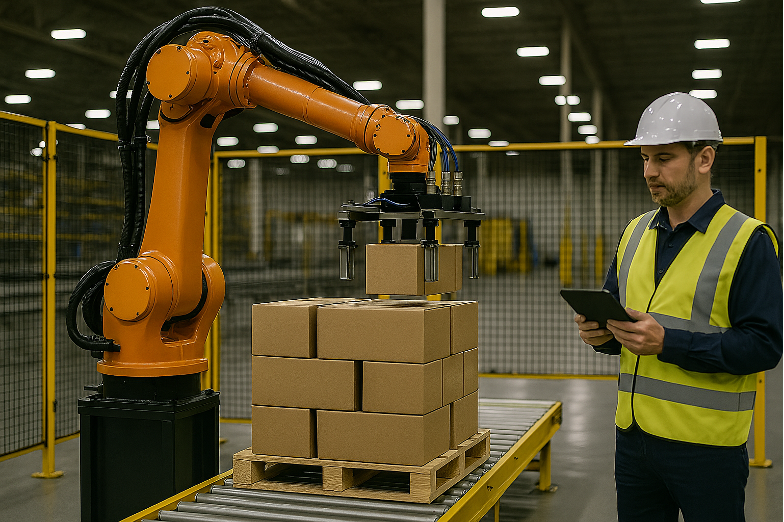
Industrial palletizing robot stacking boxes at the end of a production line

The comparison between industrial robots and traditional palletizing systems is not a new debate — but it has become more consequential as product variability increases, labor costs rise, and safety requirements tighten. A mechanical stacker or a manual palletizing line that worked well ten years ago may be creating measurable operational costs today that are … Read more

WHAT LEVEL OF PRECISION AND REPEATABILITY CAN I EXPECT FROM AN INDUSTRIAL ROBOT?

The difference between what the technical datasheets say and what actually happens on the shop floor “On paper it’s precise… but in real production?” One of the most frequent — and most honest — questions production teams ask is this: “Will the robot really be more precise than what we do today?” It’s not a … Read more

REFURBISHED MOBILE ROBOTS: THE NEW ERA OF FLEXIBLE AUTOMATION

Modern industry demands flexible, reconfigurable, and fast automation. Factories can no longer rely solely on fixed production lines; they need solutions that adapt in hours, not months. This need has given rise to a powerful combination: refurbished mobile robots integrated with used industrial robotic arms. This approach delivers the agility required by Industry 4.0—without the … Read more

HOW FAR CAN I SCALE PRODUCTION WITHOUT REBUILDING THE ENTIRE CELL?

It’s a question that rarely appears at the beginning of a project. It usually comes after the first success: The cell works. Cycle times are stable. Quality is consistent. And for the first time, the team trusts the system. Then someone asks: “What if we double production?” It’s not an innocent question — it’s a … Read more

How does robotic automation affect industrial cybersecurity when robots are connected to corporate networks or the cloud?

For a long time, industrial robots operated in isolated environments, disconnected from the rest of a company’s systems. Today, that reality has changed. The need for remote monitoring, production data collection, predictive maintenance and traceability has led to connecting robots to corporate networks and even cloud platforms. As a result, a relatively new concern has … Read more