INTEGRATING COLLABORATIVE SAFETY IN HYBRID LINES: CHALLENGES AND BEST PRACTICES

In the modern factory, the best of two worlds comes together: the robustness of traditional industrial robots and the flexibility of collaborative robots, or cobots. This fusion—a hybrid human-robot line—offers great advantages but also raises critical challenges: safety, ergonomics, production flow, and adaptability to change. For brands like KUKA, ABB, or FANUC, which you manage … Read more

REFURBISHED ROBOTS VS. NEW ROBOTS: WHEN TO CHOOSE EACH ONE?

In today’s industrial market, both new and refurbished robots have a legitimate and distinct role within automation strategies. Neither option is universally better; instead, each suits particular technical, operational, and financial requirements. The right decision shouldn’t be based on personal preference, but should come from a careful, comparative analysis that takes into account measurable criteria … Read more

POLISHING, AND FINISHING PROCESSES: WHAT YOU NEED TO KNOW BEFORE INTEGRATION

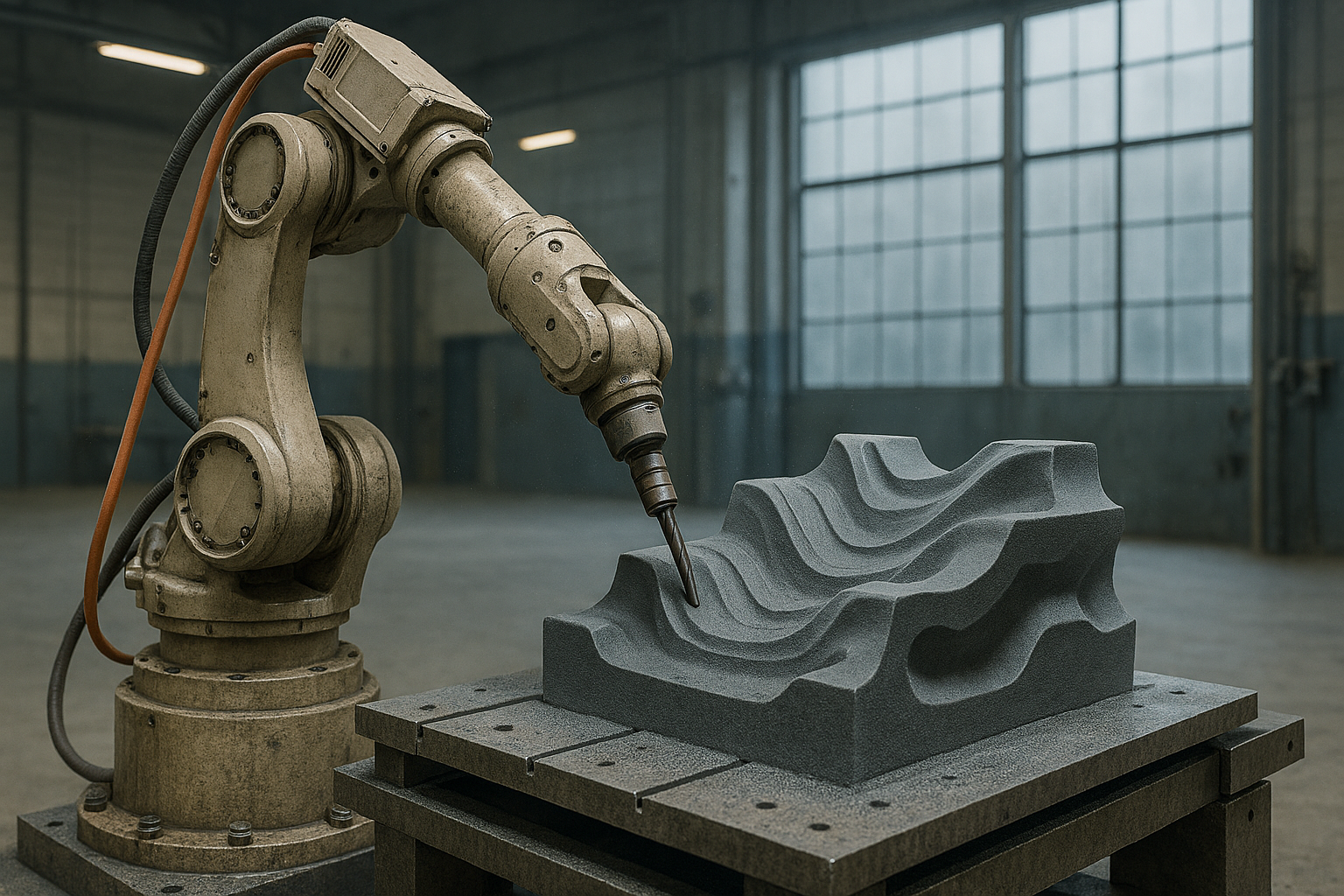
In the industrial sector, sanding, polishing, and surface finishing might seem like straightforward tasks, but they actually involve a significant level of technical complexity. Each piece requires consistent pressure, precise motions, a uniform rhythm, and an attentive approach to detail—qualities that are difficult to maintain manually over many hours of work. This is where an … Read more

THE 5 SIGNS THAT YOUR MIG/MAG WELDING IS READY FOR AUTOMATION

MIG/MAG welding is one of the most widely used manufacturing processes, but when performed manually it often leads to significant variation. Deciding to automate is not just about bringing new technology into the factory – it’s about determining whether your process is technically and operationally ready for a robot to deliver real, tangible improvements. There … Read more

WHAT SPECIFIC IMPROVEMENTS WOULD WE SEE IN EFFICIENCY, QUALITY, OR COSTS WITH THE INTEGRATION OF A ROBOTIC SOLUTION?

The integration of a robotic welding solution does not simply replace manual labor, but transforms the entire production process. The benefits are mainly reflected in three key areas, which are constantly monitored by the industry: production efficiency, weld quality, and operating costs per part. These improvements are recognized worldwide and proven by the actual performance … Read more

Motoman MH24-10 “high speed”: an efficient alternative for automated welding

Yaskawa Motoman MH24-10 robot in a compact arc welding cell with positioner

Motoman MH24-10 welding applications are possible — but the robot needs to be understood correctly before it is specified for a welding cell. That is the first thing any engineer evaluating it for a welding application needs to understand — and it is the starting point for an honest assessment of where this robot delivers … Read more

PREDICTIVE MAINTENANCE IN INDUSTRIAL ROBOTS: SENSORS, DATA AND MINIMISING DOWNTIME

At the heart of many automated factories, a group of robots works tirelessly for hundreds of hours on end. But what happens if one of these machines fails unexpectedly? An unplanned stoppage can cost thousands of euros per hour, result in lost orders and delayed deliveries. This is where predictive maintenance steps in: instead of … Read more

What is the total cost of investing in a robotic welding solution, including the robot, integration, software, and training?

Robotic welding cell with industrial robot, welding torch, and positioner in a manufacturing facility

When companies ask about robotic welding cost, they usually mean the price of the robot itself. That is a natural starting point — but it captures only 25 to 35 percent of the real investment. The remaining 65 to 75 percent goes to everything that makes the robot actually weld: integration, welding equipment, programming, training, … Read more

How Does URT Measure the Success of an Arc Welding Robotic Integration Project?

The effectiveness of a robotic welding integration project is determined by tangible outcomes in several crucial aspects. First and foremost, the quality of the weld bead is of utmost importance, as it directly impacts the strength, safety, and compliance with regulations. High-quality robotic welding results in fewer defects such as porosity, lack of fusion, undercut, … Read more

PREDICTIVE VS CORRECTIVE MAINTENANCE IN INDUSTRIAL ROBOTS

Industrial robots, like any machinery, require regular maintenance. But the key question is: do we act before a failure occurs or after it? Predictive maintenance redefines efficiency by anticipating breakdowns and optimising resources. Corrective: The Traditional Model Corrective maintenance takes place after a failure: when a servomotor stops, an axis loses calibration or a controller … Read more