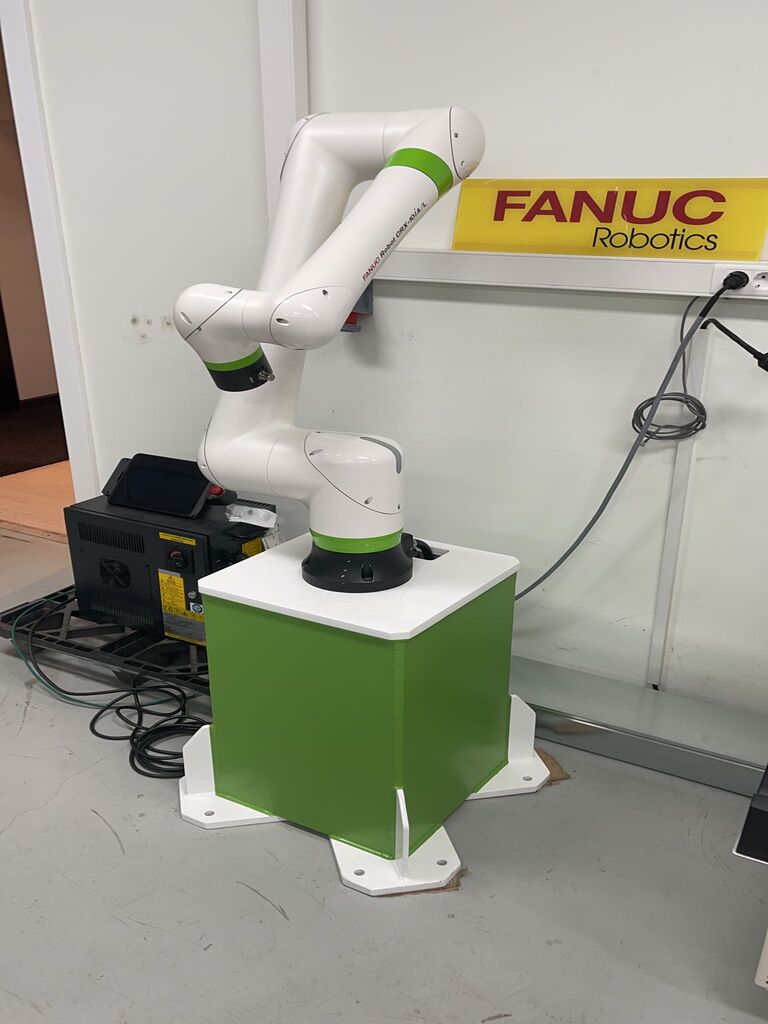
Update and modernization of industrial robots: when does refurbishing make more sense than buying new?

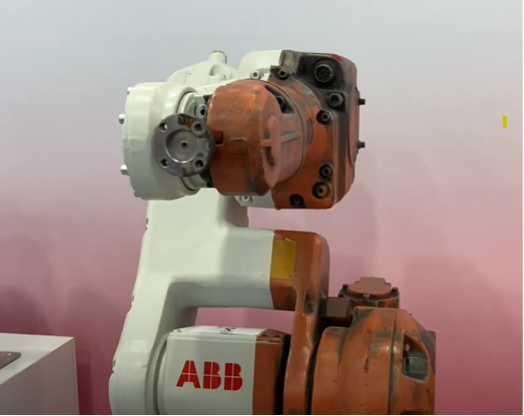
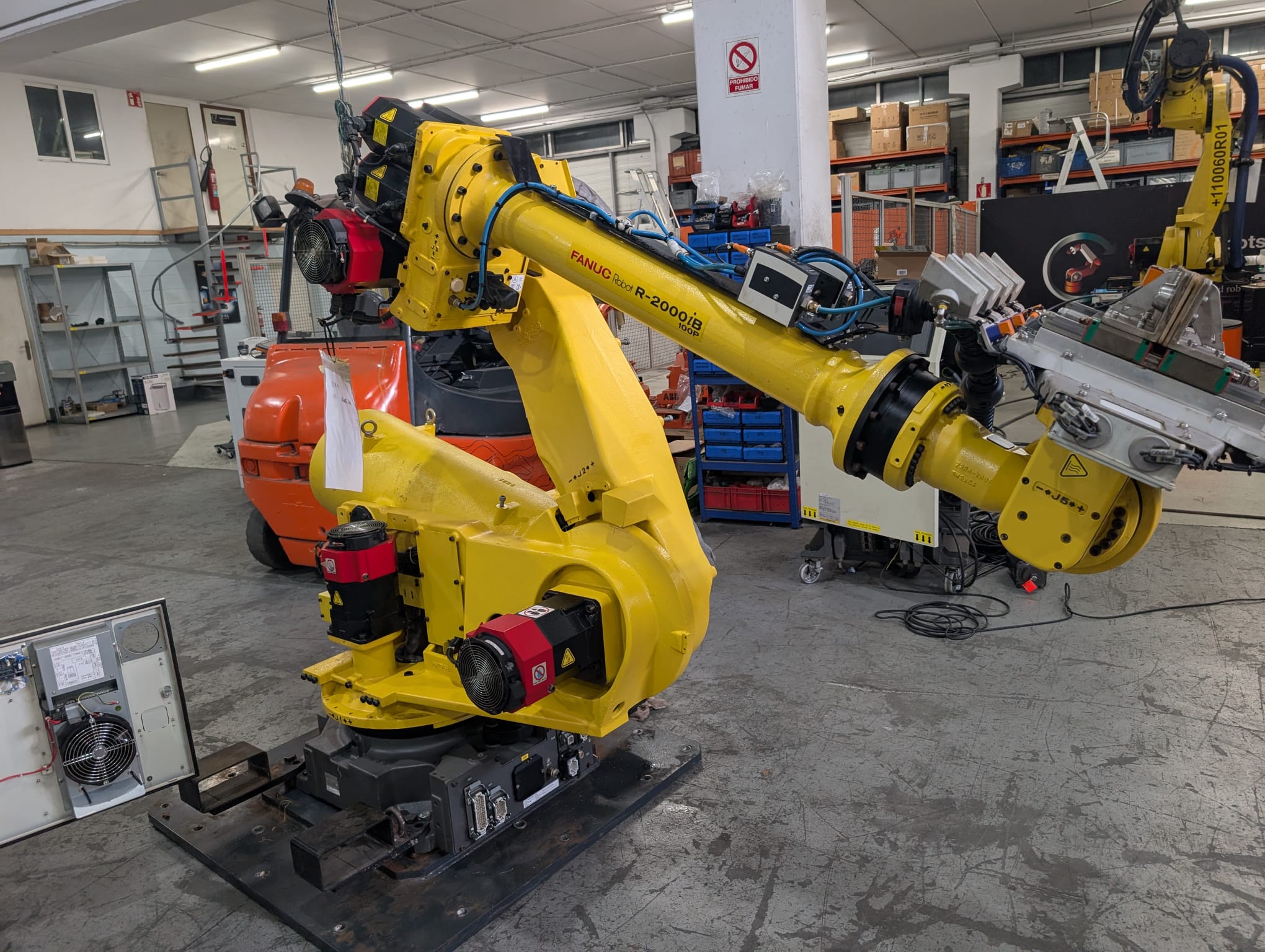
In many workshops, the same dilemma repeats itself: should you buy a new robot or modernize the one already installed? With advances in controllers, sensors, software, and mechatronics, older robots can be brought back to life effectively. The key is knowing when refurbishment makes sense— and when it’s time to replace. Why consider modernization? A … Read more

Can Your Process Become Collaborative Without Losing Productivity

Collaborative robotics has positioned itself as an attractive solution for many industries: promises of safety, flexibility, fast deployment, and the ability to work side by side with operators. However, on the shop floor a critical and completely legitimate question arises: How do I know if my process can truly become collaborative without sacrificing safety, production … Read more

WHAT TRAINING DOES MY STAFF REALLY NEED TO OPERATE AND MAINTAIN AN INDUSTRIAL ROBOT?

From the fear of depending on the integrator to true autonomy on the shop floor: “What if only they know how to make it work?” When an automation project is nearing its end, a silent concern often appears: “After the integrators leave, who keeps the knowledge?” It’s not a technical question. It’s a human question, … Read more

How to Calculate the Real ROI When Replacing a CNC Machine with a Robot + Spindle

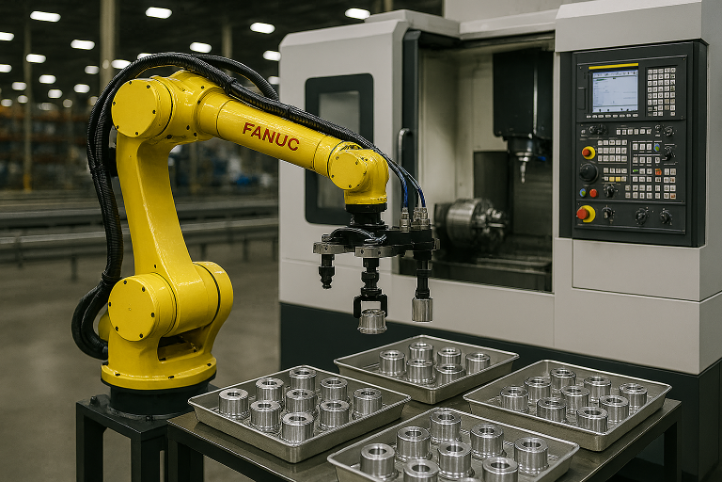
Robotic milling cell with industrial robot and high-speed spindle machining a part

Replacing a CNC machine with a robotic milling cell is not a simple upgrade decision. It is a strategic one. The financial case depends heavily on which specific costs and benefits are included in the calculation — and many standard ROI comparisons leave out the variables that most often determine whether the investment makes sense. … Read more

AI IN ROBOTIC ARMS FOR DETECTING PRODUCTION FAILURES

Failure detection in production has historically relied on a combination of human inspection, statistical controls, and traditional sensors. However, the increasing complexity of processes, the pressure to reduce scrap, and the need for real-time traceability have highlighted clear limits in these approaches. In this context, a frequently asked question on the shop floor is: How … Read more

How To Reduce Robot Programming Time In Industrial Automation

Industrial robot programming setup for reducing commissioning time

In many automation projects, the real bottleneck is not hardware selection or mechanical integration. It is robot programming. Fine adjustments, repeated trials, last-minute changes, and dependencies with PLCs, vision systems, fixtures, and operators often extend commissioning far beyond the original plan. For engineering and production managers, the practical question is not simply how to program … Read more

Industrial robots vs. traditional palletizing systems

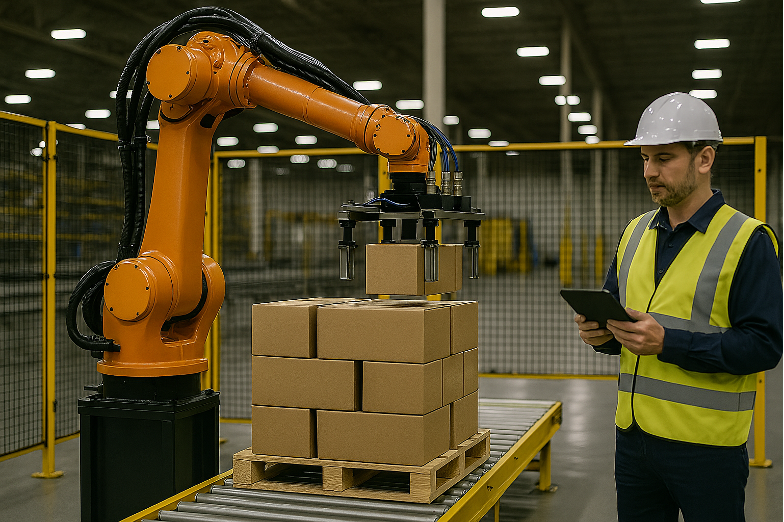
Industrial palletizing robot stacking boxes at the end of a production line

The comparison between industrial robots and traditional palletizing systems is not a new debate — but it has become more consequential as product variability increases, labor costs rise, and safety requirements tighten. A mechanical stacker or a manual palletizing line that worked well ten years ago may be creating measurable operational costs today that are … Read more

WHAT LEVEL OF PRECISION AND REPEATABILITY CAN I EXPECT FROM AN INDUSTRIAL ROBOT?

The difference between what the technical datasheets say and what actually happens on the shop floor “On paper it’s precise… but in real production?” One of the most frequent — and most honest — questions production teams ask is this: “Will the robot really be more precise than what we do today?” It’s not a … Read more

HOW FAR CAN I SCALE PRODUCTION WITHOUT REBUILDING THE ENTIRE CELL?

It’s a question that rarely appears at the beginning of a project. It usually comes after the first success: The cell works. Cycle times are stable. Quality is consistent. And for the first time, the team trusts the system. Then someone asks: “What if we double production?” It’s not an innocent question — it’s a … Read more

IS YOUR PROCESS TRULY READY FOR AUTOMATION WITH A REFURBISHED ROBOT?

The truth is that not every industrial task benefits from robotic automation—and even fewer are genuinely compatible with a refurbished robot. The key lies in understanding whether your process meets the fundamental technical conditions that professionals use to evaluate automation projects: aspects such as geometry, repeatability, production volume, accessibility, safety, and the overall stability of … Read more