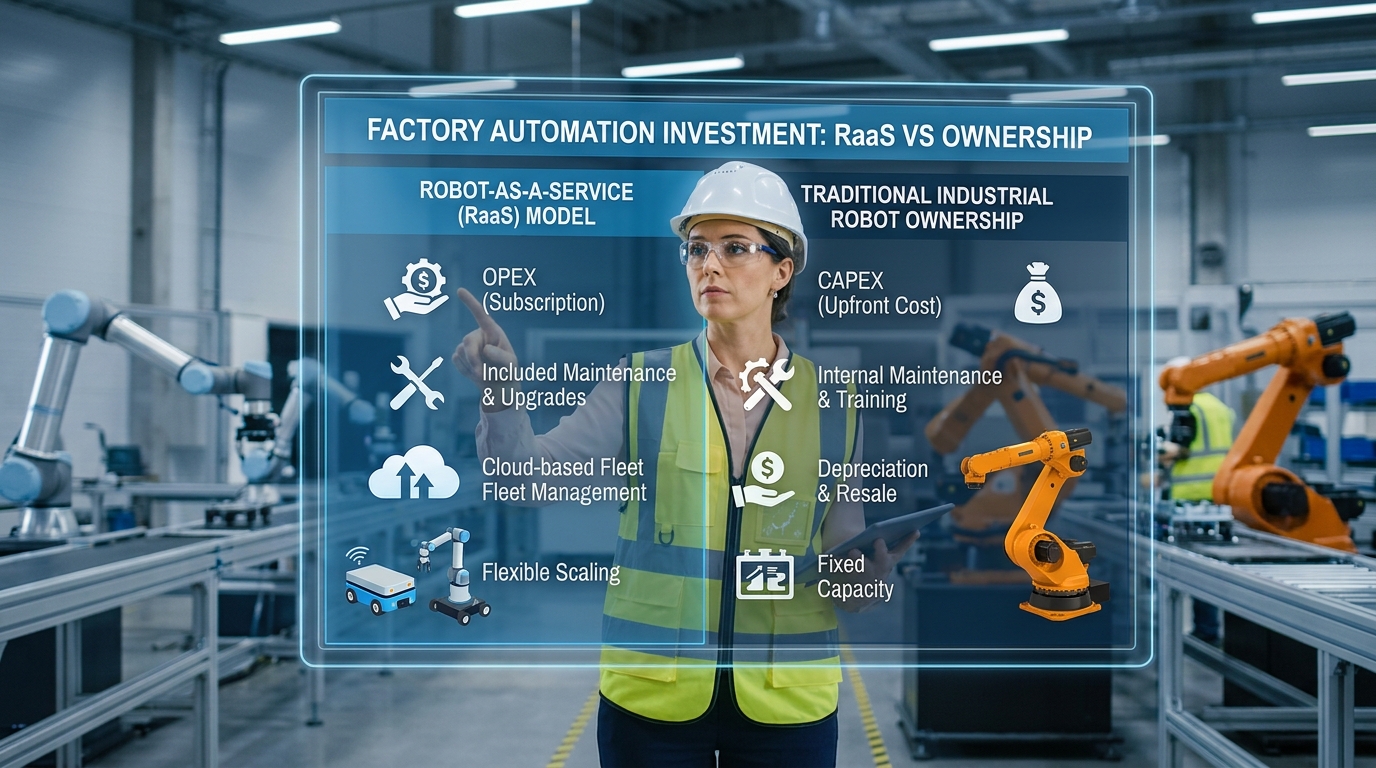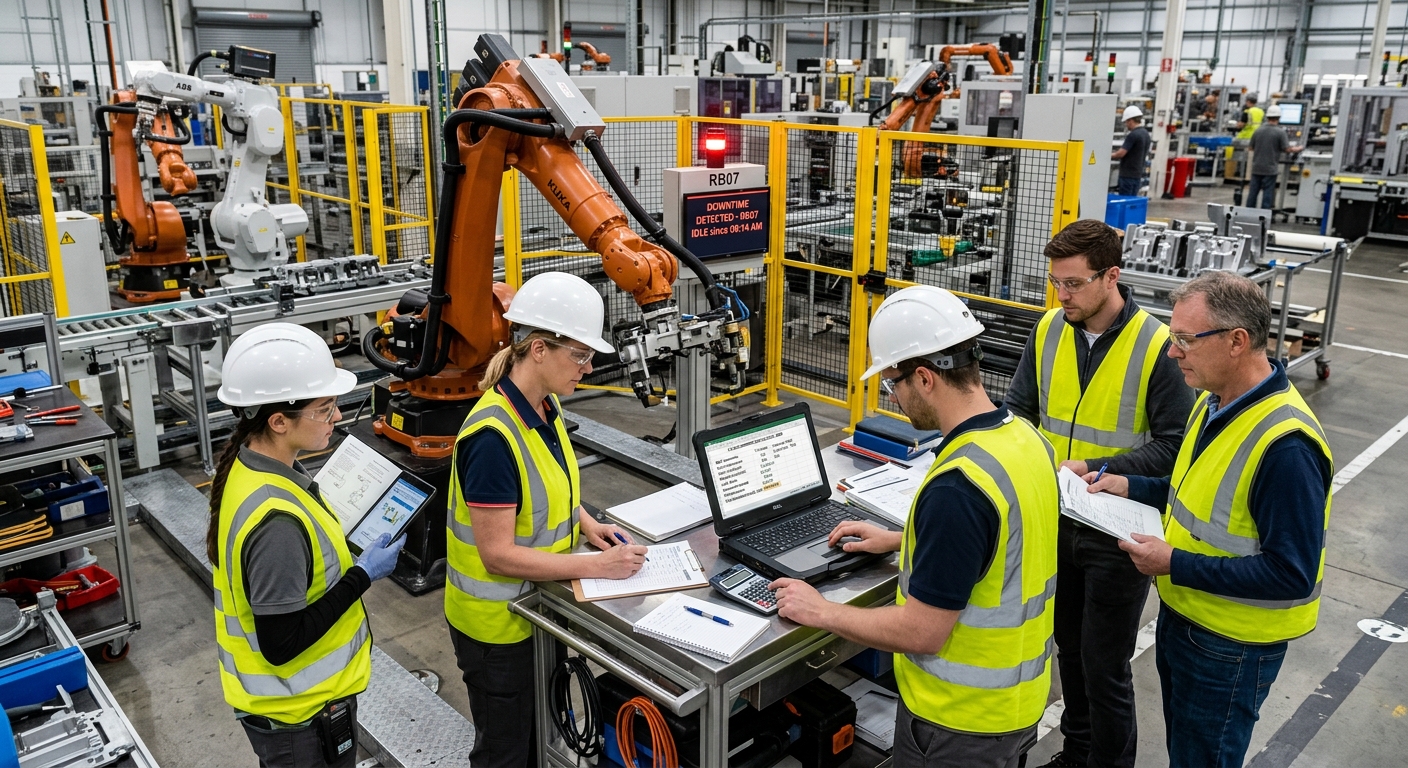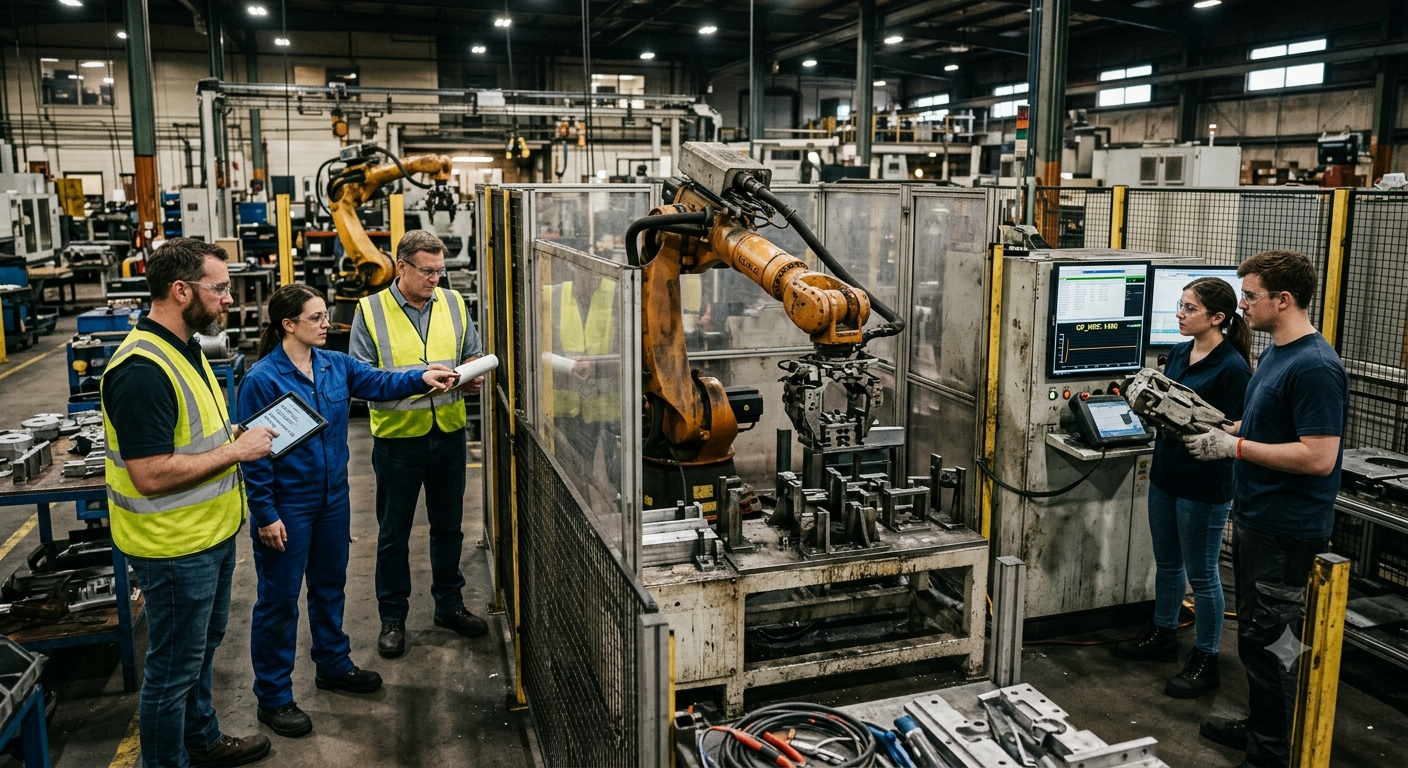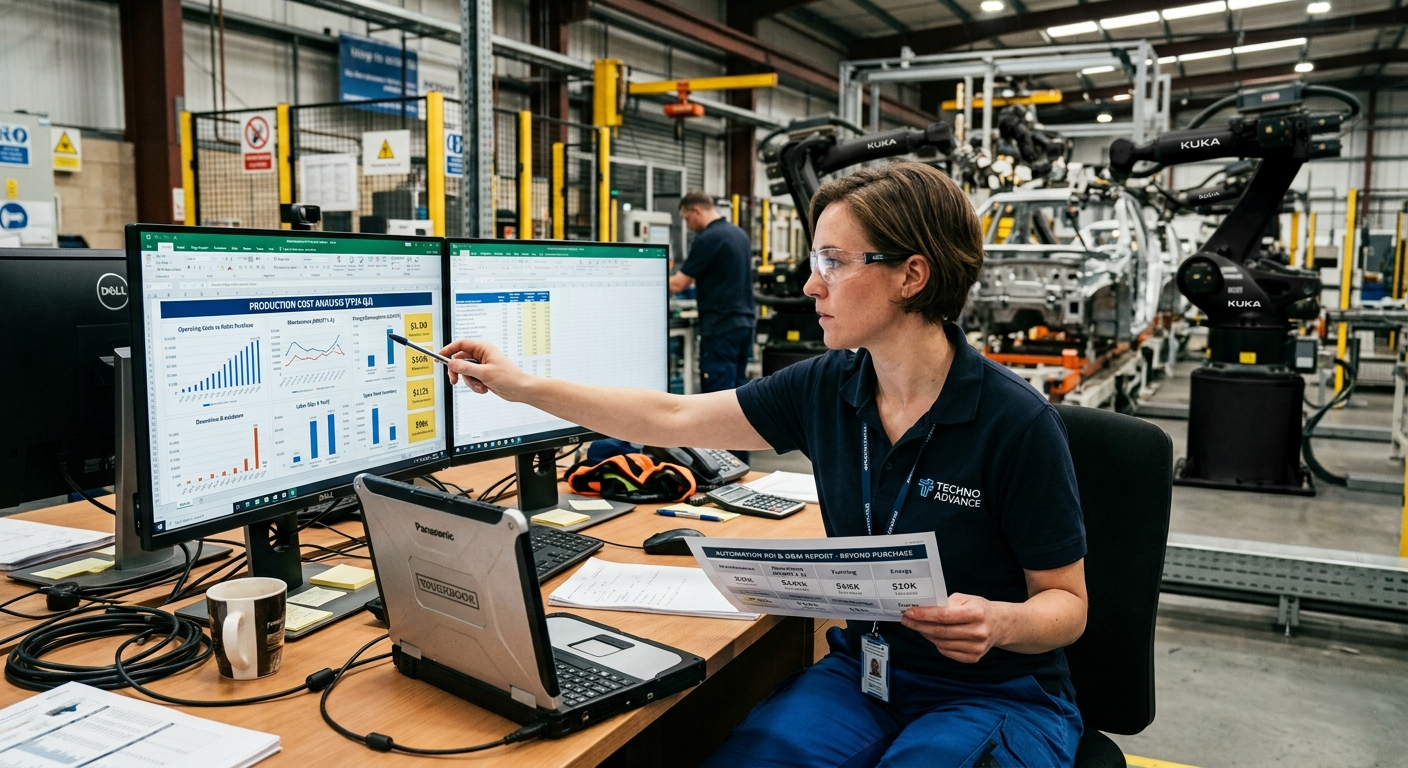
Which process should you robotize first to achieve the fastest ROI

Industrial robot used to evaluate the first process to robotize

The first process to robotize is not always the most visible one or the one with the highest labor cost. In most cases, the best starting point is the process that combines high repetitiveness, clear operational impact, a high cost of errors, and relatively simple implementation. When selected correctly, the first robotics project can deliver … Read more

End of line: when to automate and when a semi-manual solution makes more sense

Fully automating the end of line is not always the best choice. The right decision depends on several factors, including: production volume product stability ergonomics cost of errors required flexibility In some cases, a robotic cell is the most effective way to increase capacity and safety. In others, a well‑designed semi‑manual solution delivers better return, … Read more

Robotic automation KPIs to measure after implementation

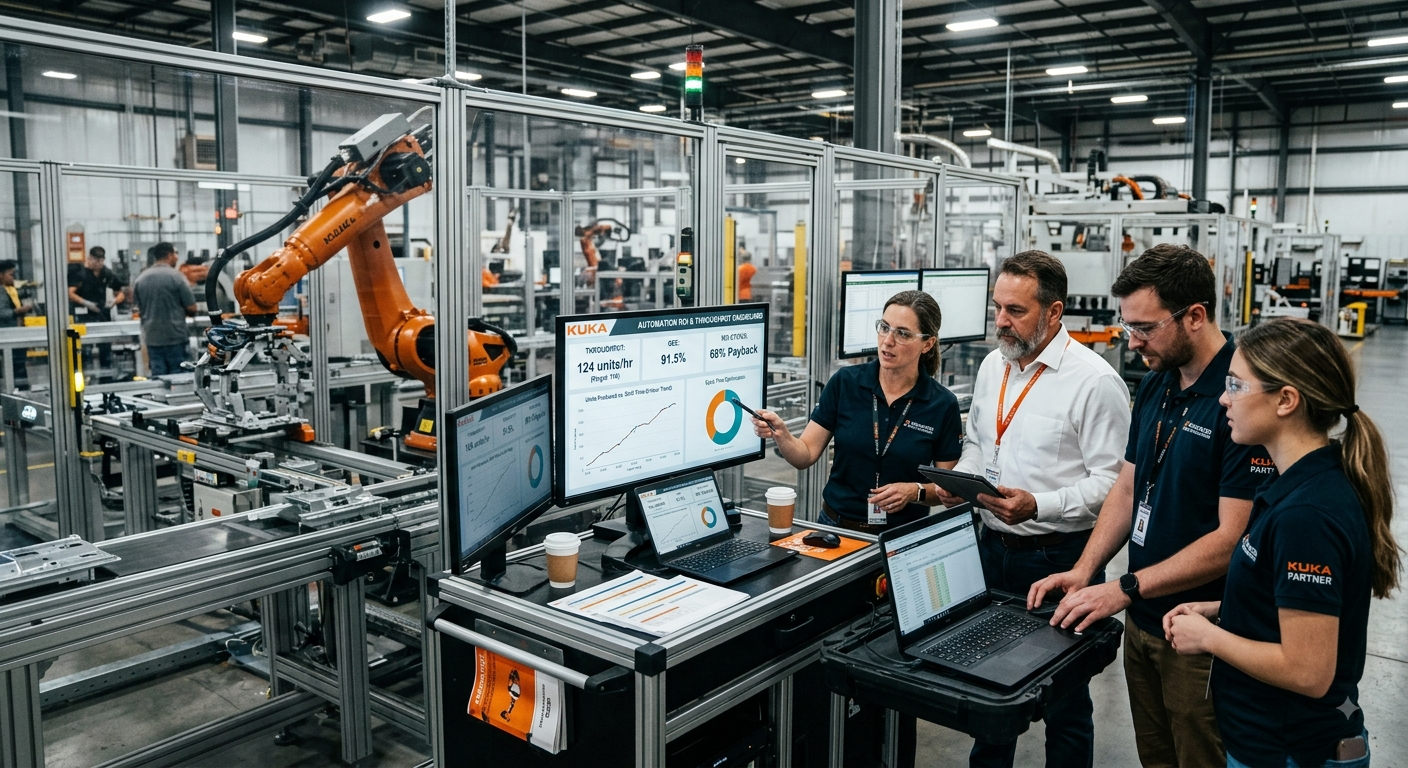
Industrial robot control panel used to track robotic automation KPIs

Implementing robotic automation in an industrial plant is not only about purchasing a robot or installing a cell. The real question is whether the system delivers measurable value after implementation. To evaluate that value, companies need clear robotic automation KPIs. These key performance indicators show whether automation is improving productivity, quality, availability, safety, cost control, … Read more

Can Your Process Become Collaborative Without Losing Productivity

Collaborative robotics has positioned itself as an attractive solution for many industries: promises of safety, flexibility, fast deployment, and the ability to work side by side with operators. However, on the shop floor a critical and completely legitimate question arises: How do I know if my process can truly become collaborative without sacrificing safety, production … Read more

How To Reduce Robot Programming Time In Industrial Automation

Industrial robot programming setup for reducing commissioning time

In many automation projects, the real bottleneck is not hardware selection or mechanical integration. It is robot programming. Fine adjustments, repeated trials, last-minute changes, and dependencies with PLCs, vision systems, fixtures, and operators often extend commissioning far beyond the original plan. For engineering and production managers, the practical question is not simply how to program … Read more

What level of internal training does a company need to avoid full dependence on the supplier after automating with industrial robots?

In many companies, the decision to automate is not held back by the cost of the robot or by floor space, but by a less visible—yet decisive—concern: technical dependency. The question is not always stated openly, but it quickly emerges in any investment committee: What happens when the supplier leaves? Robotic automation introduces powerful technology, … Read more

Justifying robotic automation without higher production volume

Industrial robot used to improve process stability without increasing production volume

In many industrial companies, robotic automation is no longer justified only by the need to produce more in less time. In mature plants, demand may already be stable and total output may not need to increase. In these cases, the main operational problem is often variability, not capacity. This creates a practical question for production … Read more

How does robotic automation affect industrial cybersecurity when robots are connected to corporate networks or the cloud?

For a long time, industrial robots operated in isolated environments, disconnected from the rest of a company’s systems. Today, that reality has changed. The need for remote monitoring, production data collection, predictive maintenance and traceability has led to connecting robots to corporate networks and even cloud platforms. As a result, a relatively new concern has … Read more

The era of edge computing in robotic cells: how is it transforming automation?

For decades, industrial robots relied on a centralized model in which all data was processed by a PLC or a main server. Today, thanks to edge computing, processing moves to the very edge of the system—closer to sensors, cameras, and actuators—allowing real‑time decision‑making without depending on the cloud. In other words, edge computing turns robotic … Read more

Does Automation Improve Quality Or Just Make The Same Mistake Faster?

There’s an awkward moment in some automation projects when no one really wants to look too closely at the first batches. The parts come out quickly. The robot never stops. Productivity indicators look great. And yet… something feels off. The defect that used to appear sporadically now shows up with impeccable regularity. There’s no debate: … Read more